Consumer Behaviour: Understanding the Psychology Behind Consumption

Consumer behavior - shopping bags


Each business should have a pretty good understanding of our target consumers, how they think, and the reasons for how they behave.

If not, it is very difficult to give them exactly they want.

The study of consumer behaviour improves decision-making a some of the guesswork is removed.

This article explores the foundations of understanding consumer behaviour so the business can make better choices with their marketing and attract more of their target customers.


Consumer behaviour is the study of consumption. It aims to have a better understanding of consumer actions and processes used in their purchase decisions, as well as the usage of products and services and how they are disposed of.

Exploring how the consumer’s emotions, attitudes and preferences affect buying behaviour, consumer behaviour draws upon ideas from several fields including psychology, sociology, anthropology, biology, marketing and economics.


“[Consumer behaviour is] all activities associated with the purchase, use and disposal of goods and services, including the consumer’s emotional, mental and behavioural responses that precede or follow these activities.” (Kardes, ‎ Cronley, ‎ & Cline, 2010)


A consumer could be an individual, groups or organisations. The study of their consumption investigating characteristics such as demographics, personality, lifestyle, and behavioural variables such as usage rates or occasion. Businesses aim to understand the process and underlying motives when satisfying their needs and wants.

Through a better understanding of what causes the consumers to buy certain goods and services, marketers can better determine the needs in the marketplace and accordingly alter marketing to suit. Consumer behaviour is the who, where, when and how of consumption.

The consumer is not necessarily the purchaser. From the information provider to the decision-maker, the user, the payer or the disposer; consumers play numerous roles. Roles also vary depending on the circumstances — for example, within a family, the Mother could be the purchaser, the children consume the items and the mother also disposes of them.

An early model of understanding consumer behaviour was introduced by Belk (1975), based on a stimulus, organism and response. The stimulus an object and a situation, a person (consumer) is the organism and the response to their behaviour (consumption).
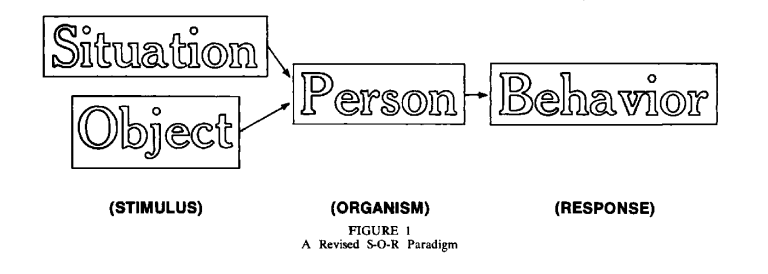
consumer behavior model

Factors that influence consumer behaviour

Consumer behaviour is not static. It changes over a period and depending on the nature of products. Societal trends change, but also does an individual over their lifetime. Equally, all consumers do not behave in the same manner. Some people spend outside their means, others are quite frugal even if they do not need to be.

For many individuals, knowledge of consumer behaviour enhances their ability to consume more wisely. Given the time and energy we devote to consuming, we should aim to be better at it and have at least a basic understanding of how marketers try and influence our behaviour.


“Most of us spend more time buying and consuming than we do working or sleeping. We consume products such as cars and fuel, services such as haircuts and home repairs, and entertainment such as television and concerts.” (Hawkins & Mothersbaugh, 2010)


Some of the factors influencing consumer behaviour are:

  • Marketing factors such as product design, pricing, promotion, packaging, positioning and distribution
  • Personal factors such as age, gender, education, and upbringing
  • Psychological factors such as buying motives, perceptions and attitudes.
  • Situational factors such as physical surroundings, social surroundings and time factor
  • Social factors such as social status, reference groups, social media and family
  • Cultural factors such as religion and ethnicity
  • Lifestyle factors such as status, income and identity
  • Geographical factors such as region, country and urban or rural.

Indian student consumers

In a household, the whole family have influence and may become involved at various stages of the decision process, performing distinct roles.

For example, the mother is often the decision-maker, Dad the purchaser, but the children important influencers.

  • The Initiator -the person who proposes a brand (or product) for consideration (something in return)
  • The Influencer -someone who recommends a given brand
  • The Decider — the person who makes the ultimate purchase decision;
  • The Purchaser — the one who orders or physically buys it;
  • The User — the person who uses or consumes the product.

Some purchase decisions involve long, detailed processes that include extensive information search to select between competing alternatives. Other purchase decisions, such as impulse buys or habitual purchases, are made instantaneously with little or no investment of time or effort in information search.

All of this illustrates the many complexities of understanding consumer behaviour.


Why consumer behaviour is important to marketers

One of their biggest challenges for businesses is to stay relevant to their target market. We must ask questions of our customers such as:

Why do people buy and use certain products?

What do they buy, when do they buy it and how often?

What are their likes, dislikes and expectations?

Why do they decide to buy one product and not another?

Do consumers behave differently individually and in groups?

Consumer behaviour gives us a better understanding of what motivates consumers to make purchases, and the benefits most valued by them. Knowing what consumers value most will improve the decision-making of businesses when creating more effective marketing campaigns. Ideally to sell more! Marketing needs to be strategic to be at its most effective.


“Marketers spend billions of dollars attempting to influence what, when, and how you and I consume. Marketers not only spend billions attempting to influence our behaviour but also spend hundreds of millions of dollars studying our behaviour.” (Hawkins & Mothersbaugh, 2010)

For example, Procter & Gamble adding the word “repeat” to the instructions of their shampoo in the 1980s is a part of marketing folk law — not because it was required, but because it sold more shampoo.

Not only is consumer behaviour relevant to marketing strategy, but it is also important to research and development, management, sales and advertising.

Remember, marketing is not just advertising. It starts with marketing research — which helps us understand consumer behaviour in our market better, which then influences the product or service itself. We want to make it fit the needs of our target market as closely as possible, as it becomes easier to sell.

However, it is not an exact science. Consumer behaviour is difficult to predict. Applying the principals learnt from consumer behaviour knowledge requires human judgment, therefore is not an objective fixed set of rules.

Marketers must have a good understanding of consumer behaviour. The best way to do this is by using market research to study a range of factors that influence their target customers. Customer relationship management (CRM) statistics are an asset for the analysis of customer behaviour.

Consumption is the ultimate goal for marketers, referred to as a behavioural response. But marketing also aims to elicit an emotional (affective) responses, as well as a mental (or cognitive) responses, influencing a consumer’s thought processes. These are often antecedents for consumption.


“Consumer behaviour is of most importance to marketers in business studies as the main aim is to create and retain customers” (Kumar, 2004).

The benefit of understanding consumer behaviour

Understanding consumer behaviour habits of the target market enables marketers to take appropriate marketing decisions concerning the following factors:

  • Product design — If a company fails to understand the reaction of a consumer towards a product, there are high chances of product failure.
  • Pricing — what price is the target market most likely to purchase at? Is this profitable?
  • Promotion — where is the best place to reach the target market? Facebook? They might spend a lot of time reading car magazines. That would be a good place to put an ad.
  • Targeting — a group of consumers with the same or similar behaviour. Each group of consumers are different, their needs and wants different from other groups. Consumer differentiation will help to tailor your strategies to the needs of varying customer groups.
  • Packaging — what type and style of packaging will be most attractive to customers? Does it matter?
  • Positioning — communicating a brand’s point of difference compared to its competitors, to the target market.
  • Branding — monitoring other brands in the customer’s consideration set to optimise planning.
  • Place of distribution — what location or type of store to sell a product or service?
  • Customer retention — retaining customers is cheaper than attracting new ones, so understanding what customers want is key to maintaining their loyalty.
  • Predicting changing trends and behaviours — consumer behaviour changes, especially with fast-evolving technology. A consumer behaviour analysis will indicate a shifting trend so marketing efforts can be aligned accordingly.
  • Innovating new products and staying relevant — many new products and services end up in failure. It can range from 33% to 90% based on the industry. Understanding customers helps businesses to design offerings that will be consumed.


Buyer decision process

The buyer decision process (or customer buying process) helps marketers to better understand consumer decision-making and how the journey from knowing about a product to making the purchase decision is completed.

The process consists of 5 distinct stages: problem or need recognition, information search, evaluation of alternatives, purchase, and post-purchase behaviour/evaluation.
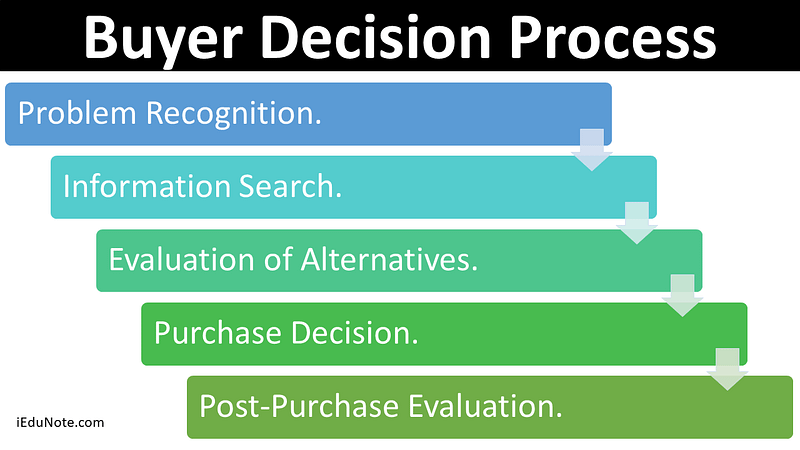
Buyer decision process

Problem recognition

The buyer decision process begins with the problem recognition stage, occurring when the consumer identifies a need or want. The strength of the need drives the decision process and the consumer decides they need a product or service to satisfy this desire. Triggers of problem recognition include:

• Out-of-Stock/Natural Depletion — e.g. when you run out of toilet paper

• Regular purchase — e.g. purchasing a bottle of wine each week with the groceries

• Dissatisfaction — e.g. not happy with their current internet service provider and change to a new one.

• New needs/wants — as a family gets bigger, they purchase a bigger vehicle

• Related product — purchasing on product triggers need for accessories, spare parts or complementary products such as purchasing the latest X-Box gaming console and upgrading the TV, buying games to go with it, and extra controllers.

• Marketing induced — advertising triggers the recognition of a problem or needs that consumers did not realise they had. E.g., my internet IS slow. Yes, I do need faster internet!


Information search

The information search phase aims to identify a list of options representing realistic buying options. Consumers search their internal memory and use external sources for information about options that will potentially satisfy their need. In an internal search, the consumer scans their memory for suitable brands.

The evoked set are preferred brands, typically to around 3- 5 alternatives.

Businesses use marketing to increase brand awareness and the likelihood that their brand becomes a part of their target market’s evoked set. An understanding of their target market’s behaviours means they are can be more objective with putting marketing in places where they are more likely to see it and hopefully remember it.

External sources of search include the internet such as social media or product comparison websites, shopping around and talking to friends/family.

Information search and the next phase of evaluation can occur throughout the entire decision process.


Evaluation of alternatives

Consumers engage in a series of rational evaluations of the alternative options available to them. During this evaluation phase, consumers consider a small number of options that could be viable choices.

Being aware a brand exists does not necessarily mean it will be considered as a potential purchase. Realistic purchase options are known as the consideration set, each consumer will have distinctive characteristics they are looking for, searching for the best value and the best fit for their needs.

Different evaluation criteria are used depending on each unique buying situation, consumers assessing and then ranking the relative merits of different options available. Consumers with low knowledge about a product category tend to evaluate a brand based on functional characteristics.

Towards the end of the evaluation stage, consumers form a purchase intention.


Purchase decision

Once the alternatives have been evaluated, the decision is made by the consumer and they proceed through to the actual purchase. To increase the chances of customers purchasing with them, businesses use techniques to improve conversion rates, such as a strong call-to-action in advertising. “Buy now while stocks last!”. This encourages an immediate sale.

Some customers might know all along who they want to purchase with. Others might spend an extended period researching information about the different options available before they make their decision.


Post-purchase evaluation

This process is not complete until after the consumption of the product or service and the consumer engages in a post-purchase evaluation. Consumers compare their experience with the product or service and the perceived value with their expectations that were formed during information search and evaluation. This is called expectancy disconfirmation and is a strong driver of satisfaction.

Factors evaluated include price, functionality, and quality.

A consumer’s next purchase decision for that good or service is influenced by this evaluation. If consumers feel some uncertainty or regret towards their choice, they are unlikely to choose that brand again.


Consumer motivations

An underlying motivation drives a consumer to act and purchase. These motivations fit under the problem recognition phase discussed above.

This motivation can be either positive or negative. A positive motivation could be a pleasure — having dinner a nice restaurant or a night on the town.

A negative motivation could be the avoidance of unpleasantness such as purchasing toothpaste to minimise tooth decay, getting toothaches and having to visit a dentist.

Abraham Maslow’s well-known Hierarchy of needs model is one way to help understand the motivation.
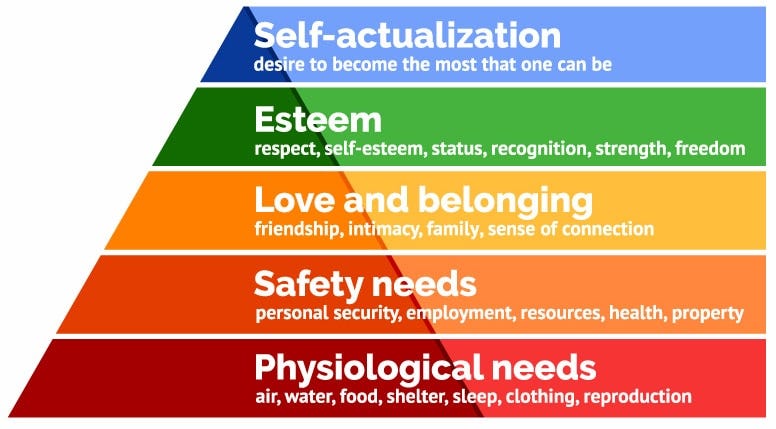
Maslow's hiararchy of needs

Although not a marketing model, it is commonly applied across the social sciences. This model can help marketers to understand the unique needs and levels of motivations of customers.

It contains five levels of needs, organised accordingly to the level of importance. Lower order needs are most important, consumers typically using most of their time, energy and finances attempting to satisfy these.

Only then can they move onto the higher-order needs and they become meaningful.

  • Physiological is a human’s basic levels of needs such as food, water and sleep. We need these to survive.
  • Safety is the need for physical safety, shelter and security. Purchasing a house or paying rent.
  • Belonging the need for love, friendship and a desire for group acceptance. A man buys his new wife an expensive ring when they get married.
  • Esteem is the need for status, recognition and self-respect. Purchasing the latest BMW car or a designer handbag and shoes.
  • Self-actualisation is the desire for self-fulfilment such as personal growth or artistic expression. You might over to the other side of the world to see a motivational speaker such as Tony Robbins at a conference.

How to Optimize Google My Business to Improve Your Local Search Ranking

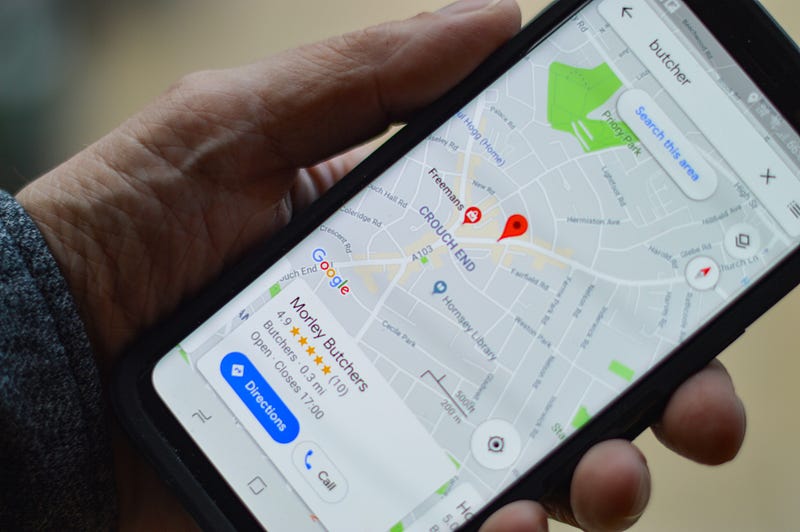
Google maps - optimise your google my business profile

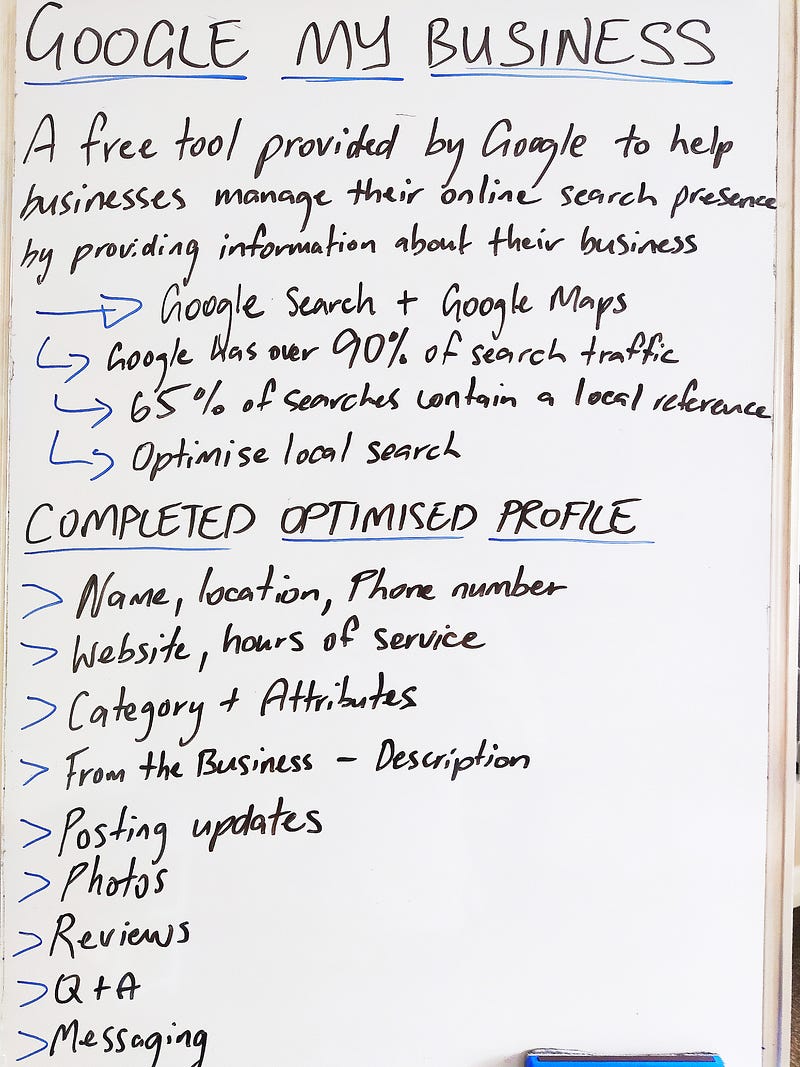
With over 90% of the search engine market, it is important for businesses that they are easily found through Google searches.

Google has made it easier for businesses to rank on their search engine by introducing Google My Business. Optimising your Google My Business profile will improve your rankings through Google search and maps

This article explores how businesses can optimise their Google My Business profiles to outrank their competitors and be the first business customers find on Google maps or search.

“Google owns 92.18% of the search engine market share.” (Mohsin, 2020).


What is Google My Business?

65 per cent of all Google searches contain a local reference, which means it is especially important businesses can optimise their local search engine optimisation (SEO).

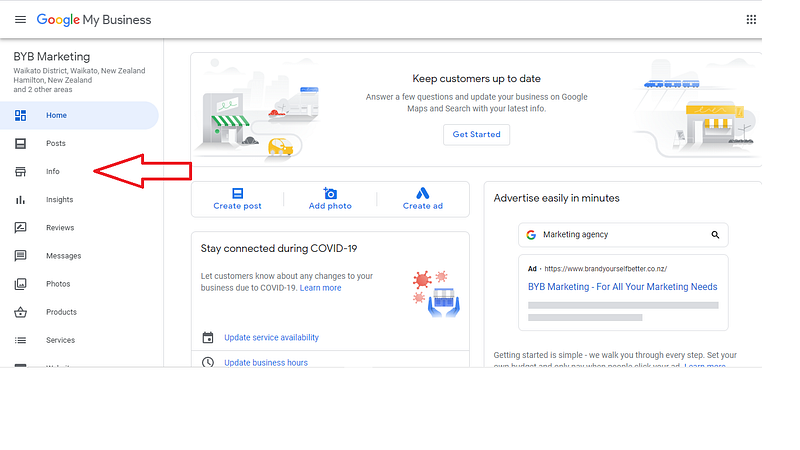
Google My Business a free tool that helps business owners to better manage their online presence by providing information about their business that is shown in Google search results. This includes information such as their location, contact information, photos, customer reviews and products/services they provide.

For a business to create a Google My Business account, they first need a Google account.

Providing as much information as possible to help their Google ranking for relevant search queries. The more Google knows, the easier it is for them to show it to the right people. A businesses’ online identity is therefore significantly improved as part of a location-based marketing strategy. Once a Google My Business listing is created, this generates a Google Maps location which synchronises with Google Search to enhance searchability.

“Google offers several discrete approaches for local SEO strategy such as listing a business through Google My Business.” (Keegan & Taylor, 2019)

Google My Business complements a businesses’ website by giving them an extra marketing presence through a Google listing, which can drive more traffic to the website or convert people into customers without them even needing to visit the website. It provides a snapshot of your business.


The benefits of Google My Business

Google My Business profiles enable potential customers to find, learn about, and engage with businesses. Users can list all their business attributes to highlight what they do and their unique and desirable benefits, including information useful to consumers such as whether there is Wi-Fi or disability access.

The key benefit of creating a Google My Business profile is to capture more customers who search for a service like they offer on Google search or maps. 

Similarly, to social media or a website, it is another marketing and lead generation tool.

“Google Maps empowers business owners to create and maintain listings that appear in Google Maps and Search. First, a business owner uses the Google My Business website to register a new listing.” (Huang, Grundman, Thomas, Kumar, Bursztein, Levchenko, & Snoeren, 2017)

A businesses’ local search ranking is enhanced through posting regular content and having relevant and useful information to the My Business account. Google’s algorithm considers activity and quality of information as well as proximity and relevance to the search query. A higher ranking in search results means higher visibility and more likelihood of customers finding them.

More customers are also converted, as all the pieces of information useful to potential customers is provided. Theoretically! But only if their Google My Business profile is optimised. This can lead to customers calling, direct messaging, visiting the website, asking questions, requesting a quote or booking an appointment/reservation — all through the My Business profile!

“The strategy represents the ultimate in genuine pay for performance marketing and, as a result, represents one of the most promising long-term marketing strategies for e-commerce.” (Duffy, 2005).


Google My Business Strategy

The first step is having a Google My Business profile. But the challenging work is not all done! The profile must be optimised and there must be a strategy, just like with any other marketing tool.

There is actually one step before the first step (I know, makes no sense) — do a Google search to make sure a listing does not already exist. If one does, from a previous owner or third-party data source, Google Maps allows the new operator to claim ownership.

Next, verify the My Business listing. Find out how to do that here. This is critical for the listing’s visibility and performance — Google will not display the business or its edits until ownership is verified.


Completed profile

Having as much useful information about your business as possible through having a completed profile will help boost the ranking of your business page in local search results and increase the chance of potential customers engaging and acting.

The sections of a Google My Business profile to complete are:

Name, location and phone number

The business name should be identical to what is used on store signage and other marketing. Make sense, right? The location obviously needs to match your physical location and any other listings of the business online.

Since many businesses operate as service-area businesses and do not have a physical brick-and-mortar location, the location of the business can be switched off if it is a home office for example that does not take appointments. Adding a service area means the business will still show up in relevant local searches.

With such a high number of people making search queries on Google Maps via mobile phones, it is important to list the business phone number so customers can contact the business to make bookings or ask questions. Make sure there is someone who answers that phone number promptly and returns calls if they are missed.

Optimise your Google my business

Website

Make sure the website (if there is one, which there should be) is included. One of the key benefits of a My Business profile is the ability to send more traffic to the website to convert more customers. It is not often people are going to decide to purchase from a My Business profile unless they are looking for something on the go such as a café or gas station nearby.


Hours

Add the hours that the business is physically open or taking appointments and update them if they change. Such as with Covid-19, if the business is forced to close, a My Business profile should reflect this. The profile can also be customised for holidays and other special events. If customers know you are open, it will encourage them to visit your physical store.


Category and Attributes

Choosing the right category for your business to help the most appropriate customers find you is key. Over 80% of My Business views are through discovery searches for a product/service category rather than searching for a business name.

After choosing a primary category for your business, you can choose secondary categories. Make sure they are relevant, so the right people are finding your business who need a product or service you offer.

When you choose your categories, Google will give you a list of attributes you can check off to further describe your business.

Many attribute options are available, you can view them here. Note that currently, this option has been deactivated due to Covid-19 and there are only a small number of available options.


Add products and services

By adding all your products and services to your profile, this will tell potential customers exactly what you do and what your specialities are. It also adds relevant keyword terms to your profile to improve your ranking on Google searches. Include the product or service name, description, and price if applicable. Link these products/services to be purchased at the website’s store if you have one.


From the business description

The description of your business is included in the ‘From the business’ section. Try and use all the available 750 characters, with key information in the first 250 characters. 

Use content you have already created for your social media accounts or from the About Us page on your website (assuming you have one).

Optimise your Google my business

You can use this to talk about how you provide value to customers, what makes you unique and how you are different from competitors. This is called positioning.

Just like traditional website SEO, using keywords in the business description will increase the chances of customers finding your profile.


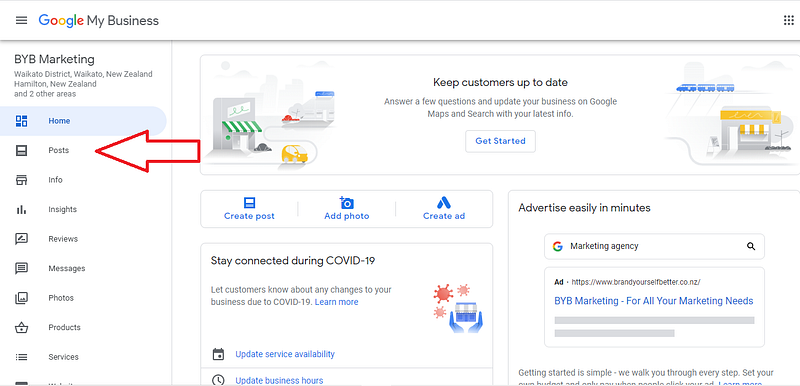
Posting regularly with updates and photos

A My Business profile can be used to post about a variety of things such as business announcements, offers, and events. Posting content on your My Business page is like blogging on your website for SEO or posting on social media. 

The aim is to provide as much quality and detailed information about your business as possible, to try and connect with searchers.

Posting regularly will increase your Google ranking, and increase the number of actions taken by consumers who find your profile. Some posts will be viewable on Google search or Maps if relevant keywords are triggered, making it valuable marketing direct to customers.

Posts expire every seven days, so it is important to be consistent to keep your presence fresh on Google. Posts can be made on-the-go via the app from a phone or tablet, or via a computer.

Include links and other calls to action, such as getting visitors to visit your website, follow you on social media or sign up to mailing lists for example.

Because of the little situation going on around the world currently forcing many businesses to close their doors, there is now a specific option to add COVID-19 updates.

“Adding links to Google Business profile, as well as relevant photos and images encourage Internet users to take targeted actions on the retailer’s website. Targeted actions of Internet users, including the number of routes and the quantity of calls are directly depend on the number of photos uploaded by retailers.” (Murphy, 2019).


Photos

Adding photos regularly will help a My Business page to perform better by positively impacts your ranking.

According to Google, businesses with photos on their My Business profile receive 42% more requests for driving directions via Google Maps and 35% more clicks through to their websites than those without any. One of your images may be used by Google to display in local search results if it matches a keyword term searched for.

Each week, I’ll add a post with a link to my latest blog and an image such as this one below.

Google my business tips

Try to add a new photo once a week. Use photos to summarise the business and what it can do for its customers. Create an identity.

Encourage customers to leave photos as that will improve your ranking. If you are a restaurant or café, you could offer a free voucher for ‘photo of the week/month’ for example to incentivise people to leave a great photo on your profile. The photos I have added to My Business profiles via Google maps has now surpassed over 1 million views which prove — people are looking!

If you are a restaurant, add photos of food items on your menu, or satisfied customers. 

Food photo

If you are a consultant, add some photos of you in your work element. Other examples of photos you could share are interior and exterior views (e.g. parking), or team photos.

Ensure your photos are of high quality. If your photos are of low quality, that does not leave a great impression with customers. Follow Google’s best practice for images: JPG or PNG formats, sized between 10KB and 5MB, minimum resolution of 720px height and width. 

Make sure photos are in focus, well-lit, without editing and excessive use of filters. Professional and keep it as real as possible!

Upload your logo for your profile thumbnail and one that highlights your brand as the cover photo. Edit to fit a 16:9 aspect ratio.

You can also add video, so include a video of you introducing yourself and how you help people or maybe a video snapshot of you or the team on the job.

“Internet users’ reviews/comments in Google affect the retailer’s website position in the local search results.” (Natorina, 2020).


Customer Reviews

Positive reviews have a positive effect on potential customers who are researching your business. They also increase your businesses’ visibility in search results, so try and encourage customers to make reviews.

Reviews influence consumer decision-making, so reviews are a key ranking factor in the My Business algorithm. On Google searches, often the first results are those with multiple reviews and a high rating, and search results may also a display a review for a My Business Profile if it uses certain keywords people are searching for.

Encourage customers to leave feedback by creating a link they can click to write a review. Around 60% of people will leave a review if requested, so ask! It could be in a follow-up email. Start with your loyal customers.

Reviews help other customers decide about a purchase, so people often do not mind leaving one (like I leave photos of every restaurant I eat at on Google Maps — which has now surpassed).

Make sure you monitor and respond to reviews. This feedback will encourage additional customers to leave one as it illustrates that your business values its customers and their feedback.


Questions and answers (Q&A)

Set up alerts to monitor your Q&A, as anybody can ask, and anyone can answer. Monitoring this ensures you maintain accurate information.

Questions and answers that contain keywords can help improve you are My Business profile’s ranking for that keyword. Creating your own Q&A is therefore an important optimisation tool. Make a list of the businesses most frequently asked questions and then ask, answer, and upvote answers on your personal profile.


Messaging

Over 80 percent of people use their phone or tablet for local search, so being able to conveniently message from their device to your My Business profile is a fantastic opportunity.

Businesses can only reply to customers through Google My Business app. Messaging must be enabled via settings on your Google My Business dashboard and once enabled, a button appears on your profile for direct messaging from customers. To make sure you do not miss an opportunity, set up alerts for messages.

Businesses can set up customised automated responses to messages. This will improve your responsiveness which will help keep message response time under 24 hours and make sure you are not penalised from slow response times.


Other functionality

Google My Business is continuously being updated with more tools for businesses.

Marketing Kits are now available with a recent update, which you can use to share on other forms of social media to bring traffic to your page. One of these is to encourage reviews. On the topic of reviews, make sure you have some! Try to encourage satisfied customers to write you a glowing review. This will increase your credibility with anyone who finds you.

Google reserve is another useful function, allowing people to make reservations or book a meeting time with you via integration of a calendar application. This syncs with your calendar with notifications. This is a very convenient feature to show people what time slots are available to book without having to go backwards and forwards.

You can now add a short name to your Google My Business account, which makes your business easier to find through a map search, and URL’s are not as messy if you share the link.


Thanks for reading this article, I hope you enjoyed the content and learnt something you can apply to your businesses’ Google My Business to improve your search results.

This content was originally posted on the BYB Marketing Blog - https://brandyourselfbetter.com/blog/post/153562/how-to-use-google-my-business-to-attract-more-customers-through-search

How to Use Affiliate Marketing to Increase Sales or to Create an Income

 Affiliate Marketing

Affiliate Marketers act like a salesforce for a business. 

Marketing can be a costly investment for businesses. Big investments into advertising can be an elevated risk if you do not know the return.

Would it not be great if someone else better at marketing took up that risk and funded the marketing?

You could pay them a small commission fee for each sale. It may sound too good to be true, but it is not. This is called affiliate marketing.

This article explores affiliate marketing, how it works and the benefit it provides to both the seller and the affiliate marketer.


What is Affiliate Marketing?

Affiliate marketing is an endorsement-based advertising strategy, that earns promoters (affiliate) money when internet users act on that marketing.

Based on a model of revenue sharing, vendors (merchant) offer a financial incentive such as a commission, through an affiliate program. Affiliates earn a piece of the profit for each sale through creating marketing content to try redirect customers through a customer URL to the merchant’s product.

Affiliates can make money promoting products and services and make an income, without actually having any of their own.

For the merchant, it employs the help of affiliate to invest time and money into marketing your products or services. to expand their reach on the target (online) audience.

According to Mediakix, affiliate marketing spending increases every year in the USA, with around a 10 percent yearly increase in affiliate marketing spending.

Affiliate marketing refers to an online relationship between the so-called merchant and the affiliate, where the merchant pays the affiliate a commission to redirect potential consumers to the merchant’s website (Libai et al., 2003).


How Affiliate Marketing works

Affiliate marketing involves four different parties:

• The merchant,

• The affiliate,

• The affiliate marketing network, and

• The customer.

From a marketing point of view, there are two components: the merchant who has produced the product or service for sale and the affiliate marketer who promotes it.

With a traditional business model, the seller bears the risk that profit exceeds the overall marketing costs. However, an affiliate takes on the promotion efforts and then earns a piece of the profit from each sale they make. This is usually via a predefined commission, and the sales are tracked via personalised affiliate links.

For the affiliate, they just need to be good at marketing. It works similarly to somebody employed in sales on commission. Such as real estate agents. This incentivises their performance. This is a huge benefit to the merchant having a purely commissioned sales force and predictable marketing costs.

In the other hand, affiliates can create a revenue stream without investing in inventory or infrastructure.

“The key to successful affiliate marketing lies in the construction of a win-win relationship between the advertiser and the affiliate.” (Duffy, 2005)
How Affiliate marketing works
Imagine via JustLearnWP.com

1. The merchant

The merchant is also known as the seller, vendor, or retailer. They are the party who created the product to market — it could be a physical object or a service. They could be a sole trader or a large corporation. Once the product is created, they are not required to be actively involved in marketing. They have others do the promotion, in exchange for a commission on sales.


2. The affiliate

Also known as the content creator or the publisher, the affiliates try to create appealing marketing to attract customers to the merchant’s website. They create content for the products to share on social media, blogs, and websites.

Affiliates often already have an audience or following on social media, so they choose products in their niche that meet the needs of their audience. For example, If I had built an audience posting content about fitness and health, I would not become an affiliate marketer for a candy company.

“There are thousands of affiliates, working for many different advertisers simultaneously, driving incremental traffic and sales in exchange for commission.” (Duffy, 2005)


3. The network

Many merchant/affiliate relationships are managed through affiliate marketing networks. There are two key relationships: The first is with the affiliate and the second is with the merchant. The network works as an intermediary between the merchant and the affiliate.

Affiliate marketing networks such as Linkshare, Commission Junction, and Clickbank facilitate the tracking of sales transactions, payments and product delivery. Their technology tracks all the activities and manages the commissions and the issuance of payments to affiliates.

These networks also serve as a database of products, out of which the affiliate can choose products or services to promote. The network facilitates the management of applicants, making the process of participation easy for both the merchant and the affiliate.

Amazon also has an affiliate network (Amazon Associates Affiliates Program), to help promote consumer products such as books and toys, sold on their platform.


4. The consumer

The consumer (or customer) make this relationship work. If they do not purchase, there is no revenue and the affiliate will not receive a commission. When consumers buy the product, the seller and the affiliate share in the profits.

There will not be a higher price for consumers purchasing through an affiliate, as the cost of the affiliate network is typically included in the price.


Email Marketing: A Tool to Strengthen Relationships, Improve Brand Awareness and Increase Sales

 Email marketing - BYB Marketing blog

Email Marketing has become one of the most popular and effective marketing method and relationship management tool used by businesses since it rose quickly into prominence with the internet about 25 years ago. 

Pretty quickly, most people had a personal email address and were checking their email, making it a powerful tool to communicate with people.

This article explores the use of email as a marketing tactic.


What is Email Marketing?

Short for electronic mail, email is the sending of messages to one or more recipients, distributed by electronic means via the internet. Email marketing is a digital marketing tool that uses email to develop relationships with prospective customers and maintain and strengthen relationships with current customers. The end goal is to influence these people to make a purchase and be ongoing customers.

“Companies often list email as one of their most powerful marketing channels. To this day, the size of your email list is a demonstration of your reach and thought leadership. However, your email marketing campaigns should be part of a holistic approach to educate your contacts about your company.” (Georgieva, 2012)

The popularity of email marketing has been a part of the ongoing trend away from a product-focused marketing strategy to a customer focus of customisation and relationship management, to satisfy the needs of each customer.

Email marketing has been growing since the mid-1990s and is a widely used marketing tool by the majority of B2B and B2C companies. In 2015, one study indicates that over 80% of firms use email as part of their marketing strategies (See Zhang, Kumar, & Cosguner, 2017).

The benefits of email marketing

Email is a powerful marketing tool, with several benefits for businesses using it to build customer relationships and increase sales. Using their database of email addresses, businesses can design email marketing campaigns, personalised for diverse groups of leads and customers. Some of the benefits of email marketing are:

• Brand awareness — keeps the brand top of mind and people informed about what you offer.

• Speed — a quick output and quick response for lead generation.

• Segmentation — allows you to selectively email members of your database depending on their behaviours.

• Cost-Effective — Low cost per contact for customer acquisition. A better return on investment many other forms of marketing.

• Targeted — you are sending relevant materials to your audience.

• Customer Dialogue — encourages a two-way dialogue with customers, where communication is one way with many other marketing methods.

• Trackable — Analytics allows you to track the performance of your emails.

• Conversion — turn prospects who are interested in your industry or your products/services into customers.

• CRM — customer relationship management helps maximise the lifetime value of customers by increasing customer retention and repeat purchases.

Objectives of email marketing

Email Newsletters are great not only for marketing to prospects but also for nurturing your existing customers. Some of the objectives of using email marketing are:

• Send recipients to other marketing content such as landing pages with exclusive offers, blog posts or other valuable content.

• Communicate with a community, customers, employees or other stakeholders to generate a reaction or a result.

• Inform the reader about a new offer or send them to a blog post.

• Maintain and develop long term relationships with current customers.

• Motivate customers to finish a purchase who have items in their shopping cart that was abandoned.

• Increase sales by converting more leads into customers and selling more to previous customers.


Analysing the results of your email marketing

One of the major benefits of email marketing is the ability to monitor subscriber engagement and interest.

It is a process of continual improvement — testing and tweaking your email content and database management. To analyse the performance of your email marketing, there are several key metrics to help measure the performance of each campaign against previous benchmarks.

For example, analysing the interaction that people have with your website after they click on a link, this can help you pinpoint how to improve the user experience on your website. Two different landing pages could be used to test which one receives better results.

• Open rate is the proportion of people opened the email. But this can be an inaccurate gauge as customers who are active in opening a firm’s emails may not be active in purchasing and vice versa. Some people are more responsive to emails. Some people like to browse. Other people may purchase but never open their emails. Therefore, it is important to track more factors than just your open rate, such as tracking your click-through rates and conversion rates.

• Bounce rate is the total emails sent that could not be delivered to the recipient’s inbox, If one particular campaign has a lower than average delivery rate (high bounce rate), examine the subject line and content of that message to check if there’s something that could have flagged it as spam.

• The list growth rate is how fast your email list is growing. This is calculated by subtracting opt-outs and hard bounces from the number of new email subscribers gained per month.

“Be clear to your target market about what they will get out of subscribing to your emails. Give them a clear description of what the value proposition is. For example, will your emails offer: (1) tips and tools on how to run their business more efficiently, (2) product updates from your company, or (3) special offers via email? Your audience will want to know “why” they should subscribe before they decide to clutter their inbox with even more emails.” (Georgieva, 2012)

• Unsubscribe rate is the proportion of people in your database who unsubscribe from receiving your emails. This is not always a reliable picture of the health of your email list, however, as many subscribers no longer want to receive emails will not bother to go through the formal unsubscribe process. They will just stop opening email messages and delete them instead.

• Click-Through Rate (CTR) is a foundation of email marketing analytics, as it indicates whether the message was relevant and the offer compelling enough to check out. This measure how many people click on the offer or other link in your email.

• Conversion rate is the proportion of people who clicked a link and completed the desired action, such as purchasing a product. This is also dependent on factors beyond the original email message, such as the quality of your landing page or the offer itself.

“Conversion rate is the ultimate measure of an email campaign’s effectiveness. The higher your conversion rate, the more relevant and compelling the offer was for your audience.” (Georgieva, 2012)

• Revenue per email measures the ROI of an email campaign, calculated by dividing the total revenue generated from the campaign by the number of emails sent. This is only relevant if you generate a lot of direct sales from email campaigns.


Spam

Because it is so cheap and accessible (anyone with an email address can send a mass-email), email is used as a tool to spread spam emails. Spam is unsolicited digital communication sent out in bulk to random email addresses without consent.

Spam has caused email marketing to leave a bad taste in the mouth for many people. We’ve probably all received an email or two from a Nigerian royal or long-lost family member promising us millions of dollars.

“Low production costs spur greater production, inducing entry to the industry by legitimate and not-so-legitimate marketers, which further increases the volume of email messages sent. As a result, consumers are awash in a sea of ads and information, some useful and some not.” (Pavlov, Melville & Plice, 2007)

The significant difference between spam and genuine email marketing is having an opt-in policy. If businesses keep rigorous with this, it means they are only emailing people who consented to receive them, and the business will not get any trouble. Most countries around the world now have anti-spam laws, so its best businesses are cautious with who goes into their emailing database.


Database management

A database can be powerful. But only if managed correctly.

A database should be continuously updated to make sure it stays relevant. If a user has been emailed 20 times and has never opened one of those emails, they probably should not be emailed once a week. You might email them once every 6 months or remove theirs completely. Your metrics will tell you who is no longer engaging.

Database members should be categorised so you can best meet their needs. Group them based on some common characteristics and behaviours.

Continually work to add new contacts to your email database, as the natural churn rate of an email list can be 25% or even more per year. Make sure you are gaining new relevant people on your database by providing a benefit to them by being on your mailing list (exclusive offers, gifts, industry updates etc).

Software such as Mailchimp or Constant Contact will help you manage your database as well as setting up your email marketing. Some systems will also you to set up your whole sales funnel with landing pages for lead generation, as well as for analytics and reporting to allow you to monitor the performance of your email marketing campaigns.


Email marketing strategy

Email marketing is about more than sending your latest offer out to your database once a month. Businesses must think of it like designing marketing communication campaigns — because they are! The objectives of email marketing should be clearly defined, who the target recipients are, the content must be developed to fit the purpose. Make sure it provides value!

The email campaign should be tested on a small sample, tweaked and then sent to the segmented members of the database. The results should then be measured to see what you can do better next time.

As well as immediate results, businesses should consider how their strategy will affect their future profitability. If your business sets up lead nurturing, emails are sent out automatically to new leads, according to the schedule you set up. lead nurturing is all about understanding the nuances of your leads’ timing and needs- tightly connected series of emails with a coherent purpose and full of useful content.

Tying a series of emails to a specific activity such as joining a mailing list, and then sending them an automated series of emails to learn more about their behaviour and potentially influence a purchase. The lead is qualified over a period with automation, saving a business time and energy.

Leads should be segmented into groups of buyers as you learn more about them to better meet their needs and provide them value. Targeted marketing has a far better return on investment than mass marketing — so do not be tempted to send the same email to all your contacts!

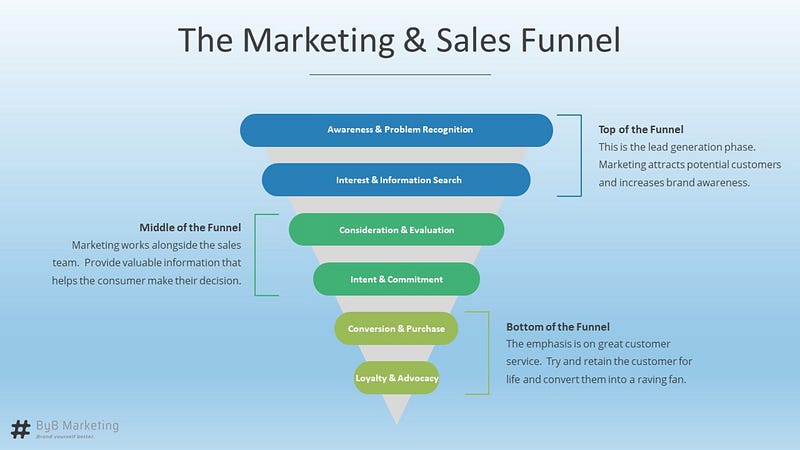
Email is a vital component of a marketing and sales funnel — where the objective is to turn as many leads into sales as possible. But email should be part of an integrated marketing approach — email does not work in isolation.

Marketing and sales funnel - BYB Marketing

Your marketing emails need to be complemented by other efforts, such as search engine optimisation and content marketing on social media. If you blog, send people to your blog via your email and encourage people to sign up to your newsletter at the end of blog posts.  

Your marketing strategy should outline how your individual marketing efforts complement each other.


Email content

What goes into an email? Of course, this will vary depending on the firm and its objectives. But there are some general rules when it comes to the content of email marketing.

The email title must convince the recipient to open the email. This is key. It must be related to the content of the email (stay away from clickbait), but at the same time be compelling enough that the recipient is curious enough to open the email. Because many people check their email via smartphones, long titles will not be displayed in full. Aim for 5 to 9 words.

“In the Subject: line Each word makes a critical difference in whether your message is opened at all. Once its opened, you only have seconds to capture the readers imagination. You have to grab their attention and keep it.” (Sterne, & Priore, 2000)

Your content must be brief and relevant for the recipient. Grab their attention right away, by containing the most information in the first paragraph. Try and keep it the length to under 100 words.

Use a personalized greeting at the beginning of the email and a clear call-to-action at the end of the email. Include a couple of hyperlinks to other useful content such as a blog or video on your website, or a custom landing page that contains more information (find out more, or to order).

An option to unsubscribe must be available. Email marketing software with automatically using an unsubscribe option.

The layout and design of email marketing are important — especially if it is a newsletter. But you do not want to go over the top trying to make it aesthetic, simple can be beautiful. Try to use a maximum of two colours.

Include one or two images in the email, one of those can be the company logo for brand awareness. Make sure the images have alt text for those not viewing the email in HTML (quite often images are turned off automatically).

Your contact information as well as social-following buttons for your social media accounts should be at the bottom of the email.


How many emails should you send?

The right number of emails to send is difficult to pinpoint, as it will depend on your customers. If you are emailing qualified leads, it might be once or twice a week. Other customers, once a month or once a quarter might work better. It will depend on the engagement level of your audience.

“Sending the right number of emails is critical for the firm’s profitability, especially since most customers tend to complain about the large number of emails sent by firms.” (Zhang, Kumar, & Cosguner, 2017)

Many companies start to send fewer emails to keep subscribers. However, the frequency of emailing does not necessarily negatively impact subscriber retention. There can be email overload, for sure. But also, ask yourself if you are emailing the right people with the right message.


Using Public Relations to Influence Your Audience's Perceptions


The use of the media to influence the perceptions of vast audiences has long been used by governments and corporations.

This is called public relations (PR), where the media is used as a gatekeeper for releasing a story to the wider public.

However, over the past 20 years or so in the age of the internet and social media, the average business or individual now has access to PR without needing a connection in the media or a big budget to pay a PR company to gain exposure.

This blog explores the use of public relations as a part of a marketing strategy.


What are Public Relations?

Public relations (PR) is the manages the release and spread of publicity from a firm or individual to the public to influence their opinions, attitudes or behaviours. PR aims to build and maintain relationships with stakeholders and those who influence the target audience, to enhance the public reputation.

Public relations professionals are storytellers and image shapers who create a positive narrative for their clients by working closely with journalists and other media. This allows them to manage and generate positive publicity for their clients to enhance their reputations. 

Public relations are controlled internally as a strategy, but publicity is controlled and distributed externally.

“(Public Relations) helps establish and maintain mutual lines of communication, understanding, acceptance and cooperation between an organisation and its publics; involves the management of problems and issues; helps management keep abreast of and effectively utilise change.” (Harlow, 1976)

PR has been a profession since the dawn of the 20th century, but the roots of the idea of widely influencing public opinion and action can be found and during the movement to abolish slavery in England 100 years before that. 

Because of these beginnings, one of the underlying assumptions of PR is that it should be socially responsible and go beyond organisational goals to play a constructive role in society.

Depending on the situation, PR will have a particular tone — whether it is showing empathy and understanding, storytelling and creativity, or more persuasive messaging. Messages are tailored to the relevant target audience/s.

PR applies to all organisations from small businesses to corporations to governments or activists. They could be from the private, public or third sector. The third sector is an umbrella term for voluntary and community organisations such as social enterprises.

Some of the tools used for PR are:

  • Owned media (e.g. website)
  • Earned media (e.g. newspapers)
  • Shared media (e.g. social networks)
  • Sponsorships and fundraising
  • Face-to-face
  • Photography
  • Moving images (video)
  • Print (e.g. newsletters)
  • Events (e.g. conferences)
  • Public Speaking

Publics

Public Relations is a critical link to manage communications between a firm or person and its publics. ‘Publics’ is any group of people or stakeholders who have a common interest in a particular subject.

Some of those publics are:

  • Employees (and potential)
  • Suppliers (and potential)
  • Partners
  • Distributors (and potential)
  • Investors
  • Donors
  • Political audiences, decision-makers and other opinion formers
  • Media and other commentators
  • Social media influencers
  • Customers
Newspaper article - Public relations

Objectives of Public Relations

Public relations can be used to protect, enhance or build reputations. 

The “management of communications between an organisation and its publics.” (Grunig, 2013)

The goal is for firms or individuals to establish, build, nurture and maintain trusted relationships with their target audience.

Communication tactics are planned and executed to influence peoples’ attitudes and behaviours, ultimately to maintain or foster a positive opinion of the firm or person.

Much like marketing, PR has several individual activities and can have distinct goals. The intended audience could be prospective customers, investors, partners, employees, or just the general public.

Some of the objectives of PR are:

  • Increase brand awareness: inform the public of the policies, procedures and interests of a firm, promote an idea, or recognise accomplishments.
  • Crisis communication: managing a company’s reputation when negative news is public, formulate a response and ease the damage.
  • Internal communications: communicating within the company itself, employee relations.
  • Government relations & lobbying: public affairs is engaging and interacting with the government to influence public policy.
  • Media relations: building and maintaining close relationships with the news media.
  • Social Media/Community Marketing: leveraging social media marketing to distribute messages to desired target audiences.

Public relations strategy

PR is a strategic communication process, and a strategy often begins with an idea to create a story that would be of interest to the general public and will leave a positive impression for the company or individual. 

A second way could be to follow up with a comment on the latest news or a current event connected to the firm/person or the industry they are in.

“Public Relations is a strategic communications process that builds mutually beneficial relationships between organisations and their publics” (Grunig & Hunt, 1984)

A PR message might be prompted by a piece of news, but a PR strategy is deliberate and should begin with an analysis of the organisation to pinpoint strengths or opportunities to guide the positioning of the strategy and messaging.

A PR strategy should be actively managed and grounded in research, to gain an understanding of the environment that shapes decision-making. Messages that are consistent with organisational values and goals, but also consistent with public values and goals is key.

The interests and concerns of the company’s stakeholders should be acknowledged in the strategy — listening to their concerns to build a mutually beneficial relationship. To avoid having contradictory or confusing messages, there must be consistency in the overall message and theme.

Several distinct but complementary messages are created to target different audiences. For example, a charity event. One message would be crafted towards the general public, and one message crafted towards corporate sponsors. 

There’s the same goal of a successful event that raises lots of money, but there are different value propositions for somebody paying to attend the event and enjoy a night for a good cause, to a corporation wanting to increase their brand awareness.

“The overall planning, execution and evaluation of an organisation’s communication with both external and internal publics — groups that affect the ability of an organisation to meet its goals.” (Grunig, 2013)

PR activities

There are several activities and tools that businesses can use for PR. There used to be a reliance on media companies and PR firms to use media such as TV and magazines to reach a certain target audience. The internet has created several opportunities for businesses to do their own PR.

Firms or individuals can produce and share content via social media to respond to a circumstance or to enhance brand awareness with their target audience.

Some of the individual PR activities that businesses can use include:

  • Writing and distributing press releases
  • Managing internal communications
  • Arranging interviews for company spokespeople
  • Holding press conferences and media interviews
  • Speechwriting
  • Writing and sharing story pitches directly to journalists
  • Hosting or sponsoring events
  • Personal networking
  • Writing blogs and newsletters
  • Social media promotions
Speech writing - Public relations


Is public relations marketing?

Public relations have become a component of marketing over the past 20 years or so since social media started being used for press releases. 

The fragmentation of mass media has dissolved a lot of the barriers public relations had for small businesses and PR has shifted into more interpersonal channels of communication. 

PR can be used for market positioning and branding, aligning it with marketing goals.

The fundamental idea behind PR is for businesses to gain exposure to their target audiences using topics of public interest, this coverage received for free. Referred to as ‘earned media’, this is what makes public relations different from advertising. 

However, social media can blur those lines — a boosted post for example where a normal social media post becomes a paid ad.

Think of PR as the generation an article featuring a client, rather than having a paid ad next to the article. This positive story enhances reputation as it is more credible coming from a third party.

Some of the main differences between advertising and public relations are:

  • Paid vs Earned
  • Builds exposure vs builds trust
  • Visual vs language
  • Creative control vs Media control
  • The audience is sceptical vs media gives third party validation

Thank you for reading.

I hope you enjoyed this blog about public relations and how the media can be used as a tool to spread a positive message about a business or person, to influence public perceptions.

Dan.

This blog was originally posted on the BYB Marketing blog.