Showing posts with label target market. Show all posts

Consumer Behaviour: Understanding the Psychology Behind Consumption

Consumer behavior - shopping bags


Each business should have a pretty good understanding of our target consumers, how they think, and the reasons for how they behave.

If not, it is very difficult to give them exactly they want.

The study of consumer behaviour improves decision-making a some of the guesswork is removed.

This article explores the foundations of understanding consumer behaviour so the business can make better choices with their marketing and attract more of their target customers.


Consumer behaviour is the study of consumption. It aims to have a better understanding of consumer actions and processes used in their purchase decisions, as well as the usage of products and services and how they are disposed of.

Exploring how the consumer’s emotions, attitudes and preferences affect buying behaviour, consumer behaviour draws upon ideas from several fields including psychology, sociology, anthropology, biology, marketing and economics.


“[Consumer behaviour is] all activities associated with the purchase, use and disposal of goods and services, including the consumer’s emotional, mental and behavioural responses that precede or follow these activities.” (Kardes, ‎ Cronley, ‎ & Cline, 2010)


A consumer could be an individual, groups or organisations. The study of their consumption investigating characteristics such as demographics, personality, lifestyle, and behavioural variables such as usage rates or occasion. Businesses aim to understand the process and underlying motives when satisfying their needs and wants.

Through a better understanding of what causes the consumers to buy certain goods and services, marketers can better determine the needs in the marketplace and accordingly alter marketing to suit. Consumer behaviour is the who, where, when and how of consumption.

The consumer is not necessarily the purchaser. From the information provider to the decision-maker, the user, the payer or the disposer; consumers play numerous roles. Roles also vary depending on the circumstances — for example, within a family, the Mother could be the purchaser, the children consume the items and the mother also disposes of them.

An early model of understanding consumer behaviour was introduced by Belk (1975), based on a stimulus, organism and response. The stimulus an object and a situation, a person (consumer) is the organism and the response to their behaviour (consumption).
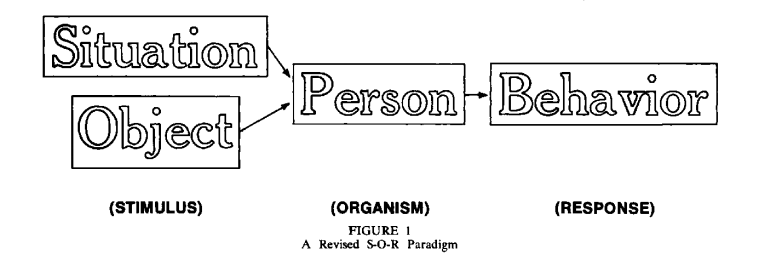
consumer behavior model

Factors that influence consumer behaviour

Consumer behaviour is not static. It changes over a period and depending on the nature of products. Societal trends change, but also does an individual over their lifetime. Equally, all consumers do not behave in the same manner. Some people spend outside their means, others are quite frugal even if they do not need to be.

For many individuals, knowledge of consumer behaviour enhances their ability to consume more wisely. Given the time and energy we devote to consuming, we should aim to be better at it and have at least a basic understanding of how marketers try and influence our behaviour.


“Most of us spend more time buying and consuming than we do working or sleeping. We consume products such as cars and fuel, services such as haircuts and home repairs, and entertainment such as television and concerts.” (Hawkins & Mothersbaugh, 2010)


Some of the factors influencing consumer behaviour are:

  • Marketing factors such as product design, pricing, promotion, packaging, positioning and distribution
  • Personal factors such as age, gender, education, and upbringing
  • Psychological factors such as buying motives, perceptions and attitudes.
  • Situational factors such as physical surroundings, social surroundings and time factor
  • Social factors such as social status, reference groups, social media and family
  • Cultural factors such as religion and ethnicity
  • Lifestyle factors such as status, income and identity
  • Geographical factors such as region, country and urban or rural.

Indian student consumers

In a household, the whole family have influence and may become involved at various stages of the decision process, performing distinct roles.

For example, the mother is often the decision-maker, Dad the purchaser, but the children important influencers.

  • The Initiator -the person who proposes a brand (or product) for consideration (something in return)
  • The Influencer -someone who recommends a given brand
  • The Decider — the person who makes the ultimate purchase decision;
  • The Purchaser — the one who orders or physically buys it;
  • The User — the person who uses or consumes the product.

Some purchase decisions involve long, detailed processes that include extensive information search to select between competing alternatives. Other purchase decisions, such as impulse buys or habitual purchases, are made instantaneously with little or no investment of time or effort in information search.

All of this illustrates the many complexities of understanding consumer behaviour.


Why consumer behaviour is important to marketers

One of their biggest challenges for businesses is to stay relevant to their target market. We must ask questions of our customers such as:

Why do people buy and use certain products?

What do they buy, when do they buy it and how often?

What are their likes, dislikes and expectations?

Why do they decide to buy one product and not another?

Do consumers behave differently individually and in groups?

Consumer behaviour gives us a better understanding of what motivates consumers to make purchases, and the benefits most valued by them. Knowing what consumers value most will improve the decision-making of businesses when creating more effective marketing campaigns. Ideally to sell more! Marketing needs to be strategic to be at its most effective.


“Marketers spend billions of dollars attempting to influence what, when, and how you and I consume. Marketers not only spend billions attempting to influence our behaviour but also spend hundreds of millions of dollars studying our behaviour.” (Hawkins & Mothersbaugh, 2010)

For example, Procter & Gamble adding the word “repeat” to the instructions of their shampoo in the 1980s is a part of marketing folk law — not because it was required, but because it sold more shampoo.

Not only is consumer behaviour relevant to marketing strategy, but it is also important to research and development, management, sales and advertising.

Remember, marketing is not just advertising. It starts with marketing research — which helps us understand consumer behaviour in our market better, which then influences the product or service itself. We want to make it fit the needs of our target market as closely as possible, as it becomes easier to sell.

However, it is not an exact science. Consumer behaviour is difficult to predict. Applying the principals learnt from consumer behaviour knowledge requires human judgment, therefore is not an objective fixed set of rules.

Marketers must have a good understanding of consumer behaviour. The best way to do this is by using market research to study a range of factors that influence their target customers. Customer relationship management (CRM) statistics are an asset for the analysis of customer behaviour.

Consumption is the ultimate goal for marketers, referred to as a behavioural response. But marketing also aims to elicit an emotional (affective) responses, as well as a mental (or cognitive) responses, influencing a consumer’s thought processes. These are often antecedents for consumption.


“Consumer behaviour is of most importance to marketers in business studies as the main aim is to create and retain customers” (Kumar, 2004).

The benefit of understanding consumer behaviour

Understanding consumer behaviour habits of the target market enables marketers to take appropriate marketing decisions concerning the following factors:

  • Product design — If a company fails to understand the reaction of a consumer towards a product, there are high chances of product failure.
  • Pricing — what price is the target market most likely to purchase at? Is this profitable?
  • Promotion — where is the best place to reach the target market? Facebook? They might spend a lot of time reading car magazines. That would be a good place to put an ad.
  • Targeting — a group of consumers with the same or similar behaviour. Each group of consumers are different, their needs and wants different from other groups. Consumer differentiation will help to tailor your strategies to the needs of varying customer groups.
  • Packaging — what type and style of packaging will be most attractive to customers? Does it matter?
  • Positioning — communicating a brand’s point of difference compared to its competitors, to the target market.
  • Branding — monitoring other brands in the customer’s consideration set to optimise planning.
  • Place of distribution — what location or type of store to sell a product or service?
  • Customer retention — retaining customers is cheaper than attracting new ones, so understanding what customers want is key to maintaining their loyalty.
  • Predicting changing trends and behaviours — consumer behaviour changes, especially with fast-evolving technology. A consumer behaviour analysis will indicate a shifting trend so marketing efforts can be aligned accordingly.
  • Innovating new products and staying relevant — many new products and services end up in failure. It can range from 33% to 90% based on the industry. Understanding customers helps businesses to design offerings that will be consumed.


Buyer decision process

The buyer decision process (or customer buying process) helps marketers to better understand consumer decision-making and how the journey from knowing about a product to making the purchase decision is completed.

The process consists of 5 distinct stages: problem or need recognition, information search, evaluation of alternatives, purchase, and post-purchase behaviour/evaluation.
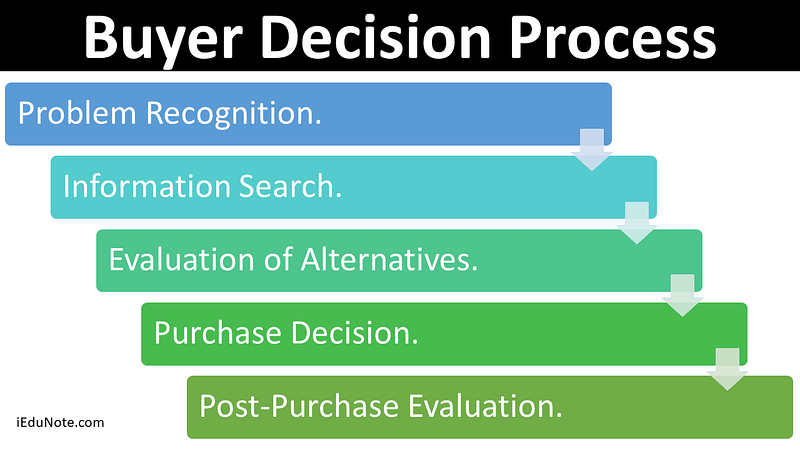
Buyer decision process

Problem recognition

The buyer decision process begins with the problem recognition stage, occurring when the consumer identifies a need or want. The strength of the need drives the decision process and the consumer decides they need a product or service to satisfy this desire. Triggers of problem recognition include:

• Out-of-Stock/Natural Depletion — e.g. when you run out of toilet paper

• Regular purchase — e.g. purchasing a bottle of wine each week with the groceries

• Dissatisfaction — e.g. not happy with their current internet service provider and change to a new one.

• New needs/wants — as a family gets bigger, they purchase a bigger vehicle

• Related product — purchasing on product triggers need for accessories, spare parts or complementary products such as purchasing the latest X-Box gaming console and upgrading the TV, buying games to go with it, and extra controllers.

• Marketing induced — advertising triggers the recognition of a problem or needs that consumers did not realise they had. E.g., my internet IS slow. Yes, I do need faster internet!


Information search

The information search phase aims to identify a list of options representing realistic buying options. Consumers search their internal memory and use external sources for information about options that will potentially satisfy their need. In an internal search, the consumer scans their memory for suitable brands.

The evoked set are preferred brands, typically to around 3- 5 alternatives.

Businesses use marketing to increase brand awareness and the likelihood that their brand becomes a part of their target market’s evoked set. An understanding of their target market’s behaviours means they are can be more objective with putting marketing in places where they are more likely to see it and hopefully remember it.

External sources of search include the internet such as social media or product comparison websites, shopping around and talking to friends/family.

Information search and the next phase of evaluation can occur throughout the entire decision process.


Evaluation of alternatives

Consumers engage in a series of rational evaluations of the alternative options available to them. During this evaluation phase, consumers consider a small number of options that could be viable choices.

Being aware a brand exists does not necessarily mean it will be considered as a potential purchase. Realistic purchase options are known as the consideration set, each consumer will have distinctive characteristics they are looking for, searching for the best value and the best fit for their needs.

Different evaluation criteria are used depending on each unique buying situation, consumers assessing and then ranking the relative merits of different options available. Consumers with low knowledge about a product category tend to evaluate a brand based on functional characteristics.

Towards the end of the evaluation stage, consumers form a purchase intention.


Purchase decision

Once the alternatives have been evaluated, the decision is made by the consumer and they proceed through to the actual purchase. To increase the chances of customers purchasing with them, businesses use techniques to improve conversion rates, such as a strong call-to-action in advertising. “Buy now while stocks last!”. This encourages an immediate sale.

Some customers might know all along who they want to purchase with. Others might spend an extended period researching information about the different options available before they make their decision.


Post-purchase evaluation

This process is not complete until after the consumption of the product or service and the consumer engages in a post-purchase evaluation. Consumers compare their experience with the product or service and the perceived value with their expectations that were formed during information search and evaluation. This is called expectancy disconfirmation and is a strong driver of satisfaction.

Factors evaluated include price, functionality, and quality.

A consumer’s next purchase decision for that good or service is influenced by this evaluation. If consumers feel some uncertainty or regret towards their choice, they are unlikely to choose that brand again.


Consumer motivations

An underlying motivation drives a consumer to act and purchase. These motivations fit under the problem recognition phase discussed above.

This motivation can be either positive or negative. A positive motivation could be a pleasure — having dinner a nice restaurant or a night on the town.

A negative motivation could be the avoidance of unpleasantness such as purchasing toothpaste to minimise tooth decay, getting toothaches and having to visit a dentist.

Abraham Maslow’s well-known Hierarchy of needs model is one way to help understand the motivation.
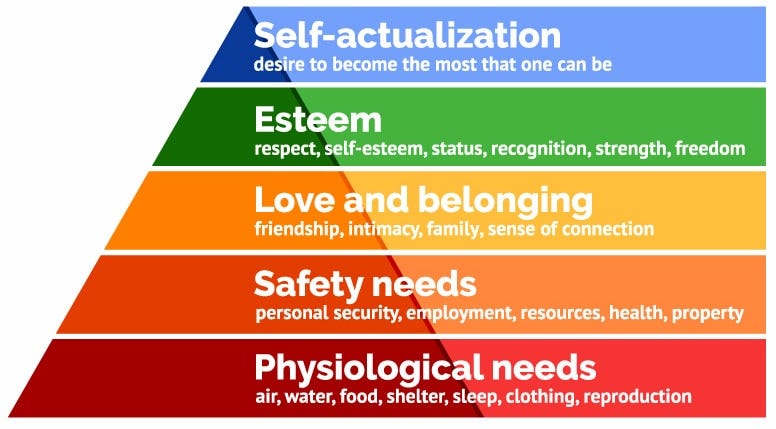
Maslow's hiararchy of needs

Although not a marketing model, it is commonly applied across the social sciences. This model can help marketers to understand the unique needs and levels of motivations of customers.

It contains five levels of needs, organised accordingly to the level of importance. Lower order needs are most important, consumers typically using most of their time, energy and finances attempting to satisfy these.

Only then can they move onto the higher-order needs and they become meaningful.

  • Physiological is a human’s basic levels of needs such as food, water and sleep. We need these to survive.
  • Safety is the need for physical safety, shelter and security. Purchasing a house or paying rent.
  • Belonging the need for love, friendship and a desire for group acceptance. A man buys his new wife an expensive ring when they get married.
  • Esteem is the need for status, recognition and self-respect. Purchasing the latest BMW car or a designer handbag and shoes.
  • Self-actualisation is the desire for self-fulfilment such as personal growth or artistic expression. You might over to the other side of the world to see a motivational speaker such as Tony Robbins at a conference.

Using Differentiation to Stand Out From The Competition

Differentiation strategy

If we’re the same as everybody else, nobody will remember us. If we’re a brand, we want to be memorable, right?

We want people to think of us when they are thinking about purchasing a product or service that we offer.

If we have a point of difference to our competitors, we are more likely to be remembered. We also want to offer a unique benefit that our competition does not offer.

This week’s marketing blog, this article explores differentiation as a business strategy.

Advertising as a Marketing Tool to Reach and Influence Customers


Advertising. It’s everywhere.

We're exposed to hundreds of advertising messages daily, so our brain starts to filter them subconsciously.

But businesses and brands don't want these advertising communication filtered - they want customers to take in the messages and remember them.

This week’s blog article explores advertising and a range of different advertising approaches that businesses can use to reach their target audience.

The Co-Creation of Value: Everybody Wins

Co-creating value

How the customer and firm can co-create value together to both get what they want.

In 2020, customisation and giving the customer exactly what they want is becoming the norm. How do we give customers exactly what they want? One way is by letting them co-create value.

This week’s article explores the co-creation of value as a strategy and how this approach creates unique value for customers, creating a competitive advantage.

Targeting: how to make marketing more efficient and effective

Target market
Who are you targeting? 

Often when you ask a small business owner who they are targeting as customers, their response is “Everyone”, or “Anybody interested in…” They might refine this audience down to “homeowners” or “people who go to the gym”. This is still too broad. The problem is with this is, not all consumers think alike, and not everyone is going to purchase your product. Because of this broad focus, marketing can miss the mark.

Instead of trying to market to everybody, targeted marketing makes your product or service as attractive as possible to certain groups of people. Firms focus their marketing efforts on a specific and defined audience. 

This week’s topic explores targeted marketing and how businesses use targeting to be more effective with their marketing and improve their ROI.

“Provided that sales in the target segment are higher than lost sales in the non-target segment, the firm is undoubtedly better off financially.” (Cahill, 1997)

What Is Targeting?

Targeting focuses all marketing efforts on the defined group or groups of people MOST LIKELY to become profitable customers. These groups of customers will have common characteristics and interests and could be based on existing customers, as there is likely to be similar people who you will also benefit. The targeted customers might also be groups of people who overlooked by the competition. If they are profitable, this then presents an opportunity for that business.

The benefits of targeting

With targeting, marketing becomes more affordable, efficient and effective at generating customer leads. Saving money on marketing and a better return on investment are the most obvious benefits of targeted marketing — especially for small businesses with frugal marketing budgets. Targeted marketing is far more cost-effective than mass marketing as firms are not wasting time and money marketing to people who will never be a customer. Instead, the target audience is specific consumers who are most likely to become customers.

“Firms can obtain significant benefits by targeting their promotions.” (Narayanan & Manchanda, 2009)

If we understand who our most profitable customers are, we will know which customers are not profitable, and we can also overlook them with our marketing which is important with paid advertising (why waste your money!?)

Targeting should begin with the customers and the marketplace. Therefore, it creates a strategic focus as the firm must take a realistic and well thought out approach to their product or service offering, their marketing and their customers. This integrated approach ensures everything is a good fit.

If you are not targeting specific groups of customers with your communication, the message can become blurred. The broader the targeted market is, the broader their preferences, needs and desires are. The more focused your message is, the more receptive the target audience will be.

What is a Target Market?

Identifying their target market/s is a crucial step for any firm when developing their strategic marketing plan. A target market is the group/s of customers that a business focuses their marketing efforts on. The people they want as their customers. It is a segment of the total market for a good or service. The consumers who make up a target market share similar characteristics, defined by demographics such as gender, location and age as well as criteria based on their consumer behaviour.

“A target market is, at its most basic, simply the market or submarket (such as a segment) at which the firm aims its marketing message(s).” (Cahill, 1997)

This target market determines other key factors for a product or service such as distribution and pricing, or it can influence aspects of the product or service itself. After identifying what group/s of customers you wish to target, you must learn their values and consumption habits. This will help you strategize how to communicate with them effectively and ensure your offering best fits their requirements. If something is not right, firms can modify aspects of the product or service itself, or its marketing such as the packaging, pricing or even the brand name to help facilitate a more successful result with their target market.

Target marketing sits alongside the positioning strategy. Positioning creates an image of a brand’s product or service in the mind of a target customer. It defines how the brand’s offering is unique and how it provides a distinct benefit to customers. Marketing communicates a brand’s positioning to consumers to influence their perception.

Your positioning must be attractive and credible to the people who require your product and are most likely to purchase it.

“This identification of target customer groups is market segmentation, where customers are aggregated into groups with similar requirements and buying characteristics.” (Dibb & Simkin, 1991)
Market Segmentation
An orange segment — think of your target market as a segment


Segmentation: defining your target market

The strategy of using targeted marketing to reach specific groups or clusters of customers is market segmentation. A firm can choose one or even numerous segmented groups as their target market, divided up based on their characteristics, based on their unique marketplace. As customers have unique buying patterns to try and understand, this process helps to match customer demands with a firm’s ability to satisfy them.

Firms can follow a range of different segmentation strategies such as concentrating on a single segment with one product or brand, concentrating on numerous segments with one brand or having many brands or products each targeting a unique segment.

Market segments are specific and objective, comprised of people with similar characteristics that are likely to respond similarly to a marketing campaign. This helps businesses to optimise their branding, advertising and sales.

For example, a Gym might choose to market to fitness-minded people between the ages of 15 and 40 in Hamilton, New Zealand. To make this segment even more defined, they might choose to market to people with strength and performance-based goals, attend the local university, and use a lot of social media. The gym could further break down this market into further niches, such as performance-based goals for sport, or powerlifting or CrossFit, or bodybuilding.

Indian International Students as a market segment
Indian International Students as a market segment

Target market characteristics

The process of dividing a target market into segments uses three key categorisation techniques. They are demographics, psychographics and behavioural.

Demographics: Demographic segmentation aims to build an accurate picture of who the target market “is” by using statistical characteristics of human populations to identify these people. These include:

· Age

· Location

· Gender

· Occupation

· Ethnic background

Psychographics: Psychographics segmentation looks at consumers as people (not customers), seeking to better understand the personal characteristics on a human level. This includes their lifestyle, key values and activities. These include:

· Personality

· Opinions, attitudes, and beliefs

· Values

· Interests/hobbies

· Lifestyles

Behavioural: Behavioural segmentation defines people based on their actions and thoughts as a consumer. This helps marketers to further define who they want to attract and who they do not want to attract. These include:

· Purchase Behaviour

· Customer Loyalty

· Occasion or timing

· Benefits sought

· Usage


Understanding the consumer behaviour of your target market

Brands need to understand what their target consumers believe are the most important components of a product or service when they decide to purchase. How will they use the product? What product features are most appealing to them? Market research is a crucial step to get your positioning in the market right.

Before releasing a new product, it is beneficial to test it with the target market. Using focus groups are a fantastic way to test perceptions and the performance of your offering with the types of people you want to purchase it. This constructive feedback will allow you to make improvements before it comes to the market. Analyse industry or talk to existing customers about what they want from a product. This will all help answer important questions you may have about your marketplace or target customers.

After the product is on the market, it is beneficial to monitor sales data or use customer surveys and other actions that help monitor performance and better understand customers and what they want. Measuring customer satisfaction allows brands to continuously improve their offering.

“Each target market needs to be addressed in different ways in order for a marketing campaign to be effective.” (Geraghty & Conway, 2016)

Communicating with your target market

It is important to market to your target market precisely, otherwise, you waste precious time and money. Targeted advertising helps improve the efficiency of matching brands with customers. To reach a target audience, marketers must consider how and where to communicate to reach these people and have them listen. Do they read the local paper every day? Are they browsing Facebook? They might watch a lot of television. Once you have chosen where to advertise, what marketing message will best resonate with them? Marketing must match customers preferences and behaviours. You will only learn this through trial and error or market research.

Traditional marketing communications include television, radio or film advertising or product placements, sponsorship of events or live sport, billboards, point of purchase placement, print advertising such as flyers, business cards or newspaper and magazine adverts. Studies have indicated that magazines have the longest life span of any traditional form of marketing (See Blakeman, 2014). People can share magazines around with their friends, or they are often left by businesses for customers to browse whilst they wait, such as in the waiting room at the Doctors, at cafés or the local fish and chips shop, and can be left for months or even years on end. 

In-person events are the most successful form of lead generation for B2B businesses (See Tomas, 2015), making networking events, conferences or expos popular with salespeople. It is much easier to convert face-to-face than it is with any other marketing technique, it is just very time consuming and you do not have a massive potential audience as you do online. The important thing to consider is, will your communication method reach your target audience.

Advances in digital marketing

Innovations in technology and software over the past quarter of a century has made it possible for any business to collect valuable data about customers and potential customers. Digital marketing provides many targeted marketing tools such as email marketing, blogging and search engine marketing or optimisation and gives marketers a much higher capacity for in-depth analysis of consumer behaviour than was possible through traditional means of marketing. The growth and popularity of social media have helped businesses to create highly customised and personalised targeted advertising based on the behaviours we learn from peoples’ habits online.

“Online targeting consumers has been a great advantage to marketers as they can now see not only what a person is viewing but for how long, where and why” (Geraghty & Conway, 2016)
Social media is a powerful tool for targeted marketing

Facebook for targeted advertising

Facebook is hugely popular for creating targeted advertising. A big strength of Facebook is the enormous audience (1.79 billion daily users) and the ability to create hyper-targeted advertising based on a vast number of attributes. There are more than 240,000 attributes that marketers can combine to target highly specific groups of people based on combinations of attributes. Facebook even allows you to exclude people based on certain characteristics, which makes your advertising even more targeted.

Because of this potential, there are over 7 million people or business advertising on Facebook. Facebook provides four major techniques for targeting and users can use a combination of these methods. They are Personally Identifiable Information, Attribute targeting, Look-alike audience and retargeting.

· Personally Identifiable Information targeting is when the users provide a database of people with personal information such as name, email address and phone number. Facebook will then place adverts in front of these people browsing the platform. Create custom audiences based on characteristics such as liking their Facebook page, downloaded an app or visited their website.

· Attribute targeting allows advertisers to target people based on a wide range of elements that include user basic demographics such as age and gender, advanced demographics such as newly married, interests such as a basketball or videogames and behaviours such people who have recently purchased online. Combining more attributes makes the audience more specific for an advert. Interests can be predefined and chosen from a dropdown menu, or a relevant topic typed in and the user can browse related attributes.

· Look-alike audiences are another option the Facebook offers to help put your advertising in front of the right people. Users input a database of people, use a previous audience or this audience can be based on people who “like” their Facebook page. The Facebook algorithm then targets other people who share similar characteristics

“By compiling demographic data, purchasing history, and responses to past advertising messages, digital marketers can create and refine advertising messages tuned precisely to the psychographic and behavioural patterns of the individual.” (Montgomery & Chester, 2009)

· Retargeting focuses on people who have already interacted with the business. Many customers need numerous interactions with a brand before they decide to purchase, so it is important to stay in front of and relevant to these people. People who have visited your website can be targeting through using a tracking pixel, or businesses can target other behaviours such as people who have watched previous videos or “liked” previous advertisements. Facebook is a powerful tool for retargeting.


Thank you for reading my blog article! I hope you enjoyed this content about targeting. 

If you are a small business owner, you should now understand some of the benefits of having a specific and refined target market.

Dan