Showing posts with label customer service. Show all posts

How to Manage Customer Relationships with CRM

What is CRM?

It‘s cheaper to retain customers than it is to attract new ones. It pays to look after them.

Wouldn’t it be great to have a tool to help us track our interactions with customers to understand their needs better?

And manage ongoing relationships with our customers as well as customer leads.

It is cheaper to retain customers than it is to attract and convert new ones.

Meaning we’re more profitable!

This blog explores Customer Relationship Management — explaining how it works and its benefits of using CRM.


What is Customer Relationship Management?

Customer relationship management (CRM) is a strategic business approach to managing interactions with existing and potential customers.

Grounded in the foundations of relationship marketing, CRM is often used to describe technology-based systems that manage customer information and solutions.

“Relationship marketing theory provides the foundations of CRM, which is “the process of acquiring, retaining, and partnering with selective customers to create superior value for the company and the customer.” (Parvatiyar & Sheth, 2001)

The focus is on customer retention through streamlined processes and staying connected to customers to improve the relationship. Firms manage and analyse their interactions with their past, current and potential customers.

Firms can use numerous customer communication channels to compile data, including a company’s website, telephone, email, live chat, and social media.

The ultimate goal of CRM is to increase sales.


A Brief History of CRM

Customer relationship management dates to the 1970s. Initially, businesses used surveys to evaluate customer satisfaction. As computer technology developed, companies used spreadsheets to categorise and analyse data and create lists of customers, which became the basis for database marketing.

In the 90s, CRM evolved as more large tech companies such as Oracle got involved and created customer software solutions, including sales force automation and customer service.

With the advances in the internet, the early 2000s saw CRM migrate into cloud technology, meaning users could access it online from any computer.

Being online also removes the burden of installing and updating software, keeping IT costs lower and being extremely flexible for businesses to upgrade as they grow.

Industry-specific software or full-customised CRM was also replacing standardised CRM options to meet businesses' needs further. Industry data suggest Worldwide spending on CRM will exceed USD 110 Billion by 2027.

“Uncertain markets and dwindling brand loyalty are critical factors which are leading service-based firms to adopt CRM as a business strategy.” (Dewnarain, Ramkissoon, & Mavondo, 2019)


The Benefits of CRM

A customer-centric marketing strategy allows firms to create and maintain relationships with their target market. CRM is a vehicle for this.

With rising customer acquisition costs and increasingly price-sensitive customers (They do not like to pay more), creating long-lasting, mutually beneficial relationships is key to increased customer retention.

The better we are at providing solutions to customers, the higher chance they will remain loyal, increasing their lifetime value to a firm.

CRM is a comprehensive approach to providing customer solutions.

Information kept and organised about leads and customers, as well as every interaction that takes place. If customers regularly interact with multiple people on your team, it allows everyone in a firm to keep track of conversations.

“Organisations today must focus on delivering the highest value to customers through better communication, faster delivery, and personalized products and services.” (Chen & Popovich, 2003)

Some of the direct benefits to businesses of using a CRM are:

  • Increased ability to target profitable customers.
  • Enhanced salesforce effectiveness and efficiency.
  • The marketing and sales teams function together more cohesively.
  • We have improved customer service effectiveness and efficiency.
  • Products/services customised to individual customer needs and preferences.
  • Communication channels integrated into a single platform.
  • Increased responsiveness to changing customer needs.
  • Improved data to more precisely segment customers based on their characteristics/needs.
  • Individualised marketing based on customer behaviours.
  • Increased opportunities to cross-sell and up-sell customers.
  • It's a key component of a sales funnel.

The Functions of CRM

The underlying function of CRM is to build customer relationships and to manage these as they mature through distinct stages. Firms keep a database of customer information to understand better those customers and better meet their needs.

The firm helps them analyse their customer data to identify sales opportunities and manage customised marketing campaigns from a central location.


Integration

For large organisations, one of the most significant benefits of CRM is that everybody has access to the data, making it easier to collaborate across teams and the entire customer lifecycle.

Sales, marketing, and customer support become integrated and automated.

Every detail about individual customers is kept, such as who they are and how their interaction with the firm.

Knowing these details helps everyone do their job better as it provides context about customer’s needs and situation, so one staff member can pick up the conversation where the last one left off.

Firms can manage inquiries across channels without losing track of conversations.

“To some, it meant direct mail, a loyalty card scheme, or a database, whereas others envisioned it as a help desk or a call centre.
Some said that it was about populating a data warehouse or undertaking data mining; others considered CRM an e-commerce solution, such as the use of a personalization engine on the Internet.” (Payne & Frow, 2005)


Marketing

CRM allows for marketing automation to make it more effective and efficient.

Firms can set up repetitive marketing tasks such as social media posts or email marketing to be sent to groups of customers at various times, with different messages, based on customer segments' individual needs and behaviours.
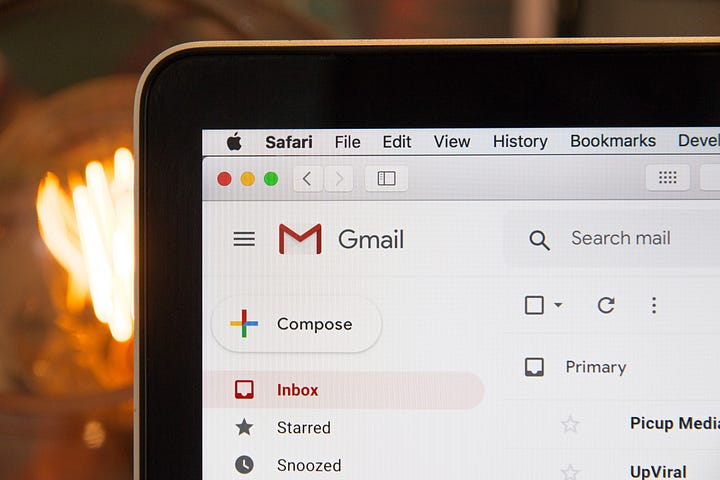
Using email for CRM

Marketing aims to put the right message in front of the right people at the right time. CRM systems also monitor how customers preferred communication method.

Daily emails? Weekly emails? Monthly phone calls?


Sales

Automation of the salesforce is another crucial function of CRM. Wherever a customer is in the sales cycle (buyer decision process), firms customise their communication for their situation (assuming we know enough about them).

CRM tracks a customer’s history with the company to know as much about them and tailor their communication.

It is critical to categorise recent sales leads accurately, as special sales promotions with different offers can be targeted at diverse groups of customers to fit their needs best.

Firms can focus and prioritise the right leads that are likely to be the best opportunities to close profitable deals. Firms do not want to waste time and resources on prospects who will never become profitable customers or clients.

Sales reps can work more efficiently, and sales forecasting becomes more accurate.


Customer Support

Another benefit of CRM is that customers are served better on a day to day process.

Direct customer service technologies mean that support becomes more personalised and automated, and customers supported through multiple channels.

CRM keeps a record of every customer interaction, the extra insight into customers helping business be more constructive with improving their customer service experience and providing better solutions.


Data Analysis

Another valuable function of CRM is the ability to analyse customer data collected through multiple digital sources.

Data mining helps businesses to learn more about their target customers.

We can find out where our sales come from, what characteristics our customers have, the best way to communicate with them, and how to best cater to their needs.

Through analysing our data, we can find patterns in consumer behaviour that informs our decision-making. Identify any potential issues, as well as what is going well.

Analytics provides all sorts of customer information, such as their past sales and how they reacted to previous marketing efforts. If we find out that certain customer groups are not purchasing, we can change our offer.

It can be a trial and error process better to understand their buying behaviour and spending habits over time.


Final Words

In summary, a value proposition is the summary statement of why a customer would choose a company’s product or service. It frames how they uniquely provide value to customers.

This article has discussed the importance of creating a value proposition and the steps a business can take to create its own and differentiate itself from competitors.

Thank you for reading.

If you enjoyed the content, you might be interested in this article on enhancing customer loyalty.

Social Selling: How it Works and 10 Tips to Optimize Your Strategy

Social selling as a marketing strategy

Social media is a pretty big deal in 2020. It was a pretty big deal back in 2010! But now, even more so. 

Literally billions of people spend hours a week, sometimes hours a day, scrolling through their social media feeds, engaging in content that interests them.

Businesses came to realise pretty quickly that social media is a pretty useful tool to reach their potential customers. 

Social selling was born as a way to communicate with potential customers through social media, in a less obtrusive way than traditional marketing. 

So how do we do this?


What is Social Selling?

Social selling is the use of social media to research, find, and understand sales prospects, to network and engage in conversations in online communities with them, to build and strengthen relationships.

“Social selling is taking out the pitching component of sales. You’re creating conversations about your product and services which organically can produce sales conversations.” (LinkedIn)

The aim is to provide value to prospective customers through answering questions, responding to comments and sharing content related to your area of expertise.

Prospect cans are anywhere throughout the buying process — from awareness to consideration. The idea is to consistently provide value, so you are the first person or brand a prospect thinks of when they are ready to buy.

Digital marketing principles can implement at an individual salesperson level or a firm level, but social selling requires an investment of time, effort, money and technology. It can be done on a shoestring budget, but to create quality content, we need to invest in our social selling strategy.

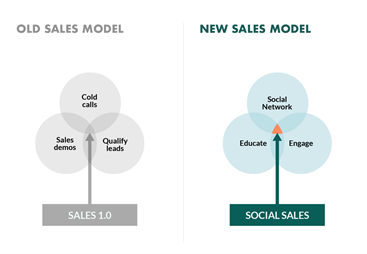
The popularity of social media makes it a perfect platform to build relationships with prospects. Through an emphasis on social interaction and content creation via digital platforms, social selling could be considered sales 2.0. The image below illustrates how it differs from the traditional sales model.

Social selling - Sales 2.0
“Social selling is the identification, targeting and reaching out to prospective and existing customers through social media channels and social communities in an effort to engage them in conversations that result in a potentially mutually beneficial relationship.” (Belew, 2014)

According to Statista, around 3.6 million people are using social media in 2020. By 2016, approximately 71% of all sales professionals were social selling in some way or form, even if they did not know it.

Having a business page on Facebook or commenting on posts in groups on LinkedIn for example are social selling tactics. It is not about bombarding strangers with private messages selling something after you connect on LinkedIn.

That is spam and the opposite of what you should do.

Sales strategy has always revolved around building and strengthening relationships to establish rapport and credibility with prospects and customers, so you are the one they think about when they require a solution to their problem, that you provide.

Social selling uses this same methodology but does it online with social media instead of requiring cold or warm calling or sales demos.

It might not be a surprise to you to hear that not many people enjoy doing cold calling and that many people do not like to receive cold calls. According to the Harvard Business Review, 90 percent of decision-makers say they never respond to cold calls. This means it can take numerous cold calls to reach a potential client if you can reach them at all.

“The approach is not simply another sales channel for making sales pitches but a way to engage the informed, empowered, and social buyers during their purchasing journeys using digital and social channels.” (Ancillai, Terho, Cardinali, & Pascucci, 2019)


Email Marketing: A Tool to Strengthen Relationships, Improve Brand Awareness and Increase Sales

 Email marketing - BYB Marketing blog

Email Marketing has become one of the most popular and effective marketing method and relationship management tool used by businesses since it rose quickly into prominence with the internet about 25 years ago. 

Pretty quickly, most people had a personal email address and were checking their email, making it a powerful tool to communicate with people.

This article explores the use of email as a marketing tactic.


What is Email Marketing?

Short for electronic mail, email is the sending of messages to one or more recipients, distributed by electronic means via the internet. Email marketing is a digital marketing tool that uses email to develop relationships with prospective customers and maintain and strengthen relationships with current customers. The end goal is to influence these people to make a purchase and be ongoing customers.

“Companies often list email as one of their most powerful marketing channels. To this day, the size of your email list is a demonstration of your reach and thought leadership. However, your email marketing campaigns should be part of a holistic approach to educate your contacts about your company.” (Georgieva, 2012)

The popularity of email marketing has been a part of the ongoing trend away from a product-focused marketing strategy to a customer focus of customisation and relationship management, to satisfy the needs of each customer.

Email marketing has been growing since the mid-1990s and is a widely used marketing tool by the majority of B2B and B2C companies. In 2015, one study indicates that over 80% of firms use email as part of their marketing strategies (See Zhang, Kumar, & Cosguner, 2017).

The benefits of email marketing

Email is a powerful marketing tool, with several benefits for businesses using it to build customer relationships and increase sales. Using their database of email addresses, businesses can design email marketing campaigns, personalised for diverse groups of leads and customers. Some of the benefits of email marketing are:

Brand awareness — keeps the brand top of mind and people informed about what you offer.

Speed — a quick output and quick response for lead generation.

Segmentation— allows you to selectively email members of your database depending on their behaviours.

Cost-Effective — Low cost per contact for customer acquisition. A better return on investment many other forms of marketing.

Targeted — you are sending relevant materials to your audience.

Customer Dialogue — encourages a two-way dialogue with customers, where communication is one way with many other marketing methods.

Trackable — Analytics allows you to track the performance of your emails.

Conversion — turn prospects who are interested in your industry or your products/services into customers.

CRM — customer relationship management helps maximise the lifetime value of customers by increasing customer retention and repeat purchases.

Objectives of email marketing

Email Newsletters are great not only for marketing to prospects but also for nurturing your existing customers. Some of the objectives of using email marketing are:

Send recipients to other marketing content such as landing pages with exclusive offers, blog posts or other valuable content.

Communicate with a community, customers, employees or other stakeholders to generate a reaction or a result.

Inform the reader about a new offer or send them to a blog post.

• Maintain and develop long term relationships with current customers.

• Motivate customers to finish a purchase who have items in their shopping cart that was abandoned.

Increase sales by converting more leads into customers and selling more to previous customers.


Analysing the results of your email marketing

One of the major benefits of email marketing is the ability to monitor subscriber engagement and interest.

It is a process of continual improvement — testing and tweaking your email content and database management. To analyse the performance of your email marketing, there are several key metrics to help measure the performance of each campaign against previous benchmarks.

For example, analysing the interaction that people have with your website after they click on a link, this can help you pinpoint how to improve the user experience on your website. Two different landing pages could be used to test which one receives better results.

Open rate is the proportion of people opened the email. But this can be an inaccurate gauge as customers who are active in opening a firm’s emails may not be active in purchasing and vice versa. Some people are more responsive to emails. Some people like to browse. Other people may purchase but never open their emails. Therefore, it is important to track more factors than just your open rate, such as tracking your click-through rates and conversion rates.

Bounce rate is the total emails sent that could not be delivered to the recipient’s inbox, If one particular campaign has a lower than average delivery rate (high bounce rate), examine the subject line and content of that message to check if there’s something that could have flagged it as spam.

The list growth rate is how fast your email list is growing. This is calculated by subtracting opt-outs and hard bounces from the number of new email subscribers gained per month.

“Be clear to your target market about what they will get out of subscribing to your emails. Give them a clear description of what the value proposition is. For example, will your emails offer: (1) tips and tools on how to run their business more efficiently, (2) product updates from your company, or (3) special offers via email? Your audience will want to know “why” they should subscribe before they decide to clutter their inbox with even more emails.” (Georgieva, 2012)

Unsubscribe rate is the proportion of people in your database who unsubscribe from receiving your emails. This is not always a reliable picture of the health of your email list, however, as many subscribers no longer want to receive emails will not bother to go through the formal unsubscribe process. They will just stop opening email messages and delete them instead.

Click-Through Rate (CTR) is a foundation of email marketing analytics, as it indicates whether the message was relevant and the offer compelling enough to check out. This measure how many people click on the offer or other link in your email.

Conversion rate is the proportion of people who clicked a link and completed the desired action, such as purchasing a product. This is also dependent on factors beyond the original email message, such as the quality of your landing page or the offer itself.

“Conversion rate is the ultimate measure of an email campaign’s effectiveness. The higher your conversion rate, the more relevant and compelling the offer was for your audience.” (Georgieva, 2012)

Revenue per email measures the ROI of an email campaign, calculated by dividing the total revenue generated from the campaign by the number of emails sent. This is only relevant if you generate a lot of direct sales from email campaigns.


Spam

Because it is so cheap and accessible (anyone with an email address can send a mass-email), email is used as a tool to spread spam emails. Spam is unsolicited digital communication sent out in bulk to random email addresses without consent.

Spam has caused email marketing to leave a bad taste in the mouth for many people. We’ve probably all received an email or two from a Nigerian royal or long-lost family member promising us millions of dollars.

“Low production costs spur greater production, inducing entry to the industry by legitimate and not-so-legitimate marketers, which further increases the volume of email messages sent. As a result, consumers are awash in a sea of ads and information, some useful and some not.” (Pavlov, Melville & Plice, 2007)

The significant difference between spam and genuine email marketing is having an opt-in policy. If businesses keep rigorous with this, it means they are only emailing people who consented to receive them, and the business will not get any trouble. Most countries around the world now have anti-spam laws, so its best businesses are cautious with who goes into their emailing database.


Database management

A database can be powerful. But only if managed correctly.

A database should be continuously updated to make sure it stays relevant. If a user has been emailed 20 times and has never opened one of those emails, they probably should not be emailed once a week. You might email them once every 6 months or remove theirs completely. Your metrics will tell you who is no longer engaging.

Database members should be categorised so you can best meet their needs. Group them based on some common characteristics and behaviours.

Continually work to add new contacts to your email database, as the natural churn rate of an email list can be 25% or even more per year. Make sure you are gaining new relevant people on your database by providing a benefit to them by being on your mailing list (exclusive offers, gifts, industry updates etc).

Software such as Mailchimp or Constant Contact will help you manage your database as well as setting up your email marketing. Some systems will also you to set up your whole sales funnel with landing pages for lead generation, as well as for analytics and reporting to allow you to monitor the performance of your email marketing campaigns.


Email marketing strategy

Email marketing is about more than sending your latest offer out to your database once a month. Businesses must think of it like designing marketing communication campaigns — because they are! The objectives of email marketing should be clearly defined, who the target recipients are, the content must be developed to fit the purpose. Make sure it provides value!

The email campaign should be tested on a small sample, tweaked and then sent to the segmented members of the database. The results should then be measured to see what you can do better next time.

As well as immediate results, businesses should consider how their strategy will affect their future profitability. If your business sets up lead nurturing, emails are sent out automatically to new leads, according to the schedule you set up. lead nurturing is all about understanding the nuances of your leads’ timing and needs- tightly connected series of emails with a coherent purpose and full of useful content.

Tying a series of emails to a specific activity such as joining a mailing list, and then sending them an automated series of emails to learn more about their behaviour and potentially influence a purchase. The lead is qualified over a period with automation, saving a business time and energy.

Leads should be segmented into groups of buyers as you learn more about them to better meet their needs and provide them value. Targeted marketing has a far better return on investment than mass marketing — so do not be tempted to send the same email to all your contacts!

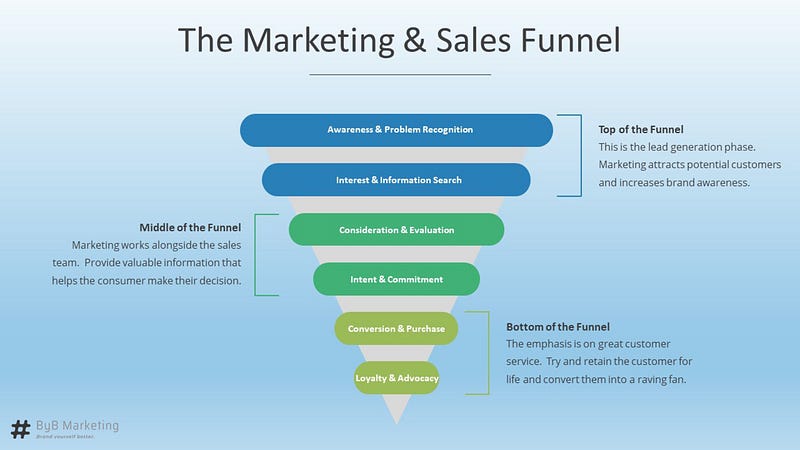
Email is a vital component of a marketing and sales funnel — where the objective is to turn as many leads into sales as possible. But email should be part of an integrated marketing approach — email does not work in isolation.

Marketing and sales funnel - BYB Marketing

Your marketing emails need to be complemented by other efforts, such as search engine optimisation and content marketing on social media. If you blog, send people to your blog via your email and encourage people to sign up to your newsletter at the end of blog posts.  

Your marketing strategy should outline how your individual marketing efforts complement each other.


Email content

What goes into an email? Of course, this will vary depending on the firm and its objectives. But there are some general rules when it comes to the content of email marketing.

The email title must convince the recipient to open the email. This is key. It must be related to the content of the email (stay away from clickbait), but at the same time be compelling enough that the recipient is curious enough to open the email. Because many people check their email via smartphones, long titles will not be displayed in full. Aim for 5 to 9 words.

“In the Subject: line Each word makes a critical difference in whether your message is opened at all. Once its opened, you only have seconds to capture the readers imagination. You have to grab their attention and keep it.” (Sterne, & Priore, 2000)

Your content must be brief and relevant for the recipient. Grab their attention right away, by containing the most information in the first paragraph. Try and keep it the length to under 100 words.

Use a personalized greeting at the beginning of the email and a clear call-to-action at the end of the email. Include a couple of hyperlinks to other useful content such as a blog or video on your website, or a custom landing page that contains more information (find out more, or to order).

An option to unsubscribe must be available. Email marketing software with automatically using an unsubscribe option.

The layout and design of email marketing are important — especially if it is a newsletter. But you do not want to go over the top trying to make it aesthetic, simple can be beautiful. Try to use a maximum of two colours.

Include one or two images in the email, one of those can be the company logo for brand awareness. Make sure the images have alt text for those not viewing the email in HTML (quite often images are turned off automatically).

Your contact information as well as social-following buttons for your social media accounts should be at the bottom of the email.


How many emails should you send?

The right number of emails to send is difficult to pinpoint, as it will depend on your customers. If you are emailing qualified leads, it might be once or twice a week. Other customers, once a month or once a quarter might work better. It will depend on the engagement level of your audience.

“Sending the right number of emails is critical for the firm’s profitability, especially since most customers tend to complain about the large number of emails sent by firms.” (Zhang, Kumar, & Cosguner, 2017)

Many companies start to send fewer emails to keep subscribers. However, the frequency of emailing does not necessarily negatively impact subscriber retention. There can be email overload, for sure. But also, ask yourself if you are emailing the right people with the right message.


The Co-Creation of Value: Everybody Wins

Co-creating value

How the customer and firm can co-create value together to both get what they want.

In 2020, customisation and giving the customer exactly what they want is becoming the norm. How do we give customers exactly what they want? One way is by letting them co-create value.

This week’s article explores the co-creation of value as a strategy and how this approach creates unique value for customers, creating a competitive advantage.

Customer Service: why it matters and 10 key skills

 Customer service

Customer service is a vital component of the consumption experience to any firm who wants to retain customers and grow their business. 

Great customer service means customers are likely to come back, but a subpar experience means they are unlikely to come back. 

What Is Customer Service?

Customer service is the support provided by a firm or brand to the customers or potential customers of their product or service. It can happen before, during or after customers purchase or use a product or service. Firms aim to meet the needs, desires and requirements of these customers through delivering professional and supportive and assistance, to ensure an easy and pleasant consumption experience.

Customer service can be face to face in a store, over the phone, through digital activities such as text, social media messaging or email, or by automated means such as an ATM. This interaction between a service organisation and its customers or clients is referred to as a service encounter and a firm has the opportunity to form an impression with customers every time they come into contact.

“Interpersonal interaction between an organisation’s employees and its customers… have a high “impact” on the consumer and the quality of the service encounter… thus a vital ingredient in the overall quality of service experienced by the customer.” (Lewis & Mitchell, 1990)

Why is customer service important?

Customer service is part of the promise brands give customers. There is now an expectation from customers that businesses provide a certain quality of customer service. This is especially true in the services industry. Even the local mechanic now needs to step up their game. Businesses need the ability to learn, identify and adapt to the needs and wants of consumers. Customer-oriented firms have a higher ability to anticipate the developing needs of consumers and respond with goods and services.

Customer service that is at least on par with competitors is critical to competing effectively. If it is better, it can give you a competitive advantage. Customers do not shop based on price as often as they used to. Instead, their overall experience is often the motivator.

“89% of companies now expect to compete mostly on the basis of customer experience.” (Gartner Research, 2014)

It is cheaper to keep existing customers than to acquire new ones. But it is not as simple as just having great products to retain them — your customer service needs to be on point. Bad customer service is enough for previously loyal customers to choose a competitor — if customers are not happy with the service, chances are they will leave.

The benefits of great customer service

Providing customers with an elevated level of service quality has a positive relationship with brand performance and customer satisfaction. Service quality is how well the delivery of that service matches customers’ expectations. Satisfaction has a positive relationship with repeat purchase, and this is particularly true for service industries. Customers are satisfied when a firm performs better than they expected.

Prioritising customer service support might increase the costs of a firm through needing extra staff or tools/technologies, but there are a few benefits that should outweigh the investment. Studies have indicated that over 80 per cent of people would pay more for better customer service.

Some other benefits of providing great customer service include:

  • customers are more satisfied with their experience
  • enhanced perceptions of the firm’s overall market strategies
  • increased positive word of mouth and referrals attracting new customers
  • increased customer loyalty and repeat purchase
  • increased ability to upsell or cross-sell relevant services
  • customers can be willing to pay higher prices for a better experience
  • customers perceive products and services as having better quality
  • customers perceive the servicescape as being of higher quality

The customer service of a firm or brand can ‘make’ or ‘break’ their reputation.

“…Organisational culture that stresses the customer as the focal point of strategic planning and execution…  Employees consistently exhibit customer-oriented behaviours, and consumers thereby become accustomed to this philosophy.” (Brady & Cronin Jr, 2001)
Having somebody yell through the phone line is nothing new to customer service representatives

Bad customer service

In the world of mobile phones and social media, it is hard to hide a bad customer experience. People can quickly share a negative experience online, which can reach a large audience. With many people using Google search to check out a business, a couple of bad reviews can make a significant difference. People are more likely to share a negative experience on social media or talk about it with their friends than they are with a positive experience.

How can firms improve their customer service?

Improving customer service means making every touchpoint great and not letting any interaction fall between the cracks. There must be consistency across the organisation in providing a great customer experience.

In 2020, it is not enough for firms to only use the traditional means of customer support such as over the telephone for customer support. Customers expect to be able to reach organisations by whatever means they find convenient, whether it is email or social media. Therefore, firms must have a comprehensive approach and provide a range of customer service options to customers.

Businesses can also provide self-service support to customers so they can find the answers they require without needing to deal with customer support staff.

A customer orientation

Marketing has progressively moved towards a customer orientation since Leonard Berry’s seminal writing on Relationship Marketing (1983), now considered a fundamental principle of marketing. To be customer-oriented implies that a firm focuses on the customer as the centre point of their strategic planning and execution. They aim to identify and adapt to consumers’ needs and wants as a competitive strategy through learning from customer perceptions of their experience.

“Having a customer orientation has a positive influence on customer perceptions and, ultimately, the performance of firms.” (Brady & Cronin Jr, 2001)

A customer’s evaluation of the overall service quality is determined by three factors: employee service performance, physical goods/service quality, and servicescape (place of business) quality. Firms must be proactive in collecting and analysing customer data for a better picture of how they are performing and the needs and wants of customers, and to act on this information.

Digital tools for customer service

In the digital age, consumers now have several methods available to communicate with customer service representatives.

Over the past few years, social media has become increasingly popular to request and receive customer service. It is an expectation now to be able to send a message via a major brand’s Facebook page with any questions or problems you may have related to their products or services and receive a prompt response. Around half of the internet users now turn to social media for help. Accordingly, many large organisations implemented dedicated customer service teams to respond to social media messages. Studies (see Xu, Liu, Guo, Sinha & Akkiraju, 2017) have indicated that users who message a brand’s Twitter account expect a response within an hour.

This consumer demand for an instant response and the time-consuming nature of manually addressing these requests lead to the rise of AI for customer service on social media. This led to the creation of chatbots to automatically generate responses for user requests on social media and now on websites. These chatbots provide an opportunity for brands to provide individualised attention to consumers.

“Marketing is concerned with exchange relationships between the organisation and its customers. Quality and customer service are key linkages in this relationship.” (Christopher, Payne & Ballantyne, 91)
A genuine smile goes a long way in customer service
A genuine smile goes a long way in customer service 

Key customer service skills

As much as a firm can have a customer orientated strategy, much of the responsibility for great customer service falls on the staff members. Luckily, customer service is a skill that people can learn and develop, rather than a personality trait you either have or you do not.

Here are ten customer service skills that are key to providing great customer service.

1. Patience

Patience is vital for anybody with customer service in their role. From real estate sales to a check out operator at a supermarket. Customers who reach out to support are often frustrated and at their wit’s end. Sometimes they want to vent. There could be a simple solution, but let the customer get it out of their system. For example, a study found that 40% of user requests on Twitter are emotional and not intended to seek specific information. Empathy goes hand in hand with patience, which is a person’s ability to understand another person’s feelings. A staff members ability to see an issue from the customer’s point of view is a huge advantage and customers appreciate it.

2. Listening

The ability to truly listen is not only a key skill for customer service but life in general. Listening allows you to fully understand the customer’s point of view and solve their problem. When you do not listen, it is easy to get it wrong and create a frustrating experience for the customer. Customer service reps can often jump to conclusions about a solution, which can come across as rude and brash. Take time to listen and understand customer issues, it will show you value their needs.

3. Communication

It might sound obvious, but how you communicate with customers is key to their experience. You do not want to come across as condescending, grumpy or rude — this will translate into a negative experience. It is important to be mindful of how staff communication comes across. As well as attitude, the clarity of the communication during customer service is key providing the right outcome. The last thing you want is more confusion on the part of the customer because they do not understand what they are supposed to do or what the solution is.

4. Learning

By learning about the issues and concerns of their customers, so they can provide a solution. How do we learn from our customers? By asking questions and listening when interacting. The more your customer service staff know about your customers’ needs, the more of an asset they are to both the organisation and the customers.

If the same customer issues come up consistently, chances are you have not learnt from this to provide an adequate solution. Staff must communicate these issues to management so they can plan to resolve the problem. If your customer service team is working like a well-oiled machine and learning from the feedback, you will start anticipating problems instead of just solving them.

5. Time management

Customers often expect a resolution as quickly as possible. They hate to wait — especially over the phone, so long waiting times can negatively affect customer experience. So, whilst patience and taking time with customers is important, there is a limit to how long you should commit to each customer. Firms should provide customer service employees with the information and tools to support their customers are as quick as possible. Staff training can help improve resolution times.

Customer service representative on the phone

6. Composure

Customer service staff must have the ability to stay consistently calm under pressure, even if they are experiencing difficulties with an upset customer. This cool demeanour can help calm down the customer and keep the conversation as objective as possible to find a resolution to their issue. Emotion triggers many of the interaction customers have with customer service, so it is key for staff to remain level-headed — even when customers are being insulting to them or their firm. The staff that can think on their feet are a huge advantage — not every interaction will be in the training manual. Expect the unexpected.

7. Negotiation

Often staff members will need to negotiate with customers to find a resolution. Conversations need to end with a solution and/or with the customer feeling that the firm have (or will) taken care of their needs. Negotiation is not arguing — it is important to remain calm and have a constructive conversation. There will always be one party who feels like they have come out better off than the other party — make sure that is the customer! Do not just give in to the customer demands, there must be some give and take. Customer service staff require good persuasion skills when there is no obvious solution, this reasoning can help convince the customer of a suitable outcome.

8. Teamwork

Teamwork and customer service go hand in hand; both staff and customers will benefit when customer teams work together as resolutions to the customer issues are faster. One customer service representative will never have all the answers, so there must be open communication lines across teams to find a solution to each unique issue. Large firms often have several dedicated customer service teams for different requirements. There might be one team for technical support, another team for accounts and billing, and another team for general inquires. In smaller firms, provide all employees with some customer service training so they can help when required.

9. Positivity

It can be a challenge for customer service staff to spend their days dealing with customer complaints and negativity that comes along with the role. However, it is a key customer service skill to remain upbeat and positive. If staff meet customers with a smile and a cheerful attitude, it makes customers feel a lot better. This can put staff on the front foot when trying to find a resolution. It also creates a better work environment. If staff are happy and they can feel other staff are happy, they enjoy their jobs more and become more productive.

10. Product & brand knowledge

The more your sales staff know about your product or service, the better they are at selling them. Similarly, with customer service, the better staff become at providing a solution. Training should be a key part of customer support. Many large companies onboard every new employee to ensure they know their products inside and out. Onboarding is the process of integrating new employees into an organisation, familiarising them with the products and/or services. The best customer service staff have intimate knowledge of how their products work or order to find each customer an adequate solution to their problems.


In summary, this article has explored how great customer service can positively influence the performance of a firm and 10 key skills for customer service staff. 

I hope you enjoyed this week’s content and learnt some new tips and strategies for improving your firm’s customer experience.