Become a better marketer! Learn how to attract more customers.
Invest in your knowledge and understanding of marketing and how to apply it to your business. Learn how to grow your business and attract more customers, through producing marketing that targets customers.
50 marketing topics over 50 weeks. In no time, you'll understand all the lingo and how marketing pieces together!
https://brandyourselfbetter.com/
How the customer and firm can co-create value together to both get what they want.
In 2020, customisation and giving the customer exactly what they want is becoming the norm. How do we give customers exactly what they want? One way is by letting them co-create value.
This week’s article explores the co-creation of value as a strategy and how this approach creates unique value for customers, creating a competitive advantage.
Customer service is a vital component of the consumption experience to any firm who wants to retain customers and grow their business.
Great customer service means customers are likely to come back, but a subpar experience means they are unlikely to come back.
What Is Customer Service?
Customer service is the support provided by a firm or brand to the customers or potential customers of their product or service. It can happen before, during or after customers purchase or use a product or service. Firms aim to meet the needs, desires and requirements of these customers through delivering professional and supportive and assistance, to ensure an easy and pleasant consumption experience.
Customer service can be face to face in a store, over the phone, through digital activities such as text, social media messaging or email, or by automated means such as an ATM. This interaction between a service organisation and its customers or clients is referred to as a service encounter and a firm has the opportunity to form an impression with customers every time they come into contact.
“Interpersonal interaction between an organisation’s employees and its customers… have a high “impact” on the consumer and the quality of the service encounter… thus a vital ingredient in the overall quality of service experienced by the customer.” (Lewis & Mitchell, 1990)
Why is customer service important?
Customer service is part of the promise brands give customers. There is now an expectation from customers that businesses provide a certain quality of customer service. This is especially true in the services industry. Even the local mechanic now needs to step up their game. Businesses need the ability to learn, identify and adapt to the needs and wants of consumers. Customer-oriented firms have a higher ability to anticipate the developing needs of consumers and respond with goods and services.
Customer service that is at least on par with competitors is critical to competing effectively. If it is better, it can give you a competitive advantage. Customers do not shop based on price as often as they used to. Instead, their overall experience is often the motivator.
“89% of companies now expect to compete mostly on the basis of customer experience.” (Gartner Research, 2014)
It is cheaper to keep existing customers than to acquire new ones. But it is not as simple as just having great products to retain them — your customer service needs to be on point. Bad customer service is enough for previously loyal customers to choose a competitor — if customers are not happy with the service, chances are they will leave.
The benefits of great customer service
Providing customers with an elevated level of service quality has a positive relationship with brand performance and customer satisfaction. Service quality is how well the delivery of that service matches customers’ expectations. Satisfaction has a positive relationship with repeat purchase, and this is particularly true for service industries. Customers are satisfied when a firm performs better than they expected.
Prioritising customer service support might increase the costs of a firm through needing extra staff or tools/technologies, but there are a few benefits that should outweigh the investment. Studies have indicated that over 80 per cent of people would pay more for better customer service.
Some other benefits of providing great customer service include:
customers are more satisfied with their experience
enhanced perceptions of the firm’s overall market strategies
increased positive word of mouth and referrals attracting new customers
increased ability to upsell or cross-sell relevant services
customers can be willing to pay higher prices for a better experience
customers perceive products and services as having better quality
customers perceive the servicescape as being of higher quality
The customer service of a firm or brand can ‘make’ or ‘break’ their reputation.
“…Organisational culture that stresses the customer as the focal point of strategic planning and execution… Employees consistently exhibit customer-oriented behaviours, and consumers thereby become accustomed to this philosophy.” (Brady & Cronin Jr, 2001)
Having somebody yell through the phone line is nothing new to customer service representatives
Bad customer service
In the world of mobile phones and social media, it is hard to hide a bad customer experience. People can quickly share a negative experience online, which can reach a large audience. With many people using Google search to check out a business, a couple of bad reviews can make a significant difference. People are more likely to share a negative experience on social media or talk about it with their friends than they are with a positive experience.
How can firms improve their customer service?
Improving customer service means making every touchpoint great and not letting any interaction fall between the cracks. There must be consistency across the organisation in providing a great customer experience.
In 2020, it is not enough for firms to only use the traditional means of customer support such as over the telephone for customer support. Customers expect to be able to reach organisations by whatever means they find convenient, whether it is email or social media. Therefore, firms must have a comprehensive approach and provide a range of customer service options to customers.
Businesses can also provide self-service support to customers so they can find the answers they require without needing to deal with customer support staff.
A customer orientation
Marketing has progressively moved towards a customer orientation since Leonard Berry’s seminal writing on Relationship Marketing (1983), now considered a fundamental principle of marketing. To be customer-oriented implies that a firm focuses on the customer as the centre point of their strategic planning and execution. They aim to identify and adapt to consumers’ needs and wants as a competitive strategy through learning from customer perceptions of their experience.
“Having a customer orientation has a positive influence on customer perceptions and, ultimately, the performance of firms.” (Brady & Cronin Jr, 2001)
A customer’s evaluation of the overall service quality is determined by three factors: employee service performance, physical goods/service quality, and servicescape (place of business) quality. Firms must be proactive in collecting and analysing customer data for a better picture of how they are performing and the needs and wants of customers, and to act on this information.
Digital tools for customer service
In the digital age, consumers now have several methods available to communicate with customer service representatives.
Over the past few years, social media has become increasingly popular to request and receive customer service. It is an expectation now to be able to send a message via a major brand’s Facebook page with any questions or problems you may have related to their products or services and receive a prompt response. Around half of the internet users now turn to social media for help. Accordingly, many large organisations implemented dedicated customer service teams to respond to social media messages. Studies (see Xu, Liu, Guo, Sinha & Akkiraju, 2017) have indicated that users who message a brand’s Twitter account expect a response within an hour.
This consumer demand for an instant response and the time-consuming nature of manually addressing these requests lead to the rise of AI for customer service on social media. This led to the creation of chatbots to automatically generate responses for user requests on social media and now on websites. These chatbots provide an opportunity for brands to provide individualised attention to consumers.
“Marketing is concerned with exchange relationships between the organisation and its customers. Quality and customer service are key linkages in this relationship.” (Christopher, Payne & Ballantyne, 91)
A genuine smile goes a long way in customer service
Key customer service skills
As much as a firm can have a customer orientated strategy, much of the responsibility for great customer service falls on the staff members. Luckily, customer service is a skill that people can learn and develop, rather than a personality trait you either have or you do not.
Here are ten customer service skills that are key to providing great customer service.
1. Patience
Patience is vital for anybody with customer service in their role. From real estate sales to a check out operator at a supermarket. Customers who reach out to support are often frustrated and at their wit’s end. Sometimes they want to vent. There could be a simple solution, but let the customer get it out of their system. For example, a study found that 40% of user requests on Twitter are emotional and not intended to seek specific information. Empathy goes hand in hand with patience, which is a person’s ability to understand another person’s feelings. A staff members ability to see an issue from the customer’s point of view is a huge advantage and customers appreciate it.
2. Listening
The ability to truly listen is not only a key skill for customer service but life in general. Listening allows you to fully understand the customer’s point of view and solve their problem. When you do not listen, it is easy to get it wrong and create a frustrating experience for the customer. Customer service reps can often jump to conclusions about a solution, which can come across as rude and brash. Take time to listen and understand customer issues, it will show you value their needs.
3. Communication
It might sound obvious, but how you communicate with customers is key to their experience. You do not want to come across as condescending, grumpy or rude — this will translate into a negative experience. It is important to be mindful of how staff communication comes across. As well as attitude, the clarity of the communication during customer service is key providing the right outcome. The last thing you want is more confusion on the part of the customer because they do not understand what they are supposed to do or what the solution is.
4. Learning
By learning about the issues and concerns of their customers, so they can provide a solution. How do we learn from our customers? By asking questions and listening when interacting. The more your customer service staff know about your customers’ needs, the more of an asset they are to both the organisation and the customers.
If the same customer issues come up consistently, chances are you have not learnt from this to provide an adequate solution. Staff must communicate these issues to management so they can plan to resolve the problem. If your customer service team is working like a well-oiled machine and learning from the feedback, you will start anticipating problems instead of just solving them.
5. Time management
Customers often expect a resolution as quickly as possible. They hate to wait — especially over the phone, so long waiting times can negatively affect customer experience. So, whilst patience and taking time with customers is important, there is a limit to how long you should commit to each customer. Firms should provide customer service employees with the information and tools to support their customers are as quick as possible. Staff training can help improve resolution times.
6. Composure
Customer service staff must have the ability to stay consistently calm under pressure, even if they are experiencing difficulties with an upset customer. This cool demeanour can help calm down the customer and keep the conversation as objective as possible to find a resolution to their issue. Emotion triggers many of the interaction customers have with customer service, so it is key for staff to remain level-headed — even when customers are being insulting to them or their firm. The staff that can think on their feet are a huge advantage — not every interaction will be in the training manual. Expect the unexpected.
7. Negotiation
Often staff members will need to negotiate with customers to find a resolution. Conversations need to end with a solution and/or with the customer feeling that the firm have (or will) taken care of their needs. Negotiation is not arguing — it is important to remain calm and have a constructive conversation. There will always be one party who feels like they have come out better off than the other party — make sure that is the customer! Do not just give in to the customer demands, there must be some give and take. Customer service staff require good persuasion skills when there is no obvious solution, this reasoning can help convince the customer of a suitable outcome.
8. Teamwork
Teamwork and customer service go hand in hand; both staff and customers will benefit when customer teams work together as resolutions to the customer issues are faster. One customer service representative will never have all the answers, so there must be open communication lines across teams to find a solution to each unique issue. Large firms often have several dedicated customer service teams for different requirements. There might be one team for technical support, another team for accounts and billing, and another team for general inquires. In smaller firms, provide all employees with some customer service training so they can help when required.
9. Positivity
It can be a challenge for customer service staff to spend their days dealing with customer complaints and negativity that comes along with the role. However, it is a key customer service skill to remain upbeat and positive. If staff meet customers with a smile and a cheerful attitude, it makes customers feel a lot better. This can put staff on the front foot when trying to find a resolution. It also creates a better work environment. If staff are happy and they can feel other staff are happy, they enjoy their jobs more and become more productive.
10. Product & brand knowledge
The more your sales staff know about your product or service, the better they are at selling them. Similarly, with customer service, the better staff become at providing a solution. Training should be a key part of customer support. Many large companies onboard every new employee to ensure they know their products inside and out. Onboarding is the process of integrating new employees into an organisation, familiarising them with the products and/or services. The best customer service staff have intimate knowledge of how their products work or order to find each customer an adequate solution to their problems.
In summary, this article has explored how great customer service can positively influence the performance of a firm and 10 key skills for customer service staff.
I hope you enjoyed this week’s content and learnt some new tips and strategies for improving your firm’s customer experience.
Market research plays a key role in helping businesses to better understand their customers and marketplace, to help them make more strategic decisions.
This week’s blog explores the topic of market research.
Marketing team discussing a marketing strategy
What is Market Research?
Market research is the organized effort of planning, gathering, recording and analysing information to better understand a target market. This includes factors such as market size, the competition and customer types.
“Information used to identify and define marketing opportunities and problems; generate, refine and evaluate marketing actions; monitor marketing performance; and improve understanding of marketing as a process. Marketing research specifies the information required to address these issues…” (American Marketing Association, 2004)
Research is a key component to guide businesses with important strategy decisions, such as changing elements of their marketing mix and how this is likely to impact customer behaviours.
The research process first identifies and formulates the problem, then determines the research design such as the research method and collection of data and the final stage is the analysis and providing recommendations based on the research findings.
Why is market research so valuable?
There are many strategic and tactical decisions that businesses make in the process of identifying satisfying customer needs. There are many uncontrollable environmental factors such as economic conditions, politics, and social changes that complicate marketplaces. Analytics can show a business what is happening, but you can only learn so much. Market Research helps a business discover the ‘why’.
Research provides relevant, accurate and up to date information to understand a marketplace at a current point in time. This new knowledge of relevant information informs decision-making by reducing uncertainty. Often bad decisions in business are the result of guessing instead of putting any time and effort into researching what the customer would think or how the market would react.
You will never think on behalf of your customers or experience a product or service in the same way. Testing your assumptions means you will not waste time and money on a bad idea.
Research helps businesses improve decision making to create better products, improve the customer experience and improve their marketing to attract and convert more leads. This leads to three broad goals for market research. First is to better understand the marketplace; second, to better understand your customers; third, to monitor performance.
Gain a better understanding of your market
Without understanding a market, a business is just throwing something out there, hoping it will work. Do not learn from mistakes, look for the opportunities first and then tailor your products to suit.
A market analysis is a powerful tool to study the dynamics of a specific market, whether it is online, or localised. This analysis helps a business understand market trends to discover opportunities and guide strategy. A business needs to identify internal strengths and weaknesses, as well as external opportunities and threats. This is a SWOT analysis.
Part of understanding a market is knowing what your competition is doing better than you, to improve. A similar analysis a business can use through research is a PESTEL analysis, which investigates Political, Economic, Social, Technological, Environmental and Legal factors in a marketplace.
Some of the broad goals business have for market research are:
• planning and implementing marketing strategies
• a competitor analysis
• risk analysis
• identifying market trends and opportunities
• learning the potential for a market
• target market selection and market segmentation
• product testing and refinement
• business planning
• understanding social, technical, and political aspects of a market
Young woman shopping at a hardware store
Getting to know your customers better
Research helps businesses understand their customers wants, needs, desires, beliefs and actions. Only then, a business can recognise whether their offerings meet those needs.
When you understand your customers better, you learn to learn how they think. You learn what they value, how they make a purchase decision, and what they think of your competitors.Once the behaviours and preferences of your target customers are better understood, you can modify your offering and accordingly the marketing to better meet their needs. This is crucial for planning a marketing strategy that aligns with not only who you are, but also what the customer is looking for.
Define your buyer persona
If your business does not already have buyer personas or understand your market segment and target customers well, this is a good place for your research to start.
Buyer Personas are fictional and generalised representations of ideal customers, created by a business to better understand them and therefore more effectively target marketing to communicate with them. Personas include characteristics such as age, gender, family, location, income and challenges.
Your research participants should then match the characteristics of your buyer personas. If you have more than one persona, focus your research on your most important personas and recruit a separate sample group for each.
Sales forecast
Monitoring performance
Market research can also help a business to monitor and evaluate their marketing or product’s performance. Large companies invest millions of dollars into product development, to ensure all that effort is worth it. Provide the right solution for a customer’s problem, at the right price, with the right marketing. There is a lot to get right… or wrong.
Ways you can test consumer opinions of new products or products in development is through focus groups and beta-testing. Companies can also analyse their existing data, such as analytics, to better understand the demand for their current products and services, to then make tweaks and improvements.
Research methods
Marketing research specifies the information required to address these issues, designs the method for collecting information, manages and implements the data collection process, analyses the results, and communicates the findings and their implications.
There are two major types of market research: primary research and secondary research. Primary research is sub-divided into two research methodologies, quantitative and qualitative research; although it can be a combination of the two, called mixed methods.
One general research question guides the research; for example: How should we segment our market for product x. Or, who is the most profitable region for product y. More specific research questions follow to guide the research process and what information to gather.
Primary Research
Primary research is the design, collection and analysis of your personal data through methods such as talking to customers or observing behaviours. Primary research can be exploratory or specific. Exploratory is when research is trying to understand a certain scenario and is better suited to qualitative research such as open-ended questions with a small sample.
Specific research usually follows exploratory research and delves into more specific research queries a company may have. It is more direct towards asking certain customer segment-specific questions.
Two methodologies guide the design of primary research — qualitative and quantitative research techniques.
Qualitative research
Qualitative research aims to explore feelings, behaviours and experiences — things we cannot measure with numbers and statistics. Common qualitative research methods include in-depth interviews, focus groups, and observation. The idea is to gain deeper knowledge about your customers and/or target market, to find out the why behind their decision-making process.
“Qualitative research encompasses a family of approaches, methods and techniques for understanding and thoroughly documenting attitudes a behaviour… Qualitative research seeks the meanings and motivations behind behaviour as well as a thorough account of behavioural facts and implications via a researcher’s encounter will people’s own actions, words and ideas.” (Mariampolski, 2001)
Instead of asking specific questions to get an objective answer, qualitative research does not follow a scripted approach. The researcher is facilitating a conversation rather than trying to lead it. Do not ask yes/any questions, as this style of questioning can bias the outcome, through unintentionally swaying participants’ thoughts.
There should be a general focus for the session, outlining the topics you want to explore, but it should be natural and conversational with open-ended questions. You might include one scripted question such as “take me back to the day when you first decided that you needed to solve this x problem”
From this point, you guide the participants which “can you tell more about that?”, and “how…?”, “who…?”, “where…”, “what…?” Just delve deeper into topics that the participant thinks are important to discuss. Get them to go deeper into their experiences.
Qualitative research goes deeper than quantitative to explore the ‘why’ instead of just the ‘what’. The general demographic information is not as important in qualitative research, as we want to understand the consumption experience itself rather than customer characteristics. Just find out a little bit of background information to give context to the participant, such as their career and family life.
Market research team
Quantitative research
Quantitative research aims to describe and explain a situation or problem (attitudes, opinions, behaviours), through generating numerical data or data that can be easily transformed into statistical data. The aim is to be as objective as possible to be able to generalise the results for a larger population.
“Quantitative research… explaining phenomena by collecting numerical data that are analysed using mathematically based methods (in particular statistics).” (Creswell, 1994)
Common methods of quantitative research are customer surveys, polls, questionnaires, and analysing digital analytics or secondary data. With the rise of digital technologies, mobile surveys have become increasingly popular making it far cheaper and easier to compile this kind of research.
Quantitative research typically begins with asking demographic questions to form an accurate picture of who the participants or ‘sample’ for the study are. Demographic questions are those such as gender, age and education. For example, a male under the age of 20 is going to have many differences to a woman over the age of 65. Because quantitative research focuses on numbers and statistics, a larger sample increases the validity of the results whereas qualitative research has a much smaller sample.
A substantial portion of the questions is closed-ended, meaning participants have set responses to choose from that best fit their situation. This makes large datasets fast and easy to analyse, but the data is generalised and cannot delve into the nuances that qualitative research can.
Some examples of quantitative survey questions are:
• How often do you use the product: Every day, once a week, once a month, very rarely
• What price do you think is fair for the product: $80, $100, $120, $150
How to find research participants
Once you have decided to conduct market research and choose a suitable method, you need to find participants. Research participants should be a representative sample of your target customers, as well as some of your actual customers. This will help you to understand their characteristics, challenges, and buying habits.
Ideally, your sample will also include people that researched your business but decided not to purchase. If they have chosen a competitor, you want to know why.
Finding customers is the easy part. Anybody who made a recent purchase should be in your CRM. You want to ask recent customers, as their experience will still be fresh in their minds. If you do not have a CRM, ask people when they purchase if they would like to do a brief survey.
CRM will hold information such as an email for potential customers who enquired or evaluated your services but did not make a purchase. You can also find participants through social media or online forums and other communities. Find out where your target audience spends time together. You can even create a Facebook group specifically for the study. Use your network to find participants, but they must be relevant. Stay away from friends and family, but they might know somebody. A post on Facebook and LinkedIn can be fruitful.
It might help to offer an incentive for participants to be involved in the study. You could offer something like a $50 or $100 voucher to spend 30–60 minutes to be a part of a focus group or complete a survey.
Secondary research
Also known as desk research, secondary research is a research method that uses pre-existing data. No fieldwork (e.g. no observations or surveys required), hence the term desk research. This existing data is summarised to strengthen the findings of primary research. If your data matches the findings of previous studies, it is solid evidence.
Secondary research is far quicker to compile and cost-effective than primary research as data collection is not first-hand. The kind of data you can find helps paint the ‘big picture’, such as industry trends or geographic factors.
Common sources of secondary research include:
Academic journals, market research, industry reports or trade publications
Online sources — websites, databases, publications, government data
In-house company data and analytics — e.g. CRM, social media
That is this week’s blog.
I hope you enjoyed this week’s content about market research.
LinkedIn is a fantastic platform for
lead generation and increasing your brand awareness with your target market.
Especially if you are B2B.
The potential on LinkedIn is huge…
This week’s article
explores LinkedIn, and my learnings from the platform over the past ten
years. I post a piece of content on LinkedIn most days, and my content
averages over 50,000 views a month. I have over a hundred people a day
check out my LinkedIn profile.
LinkedIn post analytics
Over two articles, I
discuss strategies that you can use to increase the value you gain out of using
LinkedIn, such as more views and comments, more people viewing your profile,
more people visiting your website. I’ve done this consistently for about four years
now.
Part one will focus
on improving your LinkedIn profile to be more captive to your target audience. You
want to encourage them to read on and find out more about you.
A brief
history of LinkedIn
LinkedIn is a
business-focused social media website and mobile app that launched in 2003. The
platform had a reputation of being your “Online CV” and for job seekers, but
that has changed over the past few years. LinkedIn has seen consistent growth,
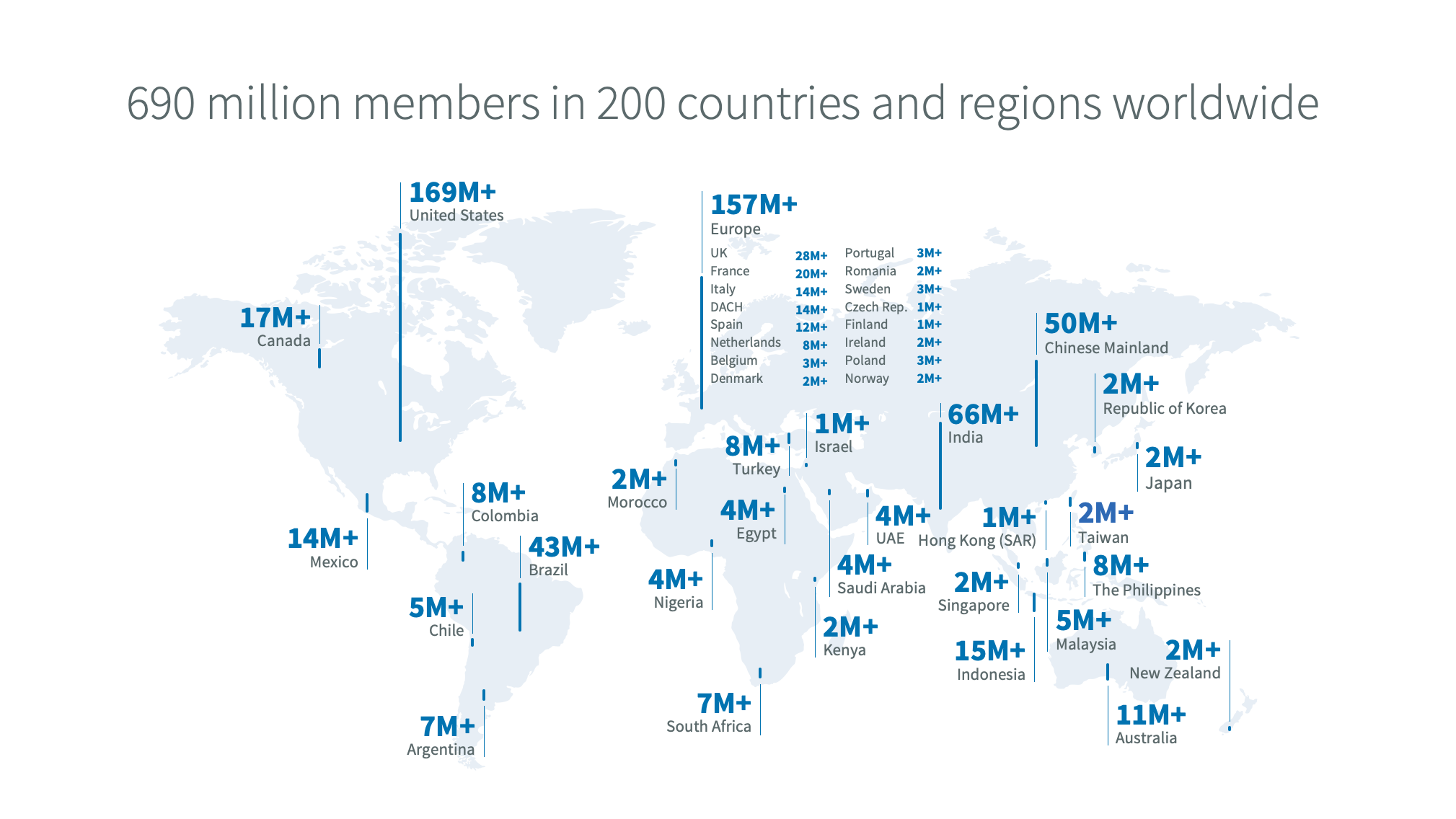
and after reaching 10 million users in 2007, now has just under 700 million
users in over 200 countries. That number has grown 100 million in the past two
years. There must be something to it, right?
LinkedIn global users in 2020
Microsoft acquired
LinkedIn in 2016 and since then, the platform transformed into more of a
Facebook-like platform. The algorithm moved away from pushing the content of
high-profile users such as Bill Gates to millions of users, tweaking it to
ensure people instead see content from people more relevant to them.
When I first
started using LinkedIn around ten years ago, it was vastly different. Long-form
content dominated the platform, along with groups. Fast forward to 2020, and
long-form articles and groups are far less relevant. Articles no longer get
much attention in the feed, and Spam killed the groups, so LinkedIn pushed them
to the background.
Short-form written
content (1200 characters maximum) and videos now dominate the platform. The
introduction of native video on the platform was not until mid-2017. This was a
game-changer for the new LinkedIn “influencer”. Before this, people had to post
a link to an external video on YouTube.
The interface of
the platform is now remarkably like Facebook. It even looks like Facebook.My 15-year-old son thought that LinkedIn was
Facebook when I showed him a video a couple of months ago. When LinkedIn
morphed into a “Facebook for professional people”, its popularity really took
off.
The ‘servicescape’ has become a little-discussed marketing topic in the digital age; yet has quite a considerable influence on customers if you are a service business with a physical location.
First, the servicescape forms a perception in the mind of customers. Then, it contributes to their service experience.
“Physical environments, also termed servicescapes, play an important role, both positive and negative, in customers’ impression formation (Bitner, 1992).”
Welcome to week eighteen of 50 weeks of marketing. This week, we will explore the servicescape and how services can provide a better experience for customers.
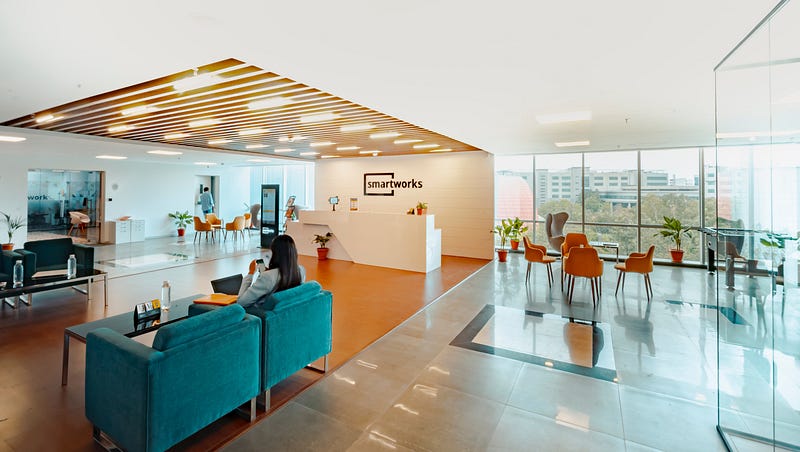
The servicecape of a modern office
What is the servicescape?
The servicescape is the physical environment where a service transaction takes place. It facilitates the customers’ experience, but it also influences their first impressions before they even enter the store or interact with a staff member. This first impression helps customers ease any discomfort of the unknown, then guides their perception and expectations of the service.
In a service encounter, customers interact with the service continuously. For example, at a restaurant. You might have numerous interactions with staff and use the restroom. Service providers need to create a pleasant, convenient, and satisfying experience for customers.
“The design of the physical environment and service staff qualities that characterise the context which houses the service encounter, which elicits internal reactions from customers leading to the display of approach or avoidance behaviours.” (Bitner, 1992)
Bitner (1992) introduced the term servicescape to define the context for a service encounter. It is the physical setting where customers consume a service and/or product and the company and customer interacts with each other. Businesses can (and should) modify their servicescape to match customer expectations and influence customer perceptions. This perception will engage customers to act in a certain way.
If it does not expect and is negatively perceived, chances are the customer will not come back. So, there is a relationship the servicescape and customer loyalty. It is something businesses need to get right. Investing in your servicescape can improve customer relationships and facilitate more sales.
Other definitions for the servicescape has included:
The physical aspects of the service environment are organisationally controllable, objective and measurable. This includes the exterior and the interior of the “brick and mortar” physical environment and the ambience of the service encounter, such as background music and cleanliness, the overall design and furnishings, and the staff’s competence and presentation. The physical components of a servicescape include:
Exterior
• Landscape
• Exterior design
• Surrounding environment
• Parking
• Signage
Facility Interior
• Music
• Layout
• Equipment
• Air quality temperature
• Interior design
Others
• Virtual servicescape
• Web pages
• Employee uniforms
• Stationary
• Business cards
These make up three dimensions of environmental stimuli according to Bitner’s original framework: ambient conditions, spatial layout and functionality and signs, symbols, and artefacts.
There is now a fourth element identified as contributing to the experience: the social dimension.
Ambience or atmosphere adds to the experience at cafes
Ambient conditions
The ambience of a business can be the deciding factor of whether or not a customer comes back. Especially in a café, bar or restaurant. The customer wants to feel as relaxed and as comfortable as possible. If it is too hot, or too cold for example, this will not help the customer enjoy their experience.
The ambience was too often overlooked by services, but as we have moved from a product-based to a service-based economy, it is a common expectation from customers to have a certain level of ambience. Aspects such as colour, music, noise, smell and lighting all contribute to the ambience of an environment. These affect our senses and influence our experience.
Ambience fills most Cafés. Background music and the noise of people talking, the scent of coffee beans, big bright menu displays. This provides a pleasant service encounter for the customer.
Compare going to your favourite café to sitting in a quiet empty room drinking a coffee alone.
“Ambient conditions represent background environmental stimuli, or atmospherics that affect human sensations. These stimuli comprise visual (e.g. lighting, colours, brightness, shapes, aesthetic cleanliness, olfactory (scent, air quality, fragrance) ambient (e.g. temperature) and auditory (e.g. music, noises) elements.” (Rosenbaum & Massiah, 2011)
Spatial layout and functionality
The physical attributes of a store should be the starting point for businesses as they can observe and measure how effectively the layout and functionality enhance employee and customer activity. It is objective and controllable.
Spatial layout refers to the arrangement of furnishings and equipment, their design and what they look like, and the general spatial relationship between these objects in the store. Consider comfort, layout, and accessibility as this can influence consumer approach or avoidance decision-making. Will they turn around and walk back out?
Functionality is the extent to which the business can facilitate the service and provide customer support. This will be dependent on how much help the customers require.
Hotel lobbies and office buildings need functional layouts and style
Signs, Symbols and artefacts
The signage of a business is the first and most obvious places to communicate with customers at your place of business. A big sign in the exterior of the building to communicate your brand to people driving past and signage in the interior of your store. As well as your branding, signs can communicate how to behave in store such as where the toilets are, where to pay, where in-store certain items are.
Symbols and artefacts help contribute to the vibe and atmosphere of a servicescape. Examples of this are the artwork on the wall, and décor design — is it themed or inspired by another culture? People usually interpret these similarly, as the store design will have a certain symbolic meaning and purpose. However, an individual’s ethnicity, for example, can be a moderator for how they perceive a servicescape dependent on how authentic it is to their expectation. This can influence a consumer’s response.
“Bagozzi (1975) noted that most marketplace exchanges are mixed exchanges, in which consumers fulfil not only their utilitarian needs but also their social and psychological needs. Thus, customer approach/avoidance decisions are influenced not only by physical stimuli but also by social, humanistic stimuli.” (Rosenbaum & Massiah, 2011)
The social dimension
The social aspect of a service encounter is dependent on the staff and the environment creating a positive consumption experience for customers. Components of this include the placement of customers, their involvement and interaction with employees. How much are customers able to contribute to the feeling of the atmosphere?
Service providers can be an outlet to remedy loneliness, through consumption communities. Often locally owned and independent, owners and employees at these businesses ‘know’ all about the neighbourhood and the people living there, and often have several ‘regulars’ — customers often spend time there as a home away from home. It becomes a community where people have a sense of belonging and can engage in social encounters free from any constraints and judgement based on their socio-economic status for example.
People subconsciously seek connections with ‘the rest of life, which Wilson (1984) called biophilia. Commercial services such as local bars can encourage these natural encounters, providing value to customers on a personal, psychological level. Oldenburg (1999) called these “third places”.
These service experiences can be restorative to consumers and enhance their wellbeing, through feelings of ‘being away’ and ‘compatibility’. Being away does not require distance but gives people a feeling of ‘escape’, beyond the realms of home and work Temporarily, the experience exports people to a different place. Natural settings are popular destinations for restoration, such as the topical beaches, botanical gardens, and mountain ranges.
“The sense of being away does not require distance; however, it does require that a person feel as though he or she is momentarily in another world.” (Rosenbaum & Massiah, 2011)
The outdoor servicescape
The roles of the servicescape
If your business has a physical store, your servicescape plays four key roles in the success of your business. I will separate these into two categories: Facilitation and socialising, and brand image and differentiation.
Facilitation is keeping the purchasing and service delivery process as convenient and efficient as possible, whilst socialising facilitates interactions between both customers and employees and between the customers themselves. Brand image is the impression customers get from your servicescape and differentiation set your business apart from your competitors.
“The physical environment influences sales, time spent in the store, perceptions of the service experience, satisfaction, dissatisfaction, product choice and customer retention. The physical elements directly influence purchasing behaviour and as such can either aid or hinder a service organisation from achieving its marketing goals.” (Tombs, McColl-Kennedy, 2003)
Facilitation and socialising
The design and fit-out of a service help facilitate two main goals: first to be as efficient as possible to maximise how productive staff are at their job, and also ensuring the customer has the experience they want. Ineffective designs can be frustrating to staff and customers alike. The design of the servicescape can also illustrate to customers where they can and cannot go.
We do not want to hinder the performance of staff or their enjoyment of their jobs, and equally, we do not want to focus on maximising the performance of staff if that reduces the quality customer experience. In services such as restaurants or cafés, the servicescape design helps both customers and employees socialise, to help facilitate a pleasurable experience with friends, family or business clients.
Overcrowding in retail stores in shopping centres can hurt atmospherics. However, in some contexts such as live sport and concerts, crowding is positive for consumers as it adds to peoples’ enjoyment. Social contagion spreads the happiness or ‘atmosphere’ throughout the crowd. Cafes, bars and nightclubs can have a similar feeling, where part of the attraction is because people like to socialise.
The ideal social density changes between service encounters, and because it affects the customer experiences and their intent for future consumption, it is something business owners need to understand. Find out whether a social experience is important to your consumers and create a spatial layout that facilitates greater social interaction. Other business customers might want to avoid each other as much as possible, such as a bank, doctor or solicitor.
Brand image and differentiation
The servicescape for a business is much like the packaging for a product or a website. It conveys a certain expectation to customers, and they perceive it in their unique way. It will attract some people and others will not like it. One person will feel comfortable in a place and not so much in another.
Such Hell’s Pizza here in New Zealand. The took a slice of the pizza market away from Pizza Hut and Dominoes with their unique branding. Your servicescape helps differentiate your brand from the next. For example, McDonald’s versus Burger King. The food is remarkably similar, but the restaurants are vastly different and there is no way you would confuse the two. The unique ‘Golden Arches’ at McDonald’s as you drive in the first dead giveaway, then there’s Ronald McDonald and the playgrounds…
All of this creates an image in the mind of consumers of what to expect. It helps position your brand in the market to attract your target customers. The playgrounds at McDonald’s targeted at families and unashamedly so. Your servicescape communicates your unique value proposition for customers and it will help attract attention to your business.
That is week eighteen of 50 weeks of marketing! I hope you enjoyed this week’s content about Servicescape.
Price is perhaps the most crucial aspect of the marketing mix to determine whether customers make the purchase. If priced too low, profit goes out the door and you must work harder. Priced too high, customers will overlook you. This article discusses several pricing strategies that businesses can use.
Welcome to week fifteen of 50 weeks of marketing. This week's blog explores price and the numerous pricing strategies that businesses can use.
Pricing
Price is the value placed on a product or service to purchase it, based on research, experience, and an understanding of the marketplace. It is an educated calculation of the price needed to be profitable and sell enough volume to be sustainable as a business. Price also must stand its ground against alternative options from competitors.
Pricing is at the core of marketing strategy, being one of the original ‘4Ps’ of the Marketing Mix.
Changing other core marketing strategies such as advertising or new product development is expensive and time-consuming, but the price is very flexible, and business can change it according to the needs of the situation. Price is the most adjustable aspect of the marketing mix, allowing a business to quickly respond to marketplace changes.
For customers, price is often the most crucial factor of their purchase decision. Businesses use price as a differentiating factor to set them apart from competitors and to target a segment of customers. Your price reflects your positioning in the market. Pricing helps create your brand identity.
“One of the more basic, yet critical decisions facing a business is what price to charge customers for products and services.” (Morris, 1987)
Factors that impact the price
There are several factors to consider with a pricing strategy.
The first factor to consider is cost. Or, what your time worth? Cost Plus takes into consideration production costs, then adds a certain percentage of profit to that total. This is a basic way to price a product, and often business use more than one pricing strategy in unison. There could also be other internal considerations within the business that can impact pricing such as quality.
The perception of value in the minds of customers is another important contributing factor a business must consider with their pricing. What do consumers think a reasonable price to pay is? Price and value will not always align with customers, and this perception of value will change over time. The more a business understands what their customers value, the easier it is to price your offering.
“This decision is particularly critical in what The Economist (2013) calls the “age of austerity” — an era characterized by sales stagnation, no reasonable possibility of cutting costs further, and price as the only remaining lever. In this competitive environment, more than ever, a sound pricing strategy is required to facilitate customer value creation, structure price decisions, and earn a profit. (Kienzler & Kowalkowski, 2017)
The competition, of course, must come into consideration. What are they doing? What are their prices? How does their product or service compare to yours? If there are similar offerings that are equally attractive but at lower prices, then you probably will not have many customers.
Economics is going to impact your market and therefore your price also. What is the economy doing? Are people willing to pay a premium? Is there a shortage of supply? How highly regulated is the market? We have recently had the Covid-19 outbreak around the world, forcing many businesses to close and changing business environments. There are now many incentives required to bring customers back to some industries where there has been a reduction in demand. Demand will have increased for other services such as delivery services.
Getting the price right
Pricing your products exactly right to get the absolute maximum profitability is easier said than done. Getting the highest volume of sales must balance at a profitable price. You could have the most brilliant math minds in the world looking at every single statistic possible to create a calculation for maximum profitability, and still not get the price right. There are so many factors outside of your control. Having said that, there are many things a business can do to ensure they are not getting it horribly wrong. Pricing decisions can have significant and disastrous consequences.
It is often the first and most important considerations for customers and it determines your profitability and ultimately, your success. It is the only marketing tool that provides the income — every other activity is an expense.
“Developing an appropriate pricing strategy is both crucial and highly complex. Prior research emphasizes its dependence on various factors, such as the environment, firm objectives, customer characteristics, and the pricing situation” (Kienzler & Kowalkowski, 2017)
Pricing Strategies
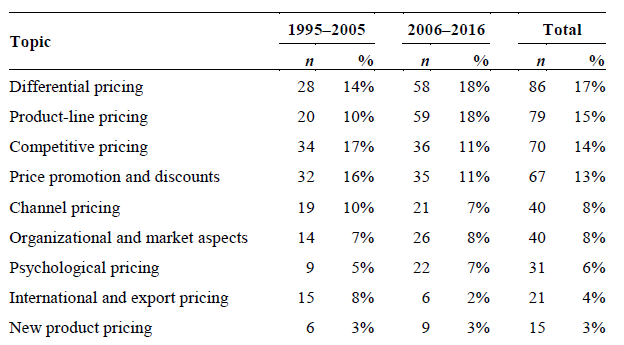
There are several methods and strategies a business can use to price their products. At a basic level, there four basic pricing strategies — premium, penetration, economy and skimming. I will discuss these along with several other strategies that businesses can use in unison in their pricing strategy. Kienzler and Kowalkowski (2017) identify many of these as being the most discussed in the marketing literature over the past 20 years. The eight other strategies are Loss Leaders, Differential, Competitive, Price Promotion and discounts, Psychological, Everyday Low Price, Bundled and Captive.
Premium pricing
Using a price structure that is higher than many of your competitors is a premium pricing strategy. The premium price alludes to the fact that the product or service is of a much higher value, usually consisting of a certain competitive advantage or unique characteristic in the minds of customers. Like a Ferrari or Aston Martin. They have a certain look, high performance and level of luxury not found in a Toyota or Ford. Keeping the price high creates an impression of higher quality than alternatives. You are unlikely to ever see a stock clearance sale on a premium brand.
Penetration pricing
The strategy with penetration pricing is to under-price a new product or service initially to gain market share more quickly. It is common with a product launch, increasing the price after this initial promotional period. The aim is to penetrate the market and steal customers away from competitors. If you can get customer loyalty and positive word of mouth during this period, that also helps marketing efforts.
Economy pricing
A no-frills brand or range of products have an economy pricing strategy which is based on a high volume of sales. Margins are low as are any overheads such as marketing costs. Many brands in a supermarket have an economy pricing strategy, and the supermarket itself will have this strategy. Targeting is at the mass market to gain a large market share, and there is little to differentiate any product besides the low price. The packaging is usually extremely basic.
Low price often equates to low quality in the eyes of customers, so there’s little chance of ever-increasing price as customers will be very price sensitive.
Skimming strategy
Initially charging a high price and then lowering it over time is a called a skimming strategy. This strategy is useful until the market has become saturated with competitors and lower the price accordingly. This strategy is usually only reserved for brands with a first-mover advantage or a strong competitive advantage such as a unique technological advancement. Wealthy segments of the market are usually targeted.
Examples of this are when mobile phones first become popular, texting and call charges were extremely high with just one or two providers. Similarly, with smartphones, the original series of the iPhones only had the one expensive model when there were not alternative android models for much cheaper with similar capacity.
Loss leaders
Whilst most of these pricing strategies are on a brand or product level; Loss Leaders is a store level strategy. Certain retailers such as supermarkets sell high profile and high volume brands such as Coca Cola at a low price, maybe at a slight loss depending on competition, intending to attract customers rather than being a profitable product. This strategy is based on the fact these customers are highly likely to purchase other products that are more profitable items.
You just want to get people into the store. Sales work the same way, a highly discounted TV because they might purchase the cabinet and home theatre that comes as a bundle. But often this is a day to day pricing strategy. After all, who goes to the supermarket just to grab some Coke, right? You will probably grab some potato chips or a bag of nuts, maybe some bread, toilet paper or milk, some bread, maybe some beer…
Differential pricing
Also known as discriminatory pricing or multiple pricing, differential pricing uses the law of demand as the key principal. Recognising that certain customers are willing to pay extra for a product based on the market segment they belong to; selling the same product or service to different customers at different prices.
Think about going to an auction for a property. If there are ten bidders, for example, they will also see value at a slightly different level. As the price goes up, the number of customers reduces.
Businesses can offer slightly different value propositions to different market segments with differential pricing. Pricing at a sports game or a concert is an example of differential pricing. Kid’s prices, family prices, corporate boxes, front row seats, VIP passes, season tickets… This helps the businesses maximise their potential profit by focusing on their customers’ unique valuations.
Brand Image in product segments such as clothing and cosmetics can also allow for different pricing in different markets, location, and time such as early bird tickers are another variable.
Competitive pricing
Also known as reference pricing, Competitor pricing is set by the market, priced just below the price of a competitor’s product. The term reference explains the use of the competitor’s price as a reference for the price, they are willing to pay.
In New Zealand, in the past because of our geographic isolation and low population, multi-national companies often leave us alone, leading to monopolistic and duopolistic markets. Telly-communications and Airlines in particular.
Air New Zealand has enjoyed a free market for extended periods, and occasionally a company like Jetstar or Virgin will come along to take a share of the market. Not often successfully. But when they do, forcing Air New Zealand to lower prices to match the competitors. Volumes of sales increase accordingly.
Going rate pricing is a by-product of highly competitive markets, where the companies have little to no control of the market price. E.g. Mobile phone rates are all similar and standardised across the market. The price of a regular-sized coffee is usually $5 in New Zealand, regardless of what café you visit.
Price promotion and discounts
Using price as a tool for sales promotion is common marketing and sales tactic. Usually, a product or service temporarily discounted in price. We have all seen it, 40% off all Tupperware for three days only! For many consumers, the value that they perceive in a brand’s product or service increases with a reduction in price. A short amount of time to purchase creates urgency around the transaction that the buyer might miss out.
Discount coupons are another form of price promotion which is also designed to promote brand awareness as the consumer a required to hold onto it physically, meaning brand recall should be higher as the coupon might be noticed often when rummaging through a purse or draw for example.
Price discounts often are a strategy to clear out-dated inventory. A study by Ailawadi, Lehmann and Neslin (2001) who looked at data from P&G when they changed their pricing strategy to cut deals and coupons and invest more into advertising, and they found coupons and discounts help with market penetration, but have little impact on customer retention and product usage. Overuse of discounting pricing can be harmful to a brand image over time and reduce the brand equity — being the premium a customer is willing to pay over a competitor.
Trade and volume discounts are common pricing strategies in B2B, especially in the trades with wholesale buyers. This also helps enhance loyalty as there are often many competitors in the market. Some products may have seasonal pricing, often summer clothing is on sale in the middle of winter and vice-versa.
Psychological pricing
Businesses can design their pricing to have a psychological impact on purchasers. Marketers using Psychological pricing to “trick” the customer’s brain into thinking the price is lower than it is. It is a common tactic in retail — we have all seen pricing at $99.99 instead of $100.00. The price rounds up to a hundred anyway, but the customer sees the 99. The lower number is more attractive to purchasers.
Everyday low price
Another store-level strategy, Everyday Low-Price strategy is popular with large format retailers. Margins low and therefore prices are low, selling in high volume. Think Walmart in the USA. People shop there because they know prices will be low, therefore the business does not need to spend money advertising their prices. You do not have to offer discounts to get people through the door. This saving on advertising costs keeps prices low and customer loyalty is often high, as people know what they are going to get and there are no gimmicks.
The two largest home and hardware store chains in New Zealand, Mitre 10 Mega and Bunnings Warehouse both use this strategy. It is more than just a pricing strategy; it is a business strategy.
Studies (See Montgomery, 1997) have shown that having micro-marketing pricing strategies instore — e.g. not promoting discounting options besides an aisle display that is low cost and low in labour, can improve profits by four to ten percent. This also allows organisations to maintain their consistent brand image but still alter prices to adapt to local markets.
Bundled pricing
When more than one product sold together at a lower than the price to buy the same items individually, this is a bundled pricing strategy. The products could be similar, e.g. shampoo and conditioner, or they could be dissimilar but under the same brand. This is an effective way for businesses to clear old stock. Buy one, get one free is an example of bundled pricing.
Other examples of bundled pricing are signing up for both power and broadband services from the same company and get a discount, or a bundle deal at the local pizza store to get 2 large pizzas, garlic bread and large drink for cheaper than purchasing individually. A Big Mac combo instead of a Big Mac. The strategy behind this approach is to stop customers dwelling on the price but instead on the benefits of the bundle.
Captive pricing
Captive pricing is where a primary product has secondary consumables that customers must purchase to function. Battery companies often manufacture torches for example or razor blades. The initial offering is cheap, but the consumables are not. This is a popular pricing strategy when there are other complementary goods you can also sell the consumer.
That is it for this week’s topic about pricing. I hope you learnt something new!
There are many strategies a business can use to base their pricing — hopefully, this makes it all a bit easier to understand.