Showing posts with label sales funnel. Show all posts

How to Manage Customer Relationships with CRM

What is CRM?

It‘s cheaper to retain customers than it is to attract new ones. It pays to look after them.

Wouldn’t it be great to have a tool to help us track our interactions with customers to understand their needs better?

And manage ongoing relationships with our customers as well as customer leads.

It is cheaper to retain customers than it is to attract and convert new ones.

Meaning we’re more profitable!

This blog explores Customer Relationship Management — explaining how it works and its benefits of using CRM.


What is Customer Relationship Management?

Customer relationship management (CRM) is a strategic business approach to managing interactions with existing and potential customers.

Grounded in the foundations of relationship marketing, CRM is often used to describe technology-based systems that manage customer information and solutions.

“Relationship marketing theory provides the foundations of CRM, which is “the process of acquiring, retaining, and partnering with selective customers to create superior value for the company and the customer.” (Parvatiyar & Sheth, 2001)

The focus is on customer retention through streamlined processes and staying connected to customers to improve the relationship. Firms manage and analyse their interactions with their past, current and potential customers.

Firms can use numerous customer communication channels to compile data, including a company’s website, telephone, email, live chat, and social media.

The ultimate goal of CRM is to increase sales.


A Brief History of CRM

Customer relationship management dates to the 1970s. Initially, businesses used surveys to evaluate customer satisfaction. As computer technology developed, companies used spreadsheets to categorise and analyse data and create lists of customers, which became the basis for database marketing.

In the 90s, CRM evolved as more large tech companies such as Oracle got involved and created customer software solutions, including sales force automation and customer service.

With the advances in the internet, the early 2000s saw CRM migrate into cloud technology, meaning users could access it online from any computer.

Being online also removes the burden of installing and updating software, keeping IT costs lower and being extremely flexible for businesses to upgrade as they grow.

Industry-specific software or full-customised CRM was also replacing standardised CRM options to meet businesses' needs further. Industry data suggest Worldwide spending on CRM will exceed USD 110 Billion by 2027.

“Uncertain markets and dwindling brand loyalty are critical factors which are leading service-based firms to adopt CRM as a business strategy.” (Dewnarain, Ramkissoon, & Mavondo, 2019)


The Benefits of CRM

A customer-centric marketing strategy allows firms to create and maintain relationships with their target market. CRM is a vehicle for this.

With rising customer acquisition costs and increasingly price-sensitive customers (They do not like to pay more), creating long-lasting, mutually beneficial relationships is key to increased customer retention.

The better we are at providing solutions to customers, the higher chance they will remain loyal, increasing their lifetime value to a firm.

CRM is a comprehensive approach to providing customer solutions.

Information kept and organised about leads and customers, as well as every interaction that takes place. If customers regularly interact with multiple people on your team, it allows everyone in a firm to keep track of conversations.

“Organisations today must focus on delivering the highest value to customers through better communication, faster delivery, and personalized products and services.” (Chen & Popovich, 2003)

Some of the direct benefits to businesses of using a CRM are:

  • Increased ability to target profitable customers.
  • Enhanced salesforce effectiveness and efficiency.
  • The marketing and sales teams function together more cohesively.
  • We have improved customer service effectiveness and efficiency.
  • Products/services customised to individual customer needs and preferences.
  • Communication channels integrated into a single platform.
  • Increased responsiveness to changing customer needs.
  • Improved data to more precisely segment customers based on their characteristics/needs.
  • Individualised marketing based on customer behaviours.
  • Increased opportunities to cross-sell and up-sell customers.
  • It's a key component of a sales funnel.

The Functions of CRM

The underlying function of CRM is to build customer relationships and to manage these as they mature through distinct stages. Firms keep a database of customer information to understand better those customers and better meet their needs.

The firm helps them analyse their customer data to identify sales opportunities and manage customised marketing campaigns from a central location.


Integration

For large organisations, one of the most significant benefits of CRM is that everybody has access to the data, making it easier to collaborate across teams and the entire customer lifecycle.

Sales, marketing, and customer support become integrated and automated.

Every detail about individual customers is kept, such as who they are and how their interaction with the firm.

Knowing these details helps everyone do their job better as it provides context about customer’s needs and situation, so one staff member can pick up the conversation where the last one left off.

Firms can manage inquiries across channels without losing track of conversations.

“To some, it meant direct mail, a loyalty card scheme, or a database, whereas others envisioned it as a help desk or a call centre.
Some said that it was about populating a data warehouse or undertaking data mining; others considered CRM an e-commerce solution, such as the use of a personalization engine on the Internet.” (Payne & Frow, 2005)


Marketing

CRM allows for marketing automation to make it more effective and efficient.

Firms can set up repetitive marketing tasks such as social media posts or email marketing to be sent to groups of customers at various times, with different messages, based on customer segments' individual needs and behaviours.
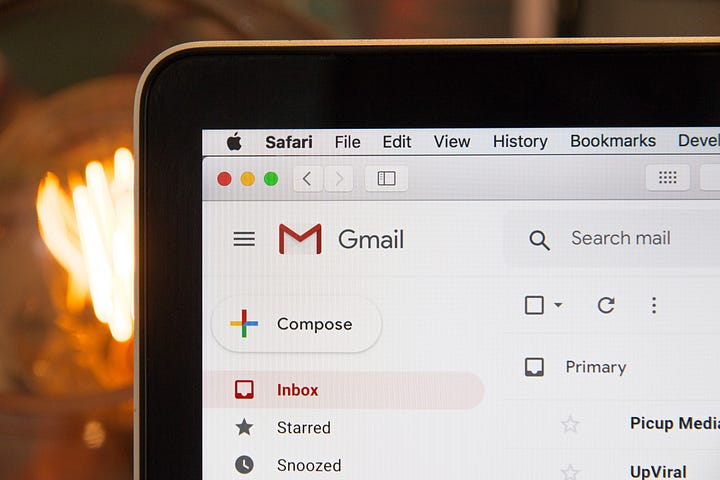
Using email for CRM

Marketing aims to put the right message in front of the right people at the right time. CRM systems also monitor how customers preferred communication method.

Daily emails? Weekly emails? Monthly phone calls?


Sales

Automation of the salesforce is another crucial function of CRM. Wherever a customer is in the sales cycle (buyer decision process), firms customise their communication for their situation (assuming we know enough about them).

CRM tracks a customer’s history with the company to know as much about them and tailor their communication.

It is critical to categorise recent sales leads accurately, as special sales promotions with different offers can be targeted at diverse groups of customers to fit their needs best.

Firms can focus and prioritise the right leads that are likely to be the best opportunities to close profitable deals. Firms do not want to waste time and resources on prospects who will never become profitable customers or clients.

Sales reps can work more efficiently, and sales forecasting becomes more accurate.


Customer Support

Another benefit of CRM is that customers are served better on a day to day process.

Direct customer service technologies mean that support becomes more personalised and automated, and customers supported through multiple channels.

CRM keeps a record of every customer interaction, the extra insight into customers helping business be more constructive with improving their customer service experience and providing better solutions.


Data Analysis

Another valuable function of CRM is the ability to analyse customer data collected through multiple digital sources.

Data mining helps businesses to learn more about their target customers.

We can find out where our sales come from, what characteristics our customers have, the best way to communicate with them, and how to best cater to their needs.

Through analysing our data, we can find patterns in consumer behaviour that informs our decision-making. Identify any potential issues, as well as what is going well.

Analytics provides all sorts of customer information, such as their past sales and how they reacted to previous marketing efforts. If we find out that certain customer groups are not purchasing, we can change our offer.

It can be a trial and error process better to understand their buying behaviour and spending habits over time.


Final Words

In summary, a value proposition is the summary statement of why a customer would choose a company’s product or service. It frames how they uniquely provide value to customers.

This article has discussed the importance of creating a value proposition and the steps a business can take to create its own and differentiate itself from competitors.

Thank you for reading.

If you enjoyed the content, you might be interested in this article on enhancing customer loyalty.

Social Selling: How it Works and 10 Tips to Optimize Your Strategy

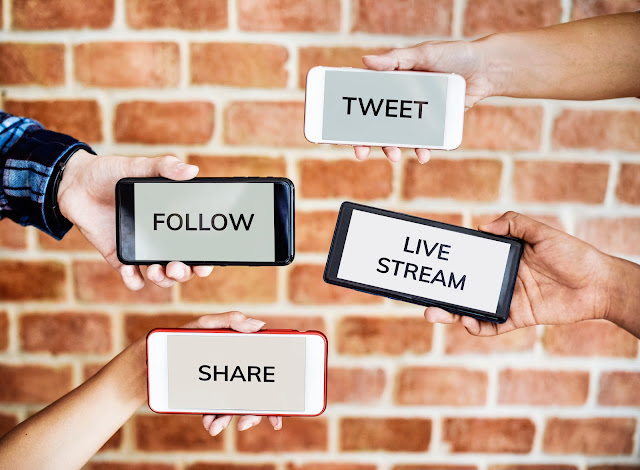
Social selling as a marketing strategy

Social media is a pretty big deal in 2020. It was a pretty big deal back in 2010! But now, even more so. 

Literally billions of people spend hours a week, sometimes hours a day, scrolling through their social media feeds, engaging in content that interests them.

Businesses came to realise pretty quickly that social media is a pretty useful tool to reach their potential customers. 

Social selling was born as a way to communicate with potential customers through social media, in a less obtrusive way than traditional marketing. 

So how do we do this?


What is Social Selling?

Social selling is the use of social media to research, find, and understand sales prospects, to network and engage in conversations in online communities with them, to build and strengthen relationships.

“Social selling is taking out the pitching component of sales. You’re creating conversations about your product and services which organically can produce sales conversations.” (LinkedIn)

The aim is to provide value to prospective customers through answering questions, responding to comments and sharing content related to your area of expertise.

Prospect cans are anywhere throughout the buying process — from awareness to consideration. The idea is to consistently provide value, so you are the first person or brand a prospect thinks of when they are ready to buy.

Digital marketing principles can implement at an individual salesperson level or a firm level, but social selling requires an investment of time, effort, money and technology. It can be done on a shoestring budget, but to create quality content, we need to invest in our social selling strategy.

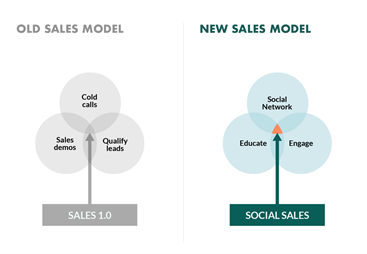
The popularity of social media makes it a perfect platform to build relationships with prospects. Through an emphasis on social interaction and content creation via digital platforms, social selling could be considered sales 2.0. The image below illustrates how it differs from the traditional sales model.

Social selling - Sales 2.0
“Social selling is the identification, targeting and reaching out to prospective and existing customers through social media channels and social communities in an effort to engage them in conversations that result in a potentially mutually beneficial relationship.” (Belew, 2014)

According to Statista, around 3.6 million people are using social media in 2020. By 2016, approximately 71% of all sales professionals were social selling in some way or form, even if they did not know it.

Having a business page on Facebook or commenting on posts in groups on LinkedIn for example are social selling tactics. It is not about bombarding strangers with private messages selling something after you connect on LinkedIn.

That is spam and the opposite of what you should do.

Sales strategy has always revolved around building and strengthening relationships to establish rapport and credibility with prospects and customers, so you are the one they think about when they require a solution to their problem, that you provide.

Social selling uses this same methodology but does it online with social media instead of requiring cold or warm calling or sales demos.

It might not be a surprise to you to hear that not many people enjoy doing cold calling and that many people do not like to receive cold calls. According to the Harvard Business Review, 90 percent of decision-makers say they never respond to cold calls. This means it can take numerous cold calls to reach a potential client if you can reach them at all.

“The approach is not simply another sales channel for making sales pitches but a way to engage the informed, empowered, and social buyers during their purchasing journeys using digital and social channels.” (Ancillai, Terho, Cardinali, & Pascucci, 2019)


How to Use Affiliate Marketing to Increase Sales or to Create an Income

 Affiliate Marketing

Affiliate Marketers act like a salesforce for a business. 

Marketing can be a costly investment for businesses. Big investments into advertising can be an elevated risk if you do not know the return.

Would it not be great if someone else better at marketing took up that risk and funded the marketing?

You could pay them a small commission fee for each sale. It may sound too good to be true, but it is not. This is called affiliate marketing.

This article explores affiliate marketing, how it works and the benefit it provides to both the seller and the affiliate marketer.


What is Affiliate Marketing?

Affiliate marketing is an endorsement-based advertising strategy, that earns promoters (affiliate) money when internet users act on that marketing.

Based on a model of revenue sharing, vendors (merchant) offer a financial incentive such as a commission, through an affiliate program. Affiliates earn a piece of the profit for each sale through creating marketing content to try redirect customers through a customer URL to the merchant’s product.

Affiliates can make money promoting products and services and make an income, without actually having any of their own.

For the merchant, it employs the help of affiliate to invest time and money into marketing your products or services. to expand their reach on the target (online) audience.

According to Mediakix, affiliate marketing spending increases every year in the USA, with around a 10 percent yearly increase in affiliate marketing spending.

Affiliate marketing refers to an online relationship between the so-called merchant and the affiliate, where the merchant pays the affiliate a commission to redirect potential consumers to the merchant’s website (Libai et al., 2003).


How Affiliate Marketing works

Affiliate marketing involves four different parties:

• The merchant,

• The affiliate,

• The affiliate marketing network, and

• The customer.

From a marketing point of view, there are two components: the merchant who has produced the product or service for sale and the affiliate marketer who promotes it.

With a traditional business model, the seller bears the risk that profit exceeds the overall marketing costs. However, an affiliate takes on the promotion efforts and then earns a piece of the profit from each sale they make. This is usually via a predefined commission, and the sales are tracked via personalised affiliate links.

For the affiliate, they just need to be good at marketing. It works similarly to somebody employed in sales on commission. Such as real estate agents. This incentivises their performance. This is a huge benefit to the merchant having a purely commissioned sales force and predictable marketing costs.

In the other hand, affiliates can create a revenue stream without investing in inventory or infrastructure.

“The key to successful affiliate marketing lies in the construction of a win-win relationship between the advertiser and the affiliate.” (Duffy, 2005)
How Affiliate marketing works
Imagine via JustLearnWP.com

1. The merchant

The merchant is also known as the seller, vendor, or retailer. They are the party who created the product to market — it could be a physical object or a service. They could be a sole trader or a large corporation. Once the product is created, they are not required to be actively involved in marketing. They have others do the promotion, in exchange for a commission on sales.


2. The affiliate

Also known as the content creator or the publisher, the affiliates try to create appealing marketing to attract customers to the merchant’s website. They create content for the products to share on social media, blogs, and websites.

Affiliates often already have an audience or following on social media, so they choose products in their niche that meet the needs of their audience. For example, If I had built an audience posting content about fitness and health, I would not become an affiliate marketer for a candy company.

“There are thousands of affiliates, working for many different advertisers simultaneously, driving incremental traffic and sales in exchange for commission.” (Duffy, 2005)


3. The network

Many merchant/affiliate relationships are managed through affiliate marketing networks. There are two key relationships: The first is with the affiliate and the second is with the merchant. The network works as an intermediary between the merchant and the affiliate.

Affiliate marketing networks such as Linkshare, Commission Junction, and Clickbank facilitate the tracking of sales transactions, payments and product delivery. Their technology tracks all the activities and manages the commissions and the issuance of payments to affiliates.

These networks also serve as a database of products, out of which the affiliate can choose products or services to promote. The network facilitates the management of applicants, making the process of participation easy for both the merchant and the affiliate.

Amazon also has an affiliate network (Amazon Associates Affiliates Program), to help promote consumer products such as books and toys, sold on their platform.


4. The consumer

The consumer (or customer) make this relationship work. If they do not purchase, there is no revenue and the affiliate will not receive a commission. When consumers buy the product, the seller and the affiliate share in the profits.

There will not be a higher price for consumers purchasing through an affiliate, as the cost of the affiliate network is typically included in the price.


Email Marketing: A Tool to Strengthen Relationships, Improve Brand Awareness and Increase Sales

 Email marketing - BYB Marketing blog

Email Marketing has become one of the most popular and effective marketing method and relationship management tool used by businesses since it rose quickly into prominence with the internet about 25 years ago. 

Pretty quickly, most people had a personal email address and were checking their email, making it a powerful tool to communicate with people.

This article explores the use of email as a marketing tactic.


What is Email Marketing?

Short for electronic mail, email is the sending of messages to one or more recipients, distributed by electronic means via the internet. Email marketing is a digital marketing tool that uses email to develop relationships with prospective customers and maintain and strengthen relationships with current customers. The end goal is to influence these people to make a purchase and be ongoing customers.

“Companies often list email as one of their most powerful marketing channels. To this day, the size of your email list is a demonstration of your reach and thought leadership. However, your email marketing campaigns should be part of a holistic approach to educate your contacts about your company.” (Georgieva, 2012)

The popularity of email marketing has been a part of the ongoing trend away from a product-focused marketing strategy to a customer focus of customisation and relationship management, to satisfy the needs of each customer.

Email marketing has been growing since the mid-1990s and is a widely used marketing tool by the majority of B2B and B2C companies. In 2015, one study indicates that over 80% of firms use email as part of their marketing strategies (See Zhang, Kumar, & Cosguner, 2017).

The benefits of email marketing

Email is a powerful marketing tool, with several benefits for businesses using it to build customer relationships and increase sales. Using their database of email addresses, businesses can design email marketing campaigns, personalised for diverse groups of leads and customers. Some of the benefits of email marketing are:

Brand awareness — keeps the brand top of mind and people informed about what you offer.

Speed — a quick output and quick response for lead generation.

Segmentation— allows you to selectively email members of your database depending on their behaviours.

Cost-Effective — Low cost per contact for customer acquisition. A better return on investment many other forms of marketing.

Targeted — you are sending relevant materials to your audience.

Customer Dialogue — encourages a two-way dialogue with customers, where communication is one way with many other marketing methods.

Trackable — Analytics allows you to track the performance of your emails.

Conversion — turn prospects who are interested in your industry or your products/services into customers.

CRM — customer relationship management helps maximise the lifetime value of customers by increasing customer retention and repeat purchases.

Objectives of email marketing

Email Newsletters are great not only for marketing to prospects but also for nurturing your existing customers. Some of the objectives of using email marketing are:

Send recipients to other marketing content such as landing pages with exclusive offers, blog posts or other valuable content.

Communicate with a community, customers, employees or other stakeholders to generate a reaction or a result.

Inform the reader about a new offer or send them to a blog post.

• Maintain and develop long term relationships with current customers.

• Motivate customers to finish a purchase who have items in their shopping cart that was abandoned.

Increase sales by converting more leads into customers and selling more to previous customers.


Analysing the results of your email marketing

One of the major benefits of email marketing is the ability to monitor subscriber engagement and interest.

It is a process of continual improvement — testing and tweaking your email content and database management. To analyse the performance of your email marketing, there are several key metrics to help measure the performance of each campaign against previous benchmarks.

For example, analysing the interaction that people have with your website after they click on a link, this can help you pinpoint how to improve the user experience on your website. Two different landing pages could be used to test which one receives better results.

Open rate is the proportion of people opened the email. But this can be an inaccurate gauge as customers who are active in opening a firm’s emails may not be active in purchasing and vice versa. Some people are more responsive to emails. Some people like to browse. Other people may purchase but never open their emails. Therefore, it is important to track more factors than just your open rate, such as tracking your click-through rates and conversion rates.

Bounce rate is the total emails sent that could not be delivered to the recipient’s inbox, If one particular campaign has a lower than average delivery rate (high bounce rate), examine the subject line and content of that message to check if there’s something that could have flagged it as spam.

The list growth rate is how fast your email list is growing. This is calculated by subtracting opt-outs and hard bounces from the number of new email subscribers gained per month.

“Be clear to your target market about what they will get out of subscribing to your emails. Give them a clear description of what the value proposition is. For example, will your emails offer: (1) tips and tools on how to run their business more efficiently, (2) product updates from your company, or (3) special offers via email? Your audience will want to know “why” they should subscribe before they decide to clutter their inbox with even more emails.” (Georgieva, 2012)

Unsubscribe rate is the proportion of people in your database who unsubscribe from receiving your emails. This is not always a reliable picture of the health of your email list, however, as many subscribers no longer want to receive emails will not bother to go through the formal unsubscribe process. They will just stop opening email messages and delete them instead.

Click-Through Rate (CTR) is a foundation of email marketing analytics, as it indicates whether the message was relevant and the offer compelling enough to check out. This measure how many people click on the offer or other link in your email.

Conversion rate is the proportion of people who clicked a link and completed the desired action, such as purchasing a product. This is also dependent on factors beyond the original email message, such as the quality of your landing page or the offer itself.

“Conversion rate is the ultimate measure of an email campaign’s effectiveness. The higher your conversion rate, the more relevant and compelling the offer was for your audience.” (Georgieva, 2012)

Revenue per email measures the ROI of an email campaign, calculated by dividing the total revenue generated from the campaign by the number of emails sent. This is only relevant if you generate a lot of direct sales from email campaigns.


Spam

Because it is so cheap and accessible (anyone with an email address can send a mass-email), email is used as a tool to spread spam emails. Spam is unsolicited digital communication sent out in bulk to random email addresses without consent.

Spam has caused email marketing to leave a bad taste in the mouth for many people. We’ve probably all received an email or two from a Nigerian royal or long-lost family member promising us millions of dollars.

“Low production costs spur greater production, inducing entry to the industry by legitimate and not-so-legitimate marketers, which further increases the volume of email messages sent. As a result, consumers are awash in a sea of ads and information, some useful and some not.” (Pavlov, Melville & Plice, 2007)

The significant difference between spam and genuine email marketing is having an opt-in policy. If businesses keep rigorous with this, it means they are only emailing people who consented to receive them, and the business will not get any trouble. Most countries around the world now have anti-spam laws, so its best businesses are cautious with who goes into their emailing database.


Database management

A database can be powerful. But only if managed correctly.

A database should be continuously updated to make sure it stays relevant. If a user has been emailed 20 times and has never opened one of those emails, they probably should not be emailed once a week. You might email them once every 6 months or remove theirs completely. Your metrics will tell you who is no longer engaging.

Database members should be categorised so you can best meet their needs. Group them based on some common characteristics and behaviours.

Continually work to add new contacts to your email database, as the natural churn rate of an email list can be 25% or even more per year. Make sure you are gaining new relevant people on your database by providing a benefit to them by being on your mailing list (exclusive offers, gifts, industry updates etc).

Software such as Mailchimp or Constant Contact will help you manage your database as well as setting up your email marketing. Some systems will also you to set up your whole sales funnel with landing pages for lead generation, as well as for analytics and reporting to allow you to monitor the performance of your email marketing campaigns.


Email marketing strategy

Email marketing is about more than sending your latest offer out to your database once a month. Businesses must think of it like designing marketing communication campaigns — because they are! The objectives of email marketing should be clearly defined, who the target recipients are, the content must be developed to fit the purpose. Make sure it provides value!

The email campaign should be tested on a small sample, tweaked and then sent to the segmented members of the database. The results should then be measured to see what you can do better next time.

As well as immediate results, businesses should consider how their strategy will affect their future profitability. If your business sets up lead nurturing, emails are sent out automatically to new leads, according to the schedule you set up. lead nurturing is all about understanding the nuances of your leads’ timing and needs- tightly connected series of emails with a coherent purpose and full of useful content.

Tying a series of emails to a specific activity such as joining a mailing list, and then sending them an automated series of emails to learn more about their behaviour and potentially influence a purchase. The lead is qualified over a period with automation, saving a business time and energy.

Leads should be segmented into groups of buyers as you learn more about them to better meet their needs and provide them value. Targeted marketing has a far better return on investment than mass marketing — so do not be tempted to send the same email to all your contacts!

Email is a vital component of a marketing and sales funnel — where the objective is to turn as many leads into sales as possible. But email should be part of an integrated marketing approach — email does not work in isolation.

Marketing and sales funnel - BYB Marketing

Your marketing emails need to be complemented by other efforts, such as search engine optimisation and content marketing on social media. If you blog, send people to your blog via your email and encourage people to sign up to your newsletter at the end of blog posts.  

Your marketing strategy should outline how your individual marketing efforts complement each other.


Email content

What goes into an email? Of course, this will vary depending on the firm and its objectives. But there are some general rules when it comes to the content of email marketing.

The email title must convince the recipient to open the email. This is key. It must be related to the content of the email (stay away from clickbait), but at the same time be compelling enough that the recipient is curious enough to open the email. Because many people check their email via smartphones, long titles will not be displayed in full. Aim for 5 to 9 words.

“In the Subject: line Each word makes a critical difference in whether your message is opened at all. Once its opened, you only have seconds to capture the readers imagination. You have to grab their attention and keep it.” (Sterne, & Priore, 2000)

Your content must be brief and relevant for the recipient. Grab their attention right away, by containing the most information in the first paragraph. Try and keep it the length to under 100 words.

Use a personalized greeting at the beginning of the email and a clear call-to-action at the end of the email. Include a couple of hyperlinks to other useful content such as a blog or video on your website, or a custom landing page that contains more information (find out more, or to order).

An option to unsubscribe must be available. Email marketing software with automatically using an unsubscribe option.

The layout and design of email marketing are important — especially if it is a newsletter. But you do not want to go over the top trying to make it aesthetic, simple can be beautiful. Try to use a maximum of two colours.

Include one or two images in the email, one of those can be the company logo for brand awareness. Make sure the images have alt text for those not viewing the email in HTML (quite often images are turned off automatically).

Your contact information as well as social-following buttons for your social media accounts should be at the bottom of the email.


How many emails should you send?

The right number of emails to send is difficult to pinpoint, as it will depend on your customers. If you are emailing qualified leads, it might be once or twice a week. Other customers, once a month or once a quarter might work better. It will depend on the engagement level of your audience.

“Sending the right number of emails is critical for the firm’s profitability, especially since most customers tend to complain about the large number of emails sent by firms.” (Zhang, Kumar, & Cosguner, 2017)

Many companies start to send fewer emails to keep subscribers. However, the frequency of emailing does not necessarily negatively impact subscriber retention. There can be email overload, for sure. But also, ask yourself if you are emailing the right people with the right message.


How a Marketing and Sales Funnel works

The Marketing and Sales Funnel
Marketing & Sales Funnel


Is it a marketing funnel or is it a sales funnel? It really is both. Both need to work together to capture as many leads as possible (Marketing), Nurture them (Marketing and Sales), and Convert them into customers (Sales). But even then the job isn’t over. We need to maintain and strengthen our relationship so they keep coming back, and becoming raving fans (Customer Service).

In the age of digital marketing where we can monitor and track our marketing and interactions with customers, the marketing and sales funnel has become a powerful tool for businesses. 

This week’s content will explore what a funnel is, how it works, and discuss the marketing activities businesses can use in their marketing funnels, to convert more of their leads into paying customers.


What is a marketing & sales funnel?

The Marketing and Sales Funnel is a model & framework to simplify and quantify each step of the customer journey. It is the process of turning a lead into a customer, from a marketing (and sales) perspective. From the awareness stage when someone learns about the business, to the purchase stage, to post-purchase — satisfaction, word of mouth and customer retention. A funnel is a fundamental way for any business to model their marketing and sales systems to work together to first connect with a lead and then convert that prospect into a customer.

The funnel works together holistically, so every phase needs to align and work together to make the buyer journey to the bottom successful.

“The marketers` goal is to funnel prospects into buyers, moving them from the top to the bottom of the funnel. The shape reflects the fact that a large number of people will never complete the journey through the funnel.” (Sapian & Vyshnevska, 2019)

A big advantage of using a funnel is you can map out your process and measure any week points in your marketing and sales systems. If they are not moving from one stage to the next, you can tweak your email copy or increase your content marketing, or wherever you are not having the impact to move customers to the next phase.

Analysis of data allows a business to learn how they can better “influence” or persuade a consumer at each phase.

Like a funnel, at the top, you try to capture as much volume as you can. Like fishermen throwing a net out wide to capture as many fish as possible. As prospective customers go through the purchasing decision, there is a reduction of numbers at each level. As the shape suggested, every single lead is not going to be converted. But you can make continuous tweaks to improve your result as you get to understand the process better.

“A Marketing Funnel is a way to frame other marketing strategies and understand how the customer interacts with a company.” (Sapian & Vyshnevska, 2019)

Example of a funnel

An example of a basic funnel is as follows. And it is a basic funnel! There are some overly complicated funnels out there, but I do not want to over-complicate things. I will use an example from when I was in real estate for four years before starting this business.

· First, I post on LinkedIn about a local infrastructure update that was in the news or something that would be of interest to local businesspeople.

· When they are on my website, the read the article, and there might be a pop up before they leave to join a mailing list for local news/updates.

· Even if they do not join the mailing list, a tracking/marketing pixel can start marketing to them on Facebook or other social media with targeted paid advertising.

· They might then start following my Facebook page.

· They might then see a house for sale on one of my posts that they are interested in and come to an open home.

· If they do not buy that house, they supply their phone number at the open home.

· I call them to ask for feedback for the house and build rapport and after following the usual script of Are you looking to upsize or downsize? Have you had an agent look at your house yet?

· They then later agree to sell their house with you, and you sell them their new house.

· They enjoyed their experience. You email them quarterly with market updates and local news. You send them a Christmas card every year and call them once or twice.

· 5 years later, they sell with you again.

· This is the best case scenario obviously, but an example of how a funnel can work from the top to the bottom.

History of the Marketing Funnel

The funnel originated over 100 years ago, with ideas from two people — John Dewey and Elias St. Elmo Lewis. John Dewey introduced the Buyer Decision Process, which is still relevant today in understanding buyer behaviour. There are five stages: Problem Recognition, Information Search, Alternative Evaluation, Choice, and Outcomes.

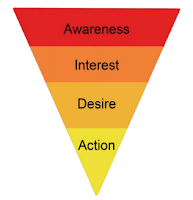
Elias St. Elmo Lewis was even more influential, introducing the AIDA (attention, interest, desire, and action) model of customer persuasion, to help illustrate the stages of a customer’s relationship with a business. Still commonly used today, the model puts the purchase process into four stages.

The AIDA Model
The AIDA Model

· Awareness: The prospect is aware of their problems and practical solutions for them. Marketing attracts customer attention to the product. The customer becomes aware it is available.

· Interest: The prospect shows interest in a group of services or products. Marketing develops an interest in a product or service.

· Desire: The prospect begins to evaluate a certain brand. Marketing develops a desire to own a product. The customer wants it.

· Action: The prospect decides whether to purchase. Marketing prompts action to purchase the product.

Originally, many funnels only included aspects up to a sale, but as we have begun to understand the importance of customer retention, models have included aspects of customer service and post-purchase factors such as “loyalty” and “advocacy” to help improve marketing strategy.

The design of marketing funnels differs depending on the context. For example, between business to business and business to consumer. Although the steps might be similar, the execution will differ.

“The firm is going to need a well-devised sales funnel that will effectively guide the target audience throughout the purchase process and turn them into buying customers.” (Sapian & Vyshnevska, 2019)

Developing a marketing and sales funnel

The process of developing a funnel that works is easier said than done. There are businesses set up that concentrate solely on online funnels. This was not the case ten years ago.

Businesses need to thoroughly develop a marketing plan for executing each stage of the funnel to yield their desired results. We need to consider each step’s role in generating a positive buyer journey through the funnel. Leverage what we learn through analytics to tweak the marketing at each step.

Setting a Marketing Strategy
Setting a marketing strategy

Important Tools for digital marketing sales funnels

Sales teams and marketers have never quite agreed on whose funnel it is, and how much control each should have. In the age of digital marketing, marketers have taken most of the control, leaving sales to look after the bottom of the funnel. But, to work together efficiently, they should meet somewhere in the middle. The Cross-sell or upsell goal is popular with digital marketing and having a product available for every step of the buyer’s journey.

Digital marketing is a powerful tool across an entire marketing funnel. Tactics used via social media are helpful for brand awareness at the top, to content marketing in the middle, to customer relationships at the bottom. These are digital marketing tools useful in marketing and sale funnel.

· Social media is a crucial tool to use at the start of the funnel for building brand awareness, but it also great for customer retention and keeping people engaged in your brand.

· Email is a powerful tool in a funnel and can be effective at every stage, especially in the retention stage.

· User Reviews are often the deciding factor on whether the purchase is made. Roughly half of the people find the information in a user review more important than any marketing material.

· Website and SEO are important in the awareness phase — you want to get traffic to your website. Creating SEO friendly content such as blogging and getting backlinks will help.

· Lead magnets are a valuable piece of information given in exchange for contact information (usually an email address). This could be a free e-book or whitepaper for example.

“Cutting through clutter now requires more-imaginative and sophisticated use of social tactics across the marketing funnel, including the integration of social with paid media. Simply raising awareness through social has become a more sophisticated and rapidly changing exercise in which new approaches can make an impact and then become passé in a matter of weeks.” (Deal, 2014)

Phases of the Marketing and Sales Funnel

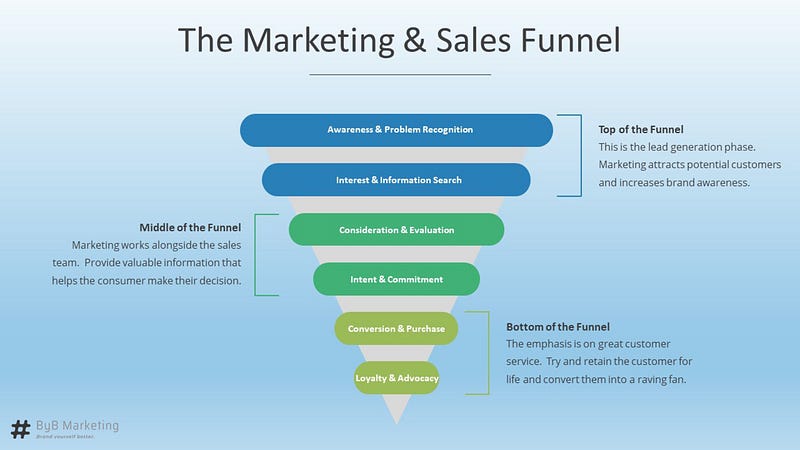
These are the six phases of a sales and marketing funnel. There are several variations on the marketing and sales funnel, but they all follow the same methodology. I have created this example based on the common components of popular versions of the funnel. The six levels are: Awareness & Problem Recognition, Interest & Information Search, Consideration & Evaluation, Intent & Commitment, Conversion & Purchase, and Loyalty & Advocacy.

1. Awareness & Problem Recognition (TOFU)

The first step in marketing and sales funnel is Awareness and problem recognition. When a person recognises a certain need they have, this is the trigger for the first phase of a marketing and sales funnel. This is the lead generation phase. A brand must attract the attention of potential customers, so they are aware that it is available. A prospect must become aware of two things, problems of customers and solution of the company. This is where a business needs to throw its marketing net wide and have a presence in places where its target market spends time to try and capture their attention. Try to engage with potential customers.

Position yourself / your brand as a thought leader in your industry through marketing activities such as SEO, social media, advertising, events, content marketing. This establishes the initial trust.

This recognition of a problem or need triggers a search for more information.

Social Media
Social media is a great tool to increase brand awareness

2. Interest & Information search (TOFU)

Once Marketing has created awareness and interest in a product, brand or service, we move into the interest and information search phase. Consumers learn more about a company or brand and its offering. Your content marketing continues in this phase and is more information and value-based than basic brand awareness. Here you position your brand in the minds of potential customers and start to develop and nurture a relationship. You also start to introduce customers to your services.

“Using tailored landing pages, webinars, newsletters, testimonials, customer guides, online videos, media interviews, blogs, and even customer service training is a perfect way to get consumer interest.” (Sapian & Vyshnevska, 2019)

Nurture leads through more targeted marketing such as email marketing, Case studies, e-newsletter, whitepapers, “how-to video”, webinar, and targeted ads. The goal is to reinforce that the prospect is in the right place and guide customers towards what they need to know about the offering.

Here you position yourself as an expert in your industry with your content marketing strategy that provides useful information that helps people, no strings attached. Whoever your target audience is, centre this content around helping them with their problem. Help your audience understand that you can solve their problems.

You can do keyword research through Google Trends, and other tools will give you an indication of what types of searches people are doing related to your industry. You can then create content that matches those queries.

You want to understand the reasons a customer would have for choosing your company’s product or service. Each search phase will be contextual. Buyers will search for a solution on Google or another search engine like social media. The amount of time and energy that put into this phase depends on the product or service. It could be a voice search on Maps for nearby cafes for example, or they could visit numerous stores for a larger purchase like a car.

3. Consideration & Evaluation (MOFU)

Following the information search, the next phase of the funnel is consideration and evaluation. This is what Elias St. Elmo Lewis referred to as “desire”, and some models refer to this as “Middle of the Funnel”. A consumer starts forming their decision at this point, so businesses should nurture their leads as they have become more qualified. At this phase, Marketing must develop a desire to own or have the product.

Emailing is more regular at this phase, and case studies are a useful tool to highlight your previous success and increase your credibility. Marketing content contains more product information, and you might give exclusive offers to these leads. A low cost or even free e-book is another tool at this phase. Resources like pricing guides and “how-to” guides are useful for marketers to keep the attention of leads at this phase. Having copy on your website covering things such as FAQ and Shipping also helps gives peace of mind, and if you can provide powerful social proof.

Depending on the type of product or service, the time spent at each stage varies. It could be a snap decision for something like fast food. A large investment will take a careful and thorough evaluation process. This is often the longest phase in a funnel, lasting weeks or even months. Marketers must consistently reinforce their relationship with the customer and give them the necessary information they are using to evaluate this decision.

4. Intent / Commitment (MOFU)

After the consideration phase, leads move onto intent & commitment. They are ALMOST a customer. These people have demonstrated some interest in buying a product or service. Marketers offer free trials, demonstrations, consultations and arrange sales meetings with people at this phase as they are ready to go. They might have left a product in a cart on the website. They have shown strong intent to consume. Marketers to make a compelling case for why their product is the best choice for a buyer.

This is also where the sales team would take over, and marketing can be more direct at this phase to help people make their final decision. Ideally, marketing and sales tactics work together to nurture the decision-making process and convince the buyer.

5. Conversion / Purchase (BOFU)

If consumers reach the Bottom of the Funnel, they have decided to buy, and become a customer. Congratulations! The customer has gone through all the phases — determining they have a problem and deciding you provide the solution.

The Conversion and Purchase phase is where sales processes have control of the customer. The aim is to make the purchasing process online as simple, safe and efficient as possible. Reduce any risk for the customer. The customers can also be cross-sold or up-sold to a more expensive product or service.

If this stage is effective and efficient, and customers are happy with their purchase, then this phase should mostly take care of itself.

Customer online shopping

6. Loyalty & Advocacy (BOFU)

What happens after the sale is key, but many companies fall short at this phase. Simply happy to make the sale, they let many potential future customers just walk away. We want to retain our best customers. The cheapest path to conversion is through existing customers. Loyalty and Advocacy is the final phase of a marketing funnel.

“And one last thing to remember, buyers can always finish the action or purchase but still be left frustrated, confused, or upset. A truly positive experience at this stage in the funnel means the marketers have moved the customer closer to the advocacy and loyalty stage.” (Sapian & Vyshnevska, 2019)

Emailing and social media are great tools to use at this point to stay in touch with customers and keep nurturing that relationship. You can send the odd offer and keep the customer aware of what you are selling, but mostly you want to create value to try and create a bond with that user, so they advocate on your behalf. Word of mouth is a powerful marketing tool and it is free! Try to create “raving fans” who will become loyal advocates for your brand.

But do not expect the time and effort you should put into this phase to be free. Create a brand promoter.


That is it for another blog! I hope you find this useful and use this knowledge to start creating some marketing content for your business! If you found this useful, check out 50 weeks of marketing


See you next week,

Dan