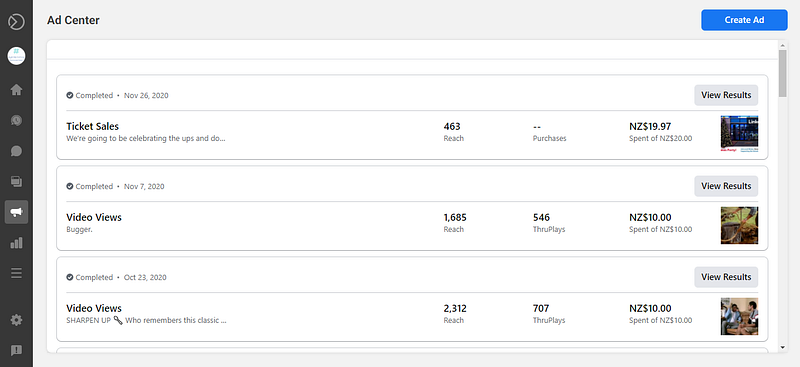
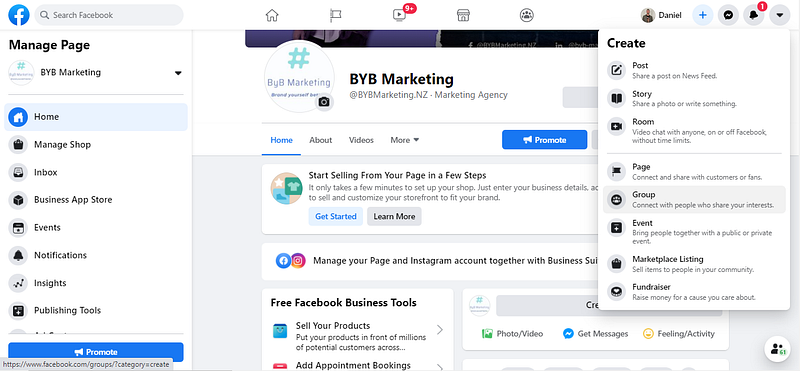
What do I post on Facebook?
Facebook as a marketing tool allows businesses to control the type of content they share when they share it and how often.
But what type of content should your business post? Motivations for people who engage with Facebook pages include socialising, entertainment, self-status seeking and information seeking.
Post content authentic to who you are and your expertise and aim to encourage meaningful conversations.
For example, a real estate agent could post content with tips for sellers when putting their house on the market, and a plumber or handyman could post DIY guides on how to fix common household problems.
The Facebook algorithm prioritises the content people see based on what they usually interact with and popularity of the post.
Think from your target customers’ perspective and what content they would find valuable, informational, thought-provoking, emotional, or entertaining. Creating this type of content will boost your credibility with your audience.
Desist from posting clickbait and too much spammy content.
A good rule of thumb is posting original material 70 percent of the time, share other content relevant to your audience’s interest 20 percent of the time and 10 percent of your content self-promotional or sales orientated.
Do not be limited to one or two types of content and embrace the opportunity to experiment with different content formats to see what works best for engaging your audience.
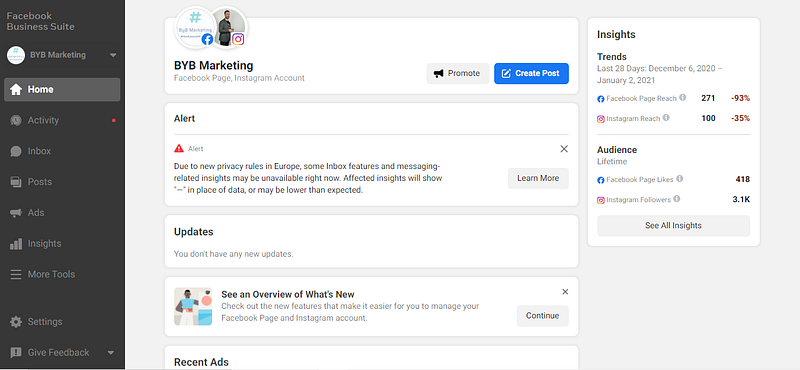
If you post content using Facebook Business Suite, it also goes on your Instagram account.
Photos & videos
Visual content such as photos, infographics, and video, is more likely to get shared on social media than other content. Including a photo means more of your followers will notice your post as they mindlessly scroll through their feed.
Facebook users are far more likely to engage than with a post with text alone.
It pays to invest a reasonable amount of time and other resources into creating video for your social media. Many people casually scroll and watch videos during downtime at home or work.
According to WordStream, 45% of people watch more than an hour of video on Facebook or YouTube a week.
Some of these people prefer to scroll in silence as to not interrupt people around them. Some studies have indicated that up to 85% of users watch Facebook videos on silent. Therefore, including captions in your videos to videos is a no-brainer.
Research carried out by Facebook found that adding subtitles increases view times by 12% on average.
Use different orientations for creating videos.
Facebook Stories are in Portrait mode; you should shoot some video content in this orientation. Many people watch a video in landscape view. Still, a study from Buffer found that square videos perform best and receive up to 35% more views than landscape videos. Users can watch square videos easily whilst scrolling through the feed without turning the mobile sideways.
Facebook live
Give Facebook live a try. As you would expect, this is when a video is recorded and broadcasted simultaneously.
Going ‘live’ can create a buzz as it gives an ‘in the moment’ look of a business and what you do. Doing video life and unedited can seem more personal and authentic, as there is no chance to edit or perfect the footage. Viewers can also comment and ask questions that the creator can respond to in real-time.
Some people are more likely to watch live streams than pre-recorded videos. Figures indicate people spend more than three times longer watching a Facebook Live video than video that is no longer live.
Your followers receive a notification when you go live and promote the fact you will go live 1–2 weeks beforehand if you feel the video will add value to your audience. You want to ensure people know it is happening and are available to watch.
Facebook Stories
Over 500 million people view Facebook Stories every day. Stories are photo or short video posts in a vertical format (for mobile phones) that appear in vertical format and disappear 24 hours. Photos last for five seconds, videos up to 20 seconds before it skips to the next story.
Stories from your friends or pages you follow are arranged based on an algorithm based on your engagement. Found at the top of the News Feed, meaning Stories are quite prominent to the platform.
Snapchat originally popularised the concept which has now spread to other platforms, including LinkedIn.
Post ‘stories’ of your workday, special projects, locations you visit or the products you sell. Give viewers a snapshot of your business.