Showing posts with label marketing. Show all posts

12 Ways to Use Direct Marketing

What is Direct Marketing?

Mass marketing is inefficient and expensive. Would it not be great if you could cut out the middleman and advertise to customers direct? The good news is, you can!

Direct marketing uses advertising tactics such as email marketing, mail drops and paid ads online to reach customers with targeted marketing messages.

This article explores direct marketing, explaining how it works and the different direct marketing tactics that businesses can use to reach customers.

“Retailers use direct marketing as one marketing communication tool in their overall communication portfolio to reach existing customers. (Uematsu, & Mishra, 2011)

What is direct marketing?

There are two main advertising variants to a marketing strategy — mass marketing and direct marketing.

Mass marketing uses mass media such as television, radio, and newspapers to broadcast messages to random publics.

Direct Marketing is advertising that seeks to achieve a specific action from a selected target audience of the most likely buyers.

The use of direct marketing has grown considerably in the digital era, as the cost of collecting and storing customer data has reduced. An increase in distribution channels’ available online provides direct access to the customer.

As the name implies, communication and/or distribution is direct with the consumer, bypassing a third party such as the mass media.

 Types of direct marketing include:

  • Email marketing
  • Direct mail
  • Fliers
  • Brochures
  • Couponing
  • Catalogue distribution
  • Postcards
  • Promotional letters
  • Loyalty cards
  • Insert media
  • Couponing
  • Door-to-door sales
  • Telemarketing phone calls
  • Text messaging
  • Messenger
  • Websites
  • Social media
  • Targeted online ads

There is some disagreement about whether some forms of promotion are direct marketing.

Some marketers consider television infomercials, newspapers and magazine advertisements, and outdoor advertising direct marketing. But only if it has a direct response aspect, such as a toll-free number.

However, these marketing methods are not as targeted as most direct marketing forms, so I do not include them here.

Most of these direct marketing methods are explained later in the document.


The objectives of direct marketing

Direct marketing campaigns aim to persuade consumers to action, providing tangible and measurable results, such as purchases, signups, or requests for more information.

While other advertising methods such as content marketing aims to educate prospects rather than sell, direct marketing intends to encourage a specific action.

Some of the reasons for using direct marketing are:

  • Improve sales of specific products
  • Clear discontinued stock
  • Increase customer retention and loyalty
  • Follow up on promotional offers.

A call to action

Direct marketing commonly uses incentive-based information where it offers consumers a benefit to act on. Called a call to action (CTA), they depend on your industry and the target consumers.

Examples of CTAs are:

  • Click the link
  • Visit our website or store
  • Call us to get more info on our products or services
  • Subscribe with your email address
  • Purchase here
  • Register your interest
  • Limited-time coupon
  • Sign up now
  • Invitation-only event
  • Discounted membership
  • Make a booking


Using direct marketing - analytics

The benefits of using direct marketing

There are several benefits to businesses using direct marketing. I will talk about some of those now.

Marketing is measurable

The first significant benefit of direct marketing is clearly measurable results.

Direct marketing is more straightforward to measure than many other types of advertising. With a process called data mining, firms can use analytics to improve their results.

Online, firms use pixels to measure campaign results, such as identifying who has clicked on an advert or used a unique discount code.

Physical mail drops are harder to measure. Still, any noticeable increases in sales of items over the campaigns can be attributed to the advertising. 

The most important deliverable is whether there is an overall return on investment for the campaign.

As well as measuring the effectiveness of your marketing, you can test new markets and trial new products or services.

“Successful direct marketing initiatives require firms to predict the behaviour of specific individuals.” (Allenby, Leone & Jen, 1999)

Marketing becomes optimised

By monitoring and analysing their processes, firms can improve future campaigns’ success by tweaking their strategy.

Firms can use small direct marketing campaigns to test marketing effectiveness, such as test A / B tests. They can try different variants of the ad's components, such as subject title, images, call to actions, or even when they send out a campaign.

New products can even be tested on small market segments before mass marketing to evaluate customers desire for those products and services.

“Instead of promoting to customers indiscriminatively, direct marketing studies customers’ characteristics and needs, and selects certain customers as the target for promotion.” (Ling & Li, 1998)

Marketing is targeted

Indirect marketing uses marketing techniques broadcasted to random audiences. Direct marketing, on the other hand, focuses on targeted lists of prospective customers.

Marketing targets the most likely prospects, which improves the response rate. For example, for a supermarket sending out the weekly specials, this will be location-based. It makes sense to focus marketing efforts on the people most likely to give results, right?

Direct marketing becomes more profitable the more targeted it becomes. You do not want to waste money marketing to people who will not be customers. Your marketing becomes junk mail or spam to these people.

To create targeted audiences requires database segmentation. Segmentation is the process of dividing the customer base into small groups with some common characteristics. 

People are grouped based on their criteria such as age, income, location, gender, occupation, interests and buying patterns.

Marketing is personalised

Because firms target marketing to a specific audience, marketing is also personalised to those customer segment’s needs.

Firms use information about their audience, such as age, income, and consumer behaviour, to create tailored marketing content. We want the audience to react, so firms must customise their message to increases their chances of resonating with the specific audience.

High conversion rate

Because direct marketing usually involves research to identify and focus on the customers most likely to purchase, it has a higher conversion rate than other marketing forms.

Furthermore, email marketing tactics are only contacting previous customers or people who have opted to receive advertising.

The audience already has a real interest in the firm and is more likely to convert again.

Direct marketing strategies allow producers to receive a better price by selling products directly to consumers (Uematsu & Mishra, 2011)

Low-cost

Direct marketing can be a small fraction of mass marketing cost because it eliminates the need for a middleman, such as an advertising agency. Moreover, because the audience chosen for a campaign is small and targeted, this also reduces the cost. Direct marketing can be done on a tight budget and still achieve results.

Enhanced customer loyalty

Direct mail is an excellent tool for building and maintaining relationships with customers and prospects because it is personalised.

Firms can combine direct marketing with customer loyalty tactics to increase the bond further. Examples of loyalty strategies include special discount offers, sending birthday messages and invites to ‘exclusive’ sales events.

Direct mail can be successful in re-establishing relationships with former customers who have not consumed it for a while.


Direct marketing strategy

As a marketing strategy, firms such as banks, insurance companies, and the retail industry increasingly use direct marketing. It can be a very aggressive form of marketing, so firms must carefully plan and implement it.

As the target audience should be people who have expressed interest or are likely to be interested in what you have to say, you need to develop contact lists. Having a robust database of customers and potential customers is key to the success of direct marketing.

“In direct marketing, this knowledge is a description of likely buyers or responders, and is useful in obtaining higher profit than mass marketing.” (Ling & Li, 1998)

It is vital to maintain an organised database and customer records. Data mining can provide an effective tool for direct marketing, discovering useful information about customers to be used in campaigns.

Campaigns are personalised to these audiences to capture their attention with relevant offers.


Direct marketing methods

There are several marketing methods firms can use to reach their customers. Many were named above. This section will outline some of the popular forms.

Loyalty cards

It entails giving loyal customers membership cards. Customers can then use these cards to access price discounts, free trials, and other offers. Combine your direct marketing methods with your loyalty program.

“Retailer direct marketing typically includes coupons or promotions bundled together with an advertising message.” (Lund & Marinova, 2014)

Couponing

The use of discounts through advertising media is called couponing, which can be an excellent way to elicit a response from targeted customers. Firms can send coupons by mail for customers to take in-store to receive a discount or a digital version.

Coupons are downloaded and printed or shown on the customer’s mobile phone. Firms can distribute digital coupons via company websites, social media, texts, or email.
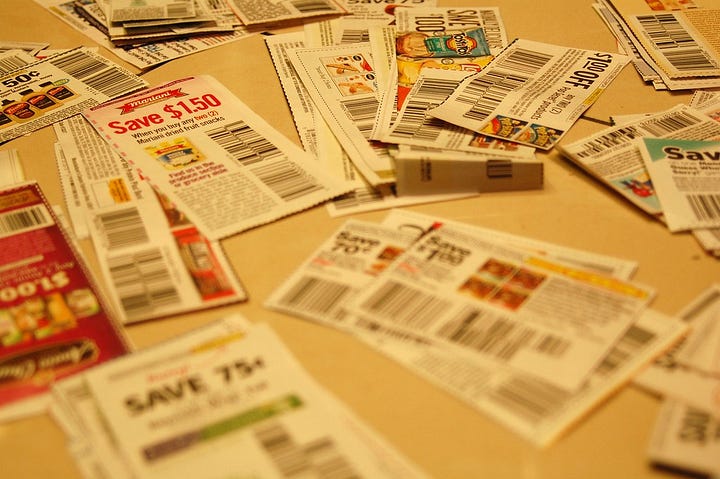
Couponing - direct marketing

Insert media

Delivering advertising inserted into shared media is called insert media. Often a one-page ad is inserted into other physical communication media, such as catalogues, newspapers, or magazines.

For this strategy to work effectively, it needs to be targeting the right audience. For example, an automotive store would not want their insert media inside women’s gossip magazines. The target audience should align.

Direct mail

Direct mail uses the mailbox of potential customers to deliver advertising materials. Campaigns often focus on people in a specific geographic area or customers on a marketing list.

There are several different types of direct mail. Types of direct mail are circulars, leaflets, or flyers distributed to everyone in the advertiser area.

This method can work well for local businesses whose products or services appeal to a broad audience. It is common with financial services, consumer goods and travel and tourism industries.

Catalogues, on the other hand, are usually only sent to consumers with a previous interest.

As well as letterbox drops could be handouts to people in the city or shopping malls. Postcards and envelope mailers also standard direct mail methods.

Telemarketing

Contacting potential customers over the phone is called telemarketing. Most consumers are not very appreciative of this approach, and in the age of digital marketing, it has become outdated. Telemarketing should focus on people with a higher probability of getting converted into actual sales to be effective,

Telemarketing can be a successful method for following up on other direct marketing campaigns. Leads are more qualified, and the call is not cold.

Junk mail — direct mail

Door-to-Door

One of the more well-known and traditional direct selling methods, door-to-door, has a salesperson go out and knock on the door of homes. It can be a very laborious and frustrating job, with people not home or answering the door rudely when they see the salesperson.

It is common for real estate salespeople to find a property to list to satisfy buyers looking in a particular geographic area. Telecommunications and utility companies often employ a salesforce to use this method as one-on-one communication can be highly persuasive.

Door hangers are another form of door-to-door, which is a more passive form. Salespeople hang fliers over the door, and no actual interaction takes place.

Mobile marketing

Sending promotional material to users via their mobile devices is mobile marketing. It is a very low-cost way to reach the target audience. A targeted method as firms creates the database with customers and other interested people.

Firms send messages via text, including information about sales, links to website specials, appointments or information about the order status.

Messenger marketing

Creating a chatbot for websites or social media messaging apps helps brands automate answering customer questions with relevant answers. Commonly chatbots are designed to reach out to people browsing the page automatically and can even collect orders.

Email marketing

As one of the most widely used direct-marketing methods, email marketing is a simple, cost-effective, and measurable way of reaching customers.

Email marketing is easy and inexpensive to design, test, and send an email message. Businesses use content marketing to provide useful information to consumers to encourage them to join the mailing list.

Firms send emails regularly to generate new customers or give special offers to existing customers.

Online Ads

Pay per click (PPC) ads can be a beneficial form of direct marketing. There are three main types of PPC ads.

  • Display Ads appear on the Web next to similar content direct mail.
  • Search engines show ads next to organic (non-paid) search results based on search terms.
  • Social media ads also use a PPC format; the users see the ads based on the advertiser's characteristics.

Social media as a direct marketing tool

Social Media

Direct marketing on social media creates content for platforms such as Facebook or Instagram, communicating directly to which customers can respond.

Much of the content created for social media is about building trust and showcasing the brand rather than selling.

Only around 1 or 2 posts out of every ten on social media should be sales focused.

Website

Having a website is an integral part of direct marketing online. Many websites are also online store, so firms use many other marketing methods in conjunction with their website to increase their traffic. These methods include SEO, PPC ads, Blogging, and lead magnets.


Summary

In sum, the article has explored direct marketing as an advertising tool for businesses. 

I have discussed some of the benefits of using direct marketing, such as being measurable and targeted.

I define twelve direct marketing methods to give tips on integrating direct marketing into your own marketing strategy. Not every direct marketing method will suit every business. 

Remember, you need to analyse your situation, look at any data, and rationally decide which approaches will most effectively communicate with your target customers.

Thank you for reading.

I hope you enjoyed the content.

Dan

This article was originally posted on the BYB Marketing Blog

How to Improve Your Copywriting


We learn to write from a very young age. 

At school, reading and writing is first skills we learn. It's key to communication and important to everyday life. Social media - reading and writing.  It is something we take for granted.

The ability to write well means you have a skill that will always be in demand. Being able to persuade people through writing means you could probably be a top-selling author for some self-help book; OR, you could be a copywriter. 

This blog explores copywriting, what it is, and how to write better copy for promotional materials.
“Copywriting is the optimum use of language to promote or persuade.” (Albrighton, 2013)

Using Digital Marketing to Reach Your Customers

Digital marketing strategy

The internet is a massive part of our lives. We use the internet for all sorts of things — to socialise, learn, or entertain us. It is where many of us spend a lot of our time. 

Because we are spending so much time online, the internet has become a powerful tool to communicate with customers and potential customers. 

Promoting our business on the internet is digital marketing, and companies have so many opportunities to put their brands out there to attract customers. 

Where do we start? 

Read on to find out more.

B2B vs B2C Marketing: 9 Key Differences

B2B vs B2C Marketing

Marketing influences customer decision-making.

A person’s decision-making process for purchasing a car, holiday or a new Ice Cream brand will differ from how they make a business decision such as what printer to buy.

Therefore, the way businesses market consumer or business products or services is quite different.

This article explores these differences between B2B and B2C marketing.

Defining B2B and B2C Marketing

Before exploring the differences between B2B and B2C marketing, we must first define marketing.

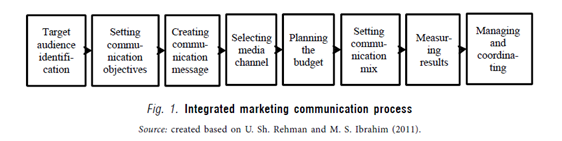
According to Rėklaitis & Pilelienė (2019) marketing comprises of six promotional mix elements: advertising, public relations (publicity), sales promotions, personal selling, digital marketing, and direct marketing; managed from an integrated marketing approach.Integrated marketing strategy

B2B stands for ‘Business to Business’, and B2C for ‘Business to Consumer’.

Therefore, they differ primarily in terms of the customer and audience. B2B sell products and services directly to other businesses and B2C sell products and services to consumers for personal use.

Examples of B2B are businesses selling the raw product to manufacturers such as timber or steel, Accountants’ customers are typically other businesses, or a company offering website building or digital marketing.

Examples of B2C businesses are the local corner store/convenience store, a website where you can buy fitness and health supplements or any store in the local shopping centre/mall.
“…Seeking to successfully plan and implement marketing communication strategies, it is important to understand the differences of business-to-consumer vs. business-to-business communication processes.” (Rėklaitis & Pilelienė, 2019)

There is some overlap between the two, and many of the practices and processes stay the same. However, some differences separate them.


Differences between B2B and B2C Marketing

In B2B, marketing communications are far more professional, rational, and less emotive than B2C.

B2B is about building relationships and educating prospects; where B2C marketing uses enjoyable content and focuses on quick solutions to trigger an emotional response to a need, interest, or challenges of people in their everyday lives.

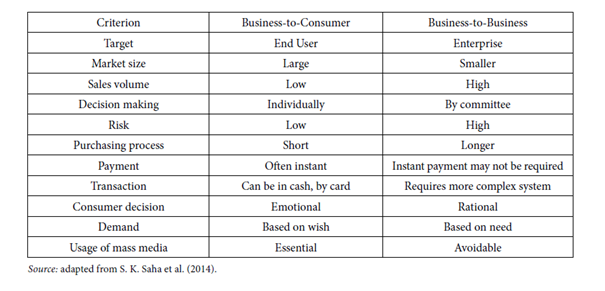
Rėklaitis & Pilelienė (2019) identify numerous differences between B2B and B2C markets.B2B vs B2C Marketing

I have identified nine of the most significant differences between marketing for B2B and B2C, which are:
  • The decision-maker
  • The decision-making and sales process
  • The motivation
  • Customer relationship
  • Marketing strategy
  • Target audience
  • Communication tools
  • Language
  • Purchase value and complexity
The following chapters will discuss these differences individually.

The decision-maker

Multiple staff can influence the decisions in organisations, whereas B2C often involves one decision-maker.
“In B2C, there is always a particular person who is making a decision to pur­chase an item. Considering B2B sales, in most cases, will be more than one person to decide; therefore, knowing the decision-makers and decision-making process in B2B is very important.” Rėklaitis & Pilelienė (2019)

B2B — Multiple decision-makers or influences

We are not marketing to one just one person in B2B. Organisational processes confine purchases, and there is a chain of command to deal with in B2B, with owners, managers or other decision-makers purchasing on behalf of their organisation.

The needs of the company and/or the employees drive decisions. A worker in a particular factory area might report that they need new equipment, but a manager might decide what to purchase.

Work out who the right person is to target with marketing or have a conversation with is, as marketing must reach this small group of individuals within the business, which can be easier said than done.

B2C — Decision-maker is often the customer

The decision-maker for B2C is often the customer or another family member. The decision is based on what benefits it brings to them personally or to their family member. Communication to consumers should focus on the problem you solve or help your brand provides.

Marketing can reach any potential consumer for a product in a household, even if they are not necessarily the purchaser.

Reach the household decision-maker for significant items such as a new vehicle. For smaller items such as cereal for the household or cleaning products, the kids or wife could be the decision-maker or consumer, and the husband/father the customer that makes the purchase.

The decision-making and sales process

The decision-making and sales process for B2B is usually highly planned, process-driven and logical, where a B2C is often more emotional than rational.
“…Based on the rationality of B2B customers and the emotionality in B2C markets, the messages of marketing communications also have to emphasise different aspects of an offering: starting with general product characteristics in B2B market and ending with pursued delight and impalpability in B2C situations.” (Rėklaitis & Pilelienė, 2019)


B2B — Slow decision-making process, highly planned and logical

The purchasing process for B2B focuses on the logic of the product/service, its features, and financial incentives. Rationality drives choices, which are less pleasure-driven than B2C, with little personal emotion involved.

B2B customers expect the business to look after them. Sales take a consultative approach, focusing on customer service before a transaction occurs, maintaining open communication.

Provide custom solutions to customers to best fit their needs, as they are often investigating alternative solutions from competi­tors

B2B customers spend longer researching before purchasing than B2C.

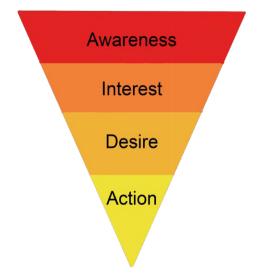
The length of sales cycles has increased as the more significant number of decision‐makers in the B2B buying process has increased. The buyer decision process illustrated in the AIDA model.

AIDA decision making model 

Customer progress in the Buyer Decision Process can be tracked through CRM, to understand their needs best and offer the best solution.
“B2B sector there are planned activities involved in a sales process: a purchaser has to follow the budget frames and time limitations.” (Rėklaitis & Pilelienė, 2019)

B2C — Decisions more emotional than rational

Decisions made by B2C customers are often more emotional, impulsive, less rational and vary in length and importance. Advertising often influences these decisions and customers can decide on a purchase instantly.

The purchase process, therefore, should be as easy and as convenient as possible.

This shortened research, decision and sales process means social proof on social media or reviews has more influence on decision-making than B2B.

Often, when a consumer realises they have a need, they already know what kind of solution (product or service) they need. They have seen the advertising, or there is a brand they trust above others.

The Motivation

Business purchasing decisions are typically motivated by business needs, in contrast to consumer decisions often motivated by individual desire.

B2B — Improve business performance

The goal of improving their business its profitability is a significant motivation for B2B customers. These customers seek efficiency and/or expertise, thinking about the impact of their business decisions. Decisions are well thought out, with little influence of emotions.

Emotion is in B2B does exist, just not at the same level. You are still selling to human beings with fears, needs, and wants, and marketers should try to appeal to this. Tie emotion appeal back to improving their business performance and a return on investment.
“B2C marketing communication campaign in most cases will be based on capturing the customer’s attention immediately. Consumers’ decision will be more emotional.” (Rėklaitis & Pilelienė, 2019)


B2C — Fulfilling consumer desire

The motivation for B2C customers is the desire to improve their lives in a particular way.

They could be seeking deals, entertainment, or pleasure. Purchasing a new shirt, or a holiday probably will not have the same decision-making process than choosing an accountant for their business.

Consumers do not have to think on behalf of an organisation, although they might decide for their family. Often instant gratification is the primary motivating factor.

Customer Relationships

B2B marketing focuses on forming long-term personal relationships with its target customers, whereas B2C marketing focuses on creating short-term value and efficiency.

B2B — Build personal relationships

Repeat and referral business is critical is advertising is not as effective as it is for B2C, instead of forming and developing personal relationships drives B2B sales and marketing goals.
“Generally speaking, building trust between seller and buyer will be the main prerequisite for a successful (B2B) deal.” (Rėklaitis & Pilelienė, 2019)
Having conversations with people you know and meeting new people can be very successful for generating leads (potential customers; a reason why networking is an excellent tool for B2B businesses.

More nurturing of leads is required than B2C, paying close attention to customer needs. Good communication is needed and other customer service aspects of creating positive (or negative) associations with your brand by your practices helping separate you from competitors.
“B2B purchasing is more likely to involve more intense direct relationships and richness of pre-purchase information.” (Jussila, Kärkkäinen, & Aramo-Immonen, 2014)


B2C — Transactional relationship

The aim of B2C marketing is drive as many sales as possible in an efficient manner. The effort spent getting to know the customer is far less than B2B, as relationships are more short-term and transactional.

Because of the larger markets and customer potential, instead of focusing on building close relationships with customers, the emphasis is on creating value and process efficiency.

The investment into you from B2C customers is unlikely not as deep as your investment in them. Do not bombard them with too much content outside their buying cycle. Try to make the customer experience with your website or other contact points, a positive experience to encourage their loyalty.

Focus on selling the product, one way of doing this is by using a call to action and offer incentives.

Marketing strategy

The focus of B2B marketing strategy is on lead generation through relationship building. For B2C, the emphasis is instead on branding to create an identity that attracts customers.

B2B — Lead generation

Lead generation is a priority of B2B businesses. B2B purchasers rely on personal sales relatively more than advertising as a source of product information. Salespeople are integral marketing tools.

Because decision-making often involves a group of people, the salesperson can talk with and negotiate with all the relevant parties at once.

Being consistent in the presentation of information, and a good reputation for delivering on promises goes a long way to drive repeat business and referrals.

Networking with other businesspeople increases your chances of bumping into past clients and acquaintances, where a conversation and introduction be your next warm sales lead. You already have built credibility through the association and introduction.

B2C — Branding

Branding is a priority for B2C marketing. Marketing should put the brand front and centre to create a lasting memory. When it comes time for customers to make a purchase, you automatically want them to think of your brand.

Keep your brand in front of target consumers with email marketing and remarketing on Google. Invest in SEO or Google Ads, and identify keywords that consumers are likely to search for online when looking for products/services you offer, to rank for those keywords and improve your online search result.

Encourage happy customers to leave positive reviews. Offer them a discount on their next purchase if they leave a review, which will help create social proof for consumers in their decision-making process.

Target Audience

B2B marketing targets the multiple decision-makers of a business, where B2C is targeted directly to end-users.

B2B — Multiple decision-makers/managers

In B2B marketing, it is essential to understand our target audience’s characteristics: businesses’ decision-makers. They may not be the product or service user but make decisions on behalf of staff who do.
“The larger number of decision-makers/influencers in B2B means that B2B marketers must consider different media and different messages for each person involved.” (Habibi, Hamilton, Valos, & Callaghan, 2015)

Salespeople need to know who to have a conversation with — the chain of command.

With digital marketing, the more we understand these people’s demographic and behaviours, the better we can target them with smart digital advertising. It is easy to compile and then analyse data about customers through CRM.

B2C — End users

Products or services are marketed directly to end-users in a B2C market. Because of this, consumers must recognise the brand and the value you provide. Consumer markets are usually much more extensive, with much more diverse customer demographics.

Create influential advertisements for mass media that give the consumer the desire for your products or services. Lead generation through social media is another effective way to reach consumers. Focus on after-sales activities rather than pre-sale to enhance the customer’s chances of retaining your brand’s favourable opinion.


Communication tools

B2B communication uses integration between digital tools and salespeople, whereas B2C commonly uses mass media such as TV or Facebook to reach audiences.
“B2C companies with limited budgets often choose to rely on two or even fewer media channels, thus amplifying the risk of wasting time and resources on activities that would not lead to pursued goals and objectives. As opposed, B2B companies often use several channels for communication with their targets.” (Rėklaitis & Pilelienė, 2019)


B2B — Integration between digital tools and salespeople

Using diverse social media and other digital tools enhances a firm’s ability to communicate a large amount of information. Social media can perform some of the functions previously carried out by salespeople, by sharing educational information about products or services, such as how you save time, money, and resources.

However, salespeople are still essential to B2B marketing to address different decision-makers’ emotional needs.

Social media’s coordination between the sales department, operations, and marketing should ensure consistency. Content marketing through social media helps business satisfy the rational needs of the multiple decision‐makers involved in a company. Ensure consistent messages to keep a consistent brand image over time, in different contexts.

The effectiveness of social media platforms for B2C, and B2B varies. Many B2C firms have experienced great success acquired customers through Facebook or Instagram, where LinkedIn generates the most leads for B2B.
“B2B companies place a higher value on educational formats such as blogging and webinars; consumer businesses are slightly more willing to experiment with advanced digital formats…” (Habibi, Hamilton, Valos, & Callaghan, 2015)


B2C — Mass media

Facebook is a powerhouse in B2C marketing, and Instagram and Pinterest are also popular platforms for B2C. A robust visual component can help create an emotional response.

B2C does not usually require a sales team (apart from retail). Instead, firms should choose the most relevant marketing channels to communicate with their target audience.

Mass marketing tools such as product placements or television advertising is far more effective for B2C than B2B.

Language

B2B marketing and sales should use industry terminology to enhance professionalism and credibility, but B2C communication should be simple, in customers’ voice and emotive.

B2B — Speak the lingo

Marketing in B2B should be professional; you could lose credibility with language that is too informal.

B2B customers need a salesperson or an expert in their industry terminology and knowledgeable about their business processes. They need a constructive conversation with knowledge provided about exactly what they are purchasing. Marketers must speak their language and provide detailed content.
“B2B marketers must ensure that social media messages for consumer products, which often are informal, casual and humorous, do not send a signal that the company is not technically competent.” (Habibi, Hamilton, Valos, & Callaghan, 2015).

B2C — Use emotional triggers

Marketing to consumers should use straightforward language, in the customer’s voice, so it is relatable. It should also aim to evoke the emotions of the audience to create a desire.

Get right to the point with marketing and point out the benefits clearly, so it is easy to understand. The more straightforward your message is, the better. Do not use industry jargon.

It is also okay to be informal and humorous.

Consumers often purchase with the hearts over their minds and will go with their gut. Emotion often influences this ‘gut’ feeling.

We aim to entertain the audience rather than strictly educating them. B2C customers are highly motivated by personal gratification, so marketing that tells an uplifting story about someone who benefited from consuming your brand provides excellent marketing content.
“B2B products or services are often more complex than consumer products and services. Greater product complexity means that B2B purchasers tend to rely on more information.” (Habibi, Hamilton, Valos, & Callaghan, 2015)

Purchase value and complexity

The B2B the purchasing process is more complicated than B2C, taking more consideration from decision-makers, as purchases are usually of higher cost and importance.

B2B — High value and complexity

Because of the higher-order values and longer sales cycles of B2B, the potential risk is heightened compared to B2C.

Purchases can become quite complicated, with multiple influences on decisions. Decisions are typically long-term investments; decisions can be a complicated process with pressure to get decisions right. B2B clients often need to prove a return-on-investment for their purchase.

B2B marketers should use social media to provide informational and valuable content to reduce risk perception.

B2C — low value and complexity

Purchase values in B2C can vary greatly. Low-cost consumables from the supermarket, for example, are low cost and low risk. Do not have to educate purchasers but instead entice them.

Marketing should aim to create an emotional response — food looks eye-watering tasty, clothing makes a model look more fashionable or a phone that takes better photos to create better memories. A decision is usually not complicated, often made in a split second to fulfil instant gratification motivation.


Thank you for reading.

I hope you enjoyed the content about B2C and B2B Marketing’s differences and learned something new!

In summary, there are different motivations for making business decisions and making personal decisions. Choices on what to purchase for a business is a longer process more logical and rational than the sometimes emotional decision to buy something for ourselves or our families.

Therefore, the way marketing communicates to these two customers groups will be different.

This article was originally posted on the BYB Marketing Blog: https://brandyourselfbetter.com/blog/post/223490/the-differences-between-b2b-and-b2c-marketing

How Sponsorship Increases Brand Awareness and Generates Good Will

 How sponsorship works

Do you have a local sports club that you support? Sponsors help them operate through providing funding or support in other ways. Some of the events you attend probably also receive sponsorship.

The biggest sports teams in the world have sponsorship splashed across the uniforms. The NBA has even succumbed to the lure of extra money after decades of refusing to have sponsor branding on the uniforms.

This blog explores what sponsorship is, how it works and its benefits to businesses.


What is Sponsorship?

Sponsorship involves a business relationship between two parties, where one party (sponsor) provides support in the form of funding, resources, or services to the other party (beneficiary), who in return provide access to the sponsor for rights and associations to be used for commercial advantage.

“(Sponsorship is) the provision of assistance either financial or in-kind to an activity by a commercial organisation, for the purpose of achieving commercial objectives.” (Meenaghan, 1983)

The sponsored party could be an event, organisation, or an individual; the involvement of this second party, distinguishing sponsorship from advertising.

Initial examples of sponsorship can be found over 100 years ago, but they are rare and on a small scale. Its use has exploded since the 1970s. 

According to Meenaghan (2001), in the UK, spending on sponsorship increased from £4 million to $1075 million between 1970 and 1997. In the US, spending increased from $850 million in 1985 to $8.7 billion in 2000.

“Sponsorship involves two main activities: (1) an exchange between a sponsor and a sponsee, whereby the latter receives a fee and the former obtains the right to associate itself with the activity sponsored and (2) the marketing of the association by the sponsor.” (Cornwell & Maignan, 1998)

A common form of sponsorship is of sports clubs. 

Your favourite sports teams are likely to have the logo of their key sponsor/s on their uniforms. This exposure on television, social media or other media holds value to the sponsor. 

The sponsor could also be provided access to players for their own events or PR and corporate hospitality at their events or games.


How does sponsorship work?

Through the affiliation with an entity people care about, sponsorship helps to enhance the public perception of the sponsors’ brand. This affiliation creates a ‘halo effect’ of goodwill, where positive associations with the beneficiary of the sponsorship are reflected onto the sponsor.

Because sponsorship provides a positive benefit to society through empowering the existence of entities consumers care about, sponsorship is typically more positively perceived than advertising’s sole focus on commercial goals.

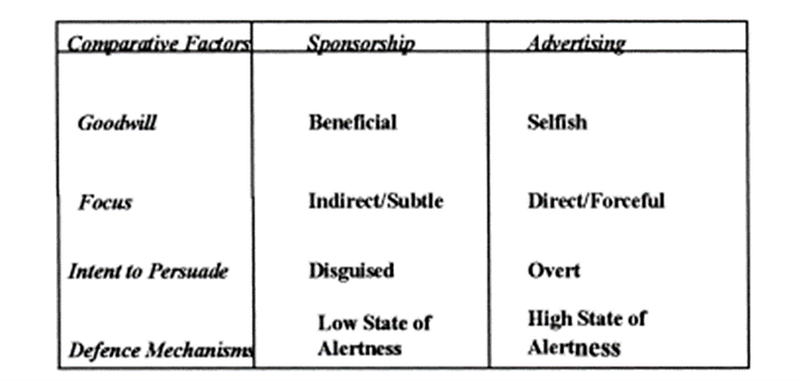
Advertising’s only interest is the profitability of the firm, thereby having no obvious benefit to the greater society. Advertising can also be coercive, resulting in alerting consumers’ defence mechanisms. Sponsorship’s commercial intent is more subtle and indirect, lowering consumer defence mechanisms. 

Read more about persuasion knowledge for a better understanding of this process.

The table below shows a comparison between sponsorship and advertising characteristics.

Comparison between advertising and sponsorship

Comparison between advertising and sponsorship (Meenaghan, 2001)


“Sponsorship works differently in relation to the consumer than do other forms of advertising and promotions in that it engages the consumer differently by bestowing benefit on an activity (e.g., sports or the arts) with which the consumer has an intense emotional relationship.” (Meenaghan, 2001)


Leveraging the partnership

To maximise the commercial result of their sponsorship, sponsors should focus their branding and marketing communications efforts on leveraging the association.

For example, along with displaying their branding on flags or banners at a sponsored event, social media posts promoting the event and the businesses’ role as sponsor.

Consumers can hold positive associations and deep loyalty towards sponsors of the sport, events, causes or other entities that they care deeply about. Sponsors proactively promoting their relationship enables these brands to leverage this emotional connection these consumers hold. The values of the sponsored activity or entity are then associated with the sponsor’s brand.

“Sponsorship appears to be another area of marketing, along with source effects, store atmospherics, brand extension, and brand alliances, where the consumer’s ability to see an association between marketing assets enhances the effectiveness of these assets.” (Cornwell, 1995)


Sponsorship fit

Sponsors invest in sponsorship to establish their credibility with their target market. For this practice to be effective, there needs to be an organic link in terms of similar goals, values, and vision, between the sponsor and the beneficiary of the sponsorship. One that makes sense to the public.

The sponsor’s target market should match the target market of the beneficiary they are sponsoring. Therefore, the right consumers have subjected the affiliation and the response is likely to be better if there is perceived to be a good fit between the two parties.

Also, passionate followers, fans or consumers of the sponsored entity judge the fit of the relationship and respond more (or less) positively than the typical consumer if the sponsor fits the same values. 

If there is a fit, the sponsorship is perceived to be more sincere. This is seen as more authentic.

“Events, activities, and venues have been fully recognized for their ability to target a particular demographic or psychographic segment.” (Cornwell, & Maignan, 1998)


What are the benefits of sponsorship?

Sponsorship works in a way that it provides mutual benefits for the sponsor and the beneficiary. The beneficiary of the sponsorship receives funding or resources to operate. 

Sponsorship has replaced other forms of funding such as government support in some countries to the extent that some sponsored activities rely on corporate funding to exist.

For a business, some of the key motivations for investing in sponsorship are improving goodwill, enhancing public relations, increasing brand awareness, improving brand image. 

Improving profitability is obviously the end goal for any businesses’ strategic planning — these motivations contribute to enhancing the probability of this.

“The sponsor’s investment benefits the activity generates a goodwill effect among activity fans, which in turn influences their attitude and behaviour toward the sponsor’s brand.” (Meenaghan, 2001)


Goodwill

One of the key factors distinguishing sponsorship from advertising is the presence of goodwill. Goodwill from the sponsor in supporting the beneficiary and gratitude from consumers to the sponsor, grateful to them for helping out a favourite event, sport or organisation.

According to Meenaghan (2001), goodwill effects are mediated by the intensity of an individual’s involvement or connection with the sponsored entity. 

Highly involved fans/consumers connection with a sports team for example can be deeply felt, and their awareness of the sponsor’s brand is likely to be higher than a casual fan/consumer.

Therefore, the goodwill affects for the sponsor are likely to be greater and they are more likely to develop a favourable opinion of the sponsor. This can trigger a strong preference for a sponsor’s products or service, increasing their purchase intention.

Goodwill also exists at different levels depending on the type of entity being supported by the sponsor. For example, the sponsorship of social causes typically generating more goodwill toward the sponsor than sponsorship of the arts or a building.


Enhancing public relations

Through sponsoring entities such as sports clubs that consumers care for, this fosters a socially responsible reputation. Improving community relations is a common sponsorship objective for corporations, especially banks, as they often do not have the best reputation. 

As well as sponsoring well-known sports clubs, the organisation also sponsor local events or not for profit groups that benefit the local community where they are based. Other ways to benefit the community might be providing computers to a local school.

Sponsorship can be a relationship marketing tool. 

Relationship marketing is the marketing activities that attract, develop, maintain, and enhance customer satisfaction and fostering customer retention. This was discussed in week 14.

Sponsorship can be a vehicle for developing relationships with the target market through signalling to them that our business shares similar interests and supports the same causes.

In B2B, It also helps create bonds with businesses partners who share a common sponsorship or strengthen their relationship with current and potential clients, through the use perks of sponsorship such as a corporate box at events.


Increasing brand awareness

Awareness of the sponsor’s brand is increased through the publicity of the entity they are supporting. It could be through advertising, TV coverage or other media such as social media or news articles, or people attending and seeing branding of sponsors.

Local businesses can increase awareness of what they are doing in the local community through an article in a local newspaper, whereas large corporations or consumer brands can put their brand in front of thousands or even millions of people through sponsoring a high-profile sports team with an audience on a global scale. 

The All Blacks, Los Angeles Lakers or Manchester United, for example.

Sponsorship of sports teams - The All Blacks

Sponsorship can provide a broader reach than advertising which will only reach a finite audience, depending on the platform.

“Activity followers, being most knowledgeable of the image values embodied in the activity, transfer these specific image values to the sponsor.” (Meenaghan, 2001)


Improving brand image

Cultivating positive and favourable brand associations (traits consumers attribute to a brand) and enhancing credibility is a benefit of sponsorship. Because of the goodwill factor, sponsors are viewed more favourably. This positively influences their brand equity.

Brand equity is the influence brand knowledge has on the consumer response to marketing. Brand equity strengthened when the consumer is familiar with the brand and holds strong and favourable associations with it. 


Types of sponsorship

Sponsorship is typically associated with a sports team or event, but there are multiple forms of sponsorship. It can include concerts or the performing arts, and sports stars such as LeBron James are commonly sponsored by clothing companies such as Nike because of their global appeal.

Other sponsored entities include not for profit groups, charity or business events, associations, social media influencers and celebrities, buildings (often banks sponsor skyscrapers), and local government-funded venues such as stadiums.

One event could have multiple sponsors. Those sponsors might all contribute an equal amount for equal benefits, or there might be different tiers of sponsors. These have different levels of investment and sponsors receive individual benefits based on the value of their investment.

For an example of a business event — I run a networking event called Linkedin Local Hamilton, funded through sponsorship. It’s probably not what you expect — I wanted it to have an atmosphere more like a cocktail party.

Sponsors pay for the food and beverages of the people attending the event — usually around 150 people. Venues are offered for free, which is an in-kind sponsorship (discussed shortly). 

Tickets to attend the event are free or donation-based, which means there is little income. The events rely on sponsorship to exist. The benefit to sponsors is the exposure of their brand as a sponsor in social media promotion and with the people attending the event. 

It has worked well — I have run 13 events and counting.


Financial sponsor

There are two main types of sponsorship. Financial and in-kind sponsors.

A financial sponsor is also known as a cash sponsor and it is the most popular form of sponsorship. It is pretty simple — they give money to an entity in return for a promotion or other benefits outlined in their sponsorship agreement.

Some different types or levels of financial sponsorship are:

  • Series sponsor — the highest status of sponsorship. the name and the logo of the sponsor are incorporated into the title of the series and other promotion, the rights to use teams, team members, players, coaches, and the series body in conducting joint promotions, right of presence at all official events.
  • Title sponsor — similar to series sponsor, but for a one-off event. Many of the same benefits of a series sponsor mentioned above, another being branding placed around the stadium.
  • General sponsor — also a large contributor (usually exist in the absence of a title sponsor), they receive the right to promote their association as a sponsor and often receive media coverage.
  • Team sponsor — fund individual teams. They receive mention in media coverage of a team and often has on the uniforms and at their stadium. Special access to the team often provided.
  • Official sponsor — is a sponsor that makes a certain part of raised funds (within 20–25%). Typically, the given status may be granted by category — for example, ‘official insurance partner’.
  • Participating sponsor — is often one of the numerous sponsors and the benefits are not as extensive as the other sponsors. The size of their fee usually does not exceed 10% of total raised funds.

In-kind Sponsors

  • Venue Partners — allows events to be hosted at their venue for a discounted or free rate. This allows the venue to gain exposure to a certain demographic.
  • Prize Sponsors — donate items to be used as prizes at events such as spot prizes for doing activities or items to be included in a charity auction.
  • Food Sponsors — at events, food sponsors offer free food to attendees. Catering can be a big expense for the organiser.
  • Digital Sponsors — might provide a custom app for an event or live stream it to social media or a webpage.
  • Media Sponsorship — marketing is provided on multiple communication platforms and PR, which can be valuable for not for profit/small businesses who do not have the budget or expertise themselves.
  • Technical sponsor — provides goods or services, to a sports team for example in terms of medical skills or equipment or perhaps supplements.


Summary

In sum, sponsorship is a marketing tactic involving a business relationship between two parties — one being the sponsor who provides support in the form of funding, resources, or services to the other party (beneficiary); who in return provide access to the sponsor for rights and associations to be used for commercial advantage.

This article has discussed how sponsorship works and its benefits, different types of sponsorship, and what needs happen in order for sponsorship to be an effective marketing tool.


Thank you for reading. 

I hope you enjoyed the content and learnt something new that you can apply to your business.

This article was originally posted on the BYB Marketing Blog: https://brandyourselfbetter.com/blog/post/208450/how-does-sponsorship-work


Social Selling: How it Works and 10 Tips to Optimize Your Strategy

Social selling as a marketing strategy

Social media is a pretty big deal in 2020. It was a pretty big deal back in 2010! But now, even more so. 

Literally billions of people spend hours a week, sometimes hours a day, scrolling through their social media feeds, engaging in content that interests them.

Businesses came to realise pretty quickly that social media is a pretty useful tool to reach their potential customers. 

Social selling was born as a way to communicate with potential customers through social media, in a less obtrusive way than traditional marketing. 

So how do we do this?


What is Social Selling?

Social selling is the use of social media to research, find, and understand sales prospects, to network and engage in conversations in online communities with them, to build and strengthen relationships.

“Social selling is taking out the pitching component of sales. You’re creating conversations about your product and services which organically can produce sales conversations.” (LinkedIn)

The aim is to provide value to prospective customers through answering questions, responding to comments and sharing content related to your area of expertise.

Prospect cans are anywhere throughout the buying process — from awareness to consideration. The idea is to consistently provide value, so you are the first person or brand a prospect thinks of when they are ready to buy.

Digital marketing principles can implement at an individual salesperson level or a firm level, but social selling requires an investment of time, effort, money and technology. It can be done on a shoestring budget, but to create quality content, we need to invest in our social selling strategy.

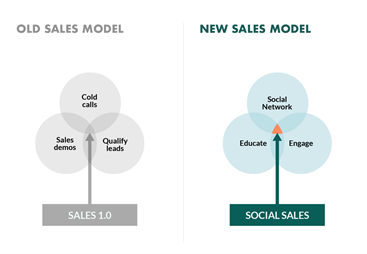
The popularity of social media makes it a perfect platform to build relationships with prospects. Through an emphasis on social interaction and content creation via digital platforms, social selling could be considered sales 2.0. The image below illustrates how it differs from the traditional sales model.

Social selling - Sales 2.0
“Social selling is the identification, targeting and reaching out to prospective and existing customers through social media channels and social communities in an effort to engage them in conversations that result in a potentially mutually beneficial relationship.” (Belew, 2014)

According to Statista, around 3.6 million people are using social media in 2020. By 2016, approximately 71% of all sales professionals were social selling in some way or form, even if they did not know it.

Having a business page on Facebook or commenting on posts in groups on LinkedIn for example are social selling tactics. It is not about bombarding strangers with private messages selling something after you connect on LinkedIn.

That is spam and the opposite of what you should do.

Sales strategy has always revolved around building and strengthening relationships to establish rapport and credibility with prospects and customers, so you are the one they think about when they require a solution to their problem, that you provide.

Social selling uses this same methodology but does it online with social media instead of requiring cold or warm calling or sales demos.

It might not be a surprise to you to hear that not many people enjoy doing cold calling and that many people do not like to receive cold calls. According to the Harvard Business Review, 90 percent of decision-makers say they never respond to cold calls. This means it can take numerous cold calls to reach a potential client if you can reach them at all.

“The approach is not simply another sales channel for making sales pitches but a way to engage the informed, empowered, and social buyers during their purchasing journeys using digital and social channels.” (Ancillai, Terho, Cardinali, & Pascucci, 2019)


How Product Placement Puts Your Brand In Front of Your Target Customers

What is product placement?

Have you ever noticed in the big movies how often you see major brands?

More often than not, the PC or mobile phone somebody is using is an Apple or perhaps a Samsung. All the vehicles could be Fords, or there might be several BMWs. 

Your favourite influencers on social media? Chances are that they are sponsored by brands to promote their products. 

This is called product placement, which is a form of advertising but attempts to persuade in a far less obvious way than traditional advertising.


What is Product Placement?

Also known as embedded marketing, product placement is a multi-billion dollar industry.

Companies pay to have commercial content such as their brand, products or services incorporated into non-commercial content such as film, TV or other mainstream media. The idea is to use the placement whilst maintaining realism with context or plot.

The audience gets exposed a brand, product or service being consumed in its natural setting; positively influencing their perceptions and opinions of the brand. They are not meant to notice that it is advertising — that is the power of product placement.

“In its simplest form, product placement consists of an advertiser or company producing some engaging content in order to sell something.” (Falkow, 2010)


Product placements can be subtle or more obvious. Ranging from an unobtrusive appearance within the setting, or more prominent incorporation and acknowledgement of the brand as part of the plot.

The product itself does not have to be shown; it could be a logo, signage or brand name for example. More subtle product placement could avoid showing the brand itself but instead showing a distinct colour scheme or other feature synonymous with that brand.

Consumer products such as electronics (Apple products for example) or automobiles, as well as service placements (such as McDonald’s), that target ultimate household consumers are the most common placement, but business-to-business promotions are becoming more common.

The vast number of media that use product placements include films, television programs, celebrities/influencers via social media, video games, blogs, music videos, concerts, magazines, books, comics, musicals and plays, live sport, radio, the internet, and mobile phones.

Product placement on television has grown rapidly to try and combat people skipping traditional commercial breaks. According to Priceonomics, television accounts for just over 70 percent of all paid product placements, and approximately 75% of all broadcast-network shows feature some form of product placement.

Films can often use multiple brands as product placements, Superman: Man of Steel is reported to have used $160 million worth of product placements promotions with over 100 brands.

“Since Unilever’s deliberate insertion of Sunlight Soap into several early Lumière films of the late 1890s, the practice of placing branded products within films for commercial purposes has developed into a distinct promotional tool.” (De Gregorio & Sung, 2010)


A Brief History of Product Placement

Although the term product placement was only created to describe this practice as recently as the 1980s, it is not a new practice. Instead, dating back to the first appearance of brands in Lumière films in 1896.

Product placement was not always monetised — many of the product placement deals were cash-free; instead, the arrangement was often reciprocal, items were borrowed and used as props by studios and television networks, reducing the cost of production. Products could be moved as well as selling movie tickets.

Commercial product placements were integrated into the creation and marketing of mass media content as early as the 1920s. The first spurt of popularity came in the 1950s, where tobacco companies tried to glamorise smoking cigarettes in TV and film.

In the 1980s, product placements became widely used after E.T. followed a trail of Reese’s Pieces out of the woods, resulting in a reported 65% increase in profits for Hershey’s.

“In E.T. the Extra-Terrestrial, the alien followed a trail of Hershey’s Reese’s Pieces to his new home. The movie was a hit, sales of Reese’s Pieces increased dramatically, and to some the product placement industry was born.” (Newell, Salmon, & Chang, 2006)


The Benefits of Product Placement

This fusion of advertising and entertainment helps brands to reach and engage with many of their target audience.

Because many people find traditional ads are annoying or irrelevant, it is estimated that two-thirds of TV viewers mute or skip ads. A major benefit of product placement is they cannot be skipped — they are embedded into the TV program, movie or other media itself.

The brand is often associated with the characters or context of the placement, so they must match to create a compatible match, which usually achieves positive evaluations.

Brands placed with attractive characters or settings can often be more appealing to the audience/consumers. This can be attributed to the ‘halo effect’, where a positive association with a show or person creates a positive association with the corresponding product or brand.

Viewers can become emotionally invested in the storyline in which a brand is presented. Because of this, the placement can encourage purchase intent.

When a placement is integrated seamlessly into a piece of media, the brand is seen in context, so it markets to consumers less directly. This means consumers’ persuasion knowledge is less likely to be triggered; this is a barrier that consumers put up to resist persuasion attempts from marketing that is too obtrusive.

Product placements can also boost brand recognition — the audience is also more likely to be able to recognise and name a brand after seeing it in product placement.

A study by Williams, Petrosky, Hernandez, & Page Jr (2011) found that just over 57 percent of TV viewers recognized a brand in placement when the brand also was advertised during the show.

The final major benefit is that movies and TV programs can be watched many times over several years, so their value is not limited to when it is originally aired.

“Viewers are able to correctly recognize brands placed in films and consumers do not really mind seeing products placed in motion pictures.” (La Ferle & Edwards, 2006)

American Idol — product placement of Coke 

How Product Placement Works

Product placement is all about context. To present a product or service in a way that will produce positive feelings towards that brand and hopefully influence peoples’ buying behaviour to purchase the brand. This connects with the audience in a more natural way than advertising when consumers are marketed to directly.

Product placements can be initiated directly through the firm’s marketing team suggesting their products to a studio or producers of a TV/Movie, or it could go the other way. Some companies and agents work as an intermediary to match companies with product placement opportunities. The brands in placements should be matched as closely as possible with the projected target audience of that piece of media.

Because of this potential influence over an audience, product placement should be ethical. The placement of brands of tobacco or alcohol for example can be viewed as unacceptable by much of the audience, especially in content created for youth.

There are two main forms of product placements: visual and verbal.

A visual placement involves placing a brand into a piece of media, so it is viewed. It could be an advertising hoarding in the background of a shot, or it could be of more importance in a scene, such as a cast member eating a packet of branded potato chips.

A verbal placement refers to the brand being mentioned in dialogue. There are varying degrees of audio placement, depending on the context in which the product is mentioned, the frequency with which it is mentioned, and the emphasis placed on the product name. Purely verbal placement we are called script placement.

A plot placement that relies on placing the brand both on the screen and in the conversation provides an opportunity for both verbal and visual encoding, whereas the other situations would activate only one form of encoding.

If a brand’s product becomes part of the plot -playing a major place in the storyline of building the persona of a character, this is a plot placement. Where a brand is identified with a character, e.g. James Bond and his Aston Martin, this is high intensity. A brief mention and appearance on screen low intensity.

Based on the coding redundancy hypothesis (See Paivio 1971), “…memory increases directly with the number of alternative memory codes available for an item”. Visual and audio activate different codes, and therefore different combinations of screen and script placement vary in effectiveness and brand recall.

“Virtual product placement” has been used to insert products and/or advertisements into portions of a media stream, where the products and/or advertisements may not actually exist.” (Gajdos & Pettersson, 2011)


The Digital Age of Product Placements

Advances in digital editing technology allow producers to update existing placements or create new ones in post-production, sometimes changing items used in shows long after they were filmed.

In live sports broadcasted to viewers, an advertisement on a billboard can be created where the advertisement is different than what physically exists. It may be a different ad or there might not even be an advertisement there in the first place.

On TV and in movies, virtual product placements can be inserted after the movie has been produced. Examples of this could be an advertising sign inserted into the background of a scene advertise a brand, or a beverage a person is drinking being altered to display a specific brand.

With advances in AI, product placements can be inserted into a media stream based on information about the consumer watching it, meaning brands relevant to that individual can be used, becoming more targeted to their personal interests.

Product placement has exploded on social media in the form of influencer marketing. An influencer is a social media personality with a following, who are paid to include products in their content to boost that brand’s popularity with their following. If the following of an influencer matches the target market of a brand, then they are a good fit.

Influencer marketing can range from a small mention in a post to the topic of a piece of content. The more obvious the product placement, the more it is deemed to be considered too ‘commercial’ by the followers of that social media influencer and the less effective it is likely to be.

“The extent to which the placement is prominent, whereby more prominence seems to evoke more negative reactions.” (Ewers, 2017)


Product Placement in Retail Settings

Product placement not only applies to media — but it can also apply to physical retail shop space. Brands will pay top dollar for prime space on the retail floor and shelves. This includes large endcap (end of an aisle) displays, the area next to the register where you checkout, or having item at eye level on the shelves and limiting shelf space their competitors — known as a slotting or shelving fee.

Large brands pay good money for this premium shelving space, this makes it harder for small brands and new businesses to break into the commercial retail market.


In summary, product placement is when a company pays to have commercial content such as their brand incorporated into a piece of media such as a film, or TV program, to expose it to the audience which is usually a good fit with their target market.

This aims to positively influence their perceptions and opinions of the brand in a less obtrusive way than traditional advertising. 

This article has explored product placement, how it works and the benefits of using it as a marketing strategy.

Thank you for reading.

I hope you enjoyed the content and learnt something new.

This was initially posted on the BYB Marketing Blog - https://brandyourselfbetter.com/blog/post/197065/how-product-placement-puts-your-brand-in-front-of-your-target-customers