Showing posts with label marketing tutorials. Show all posts

Positioning: 5 strategies to stand out from your competitors

Positioning

Positioning is one of the fundamental elements of marketing, both for consumer products and B2B (Business to Business). Positioning is a brand’s unique way of providing value to its customers. Where does a brand sit in the hearts and minds of customers? These associations that consumers hold with a brand reflect their positioning.

This week’s blog topic explores positioning as a marketing strategy and how it relates to other marketing strategies. Five common positioning strategies are also discussed.

“A position that takes into consideration not only a company’s own strengths and weaknesses, but those of its competitors as well.” (Ries & Trout, 2001)

What Is Positioning?

Firms use positioning to create an image of a brand’s product or service in the mind of a target customer. Positioning defines how the brand’s offering is unique, how it provides a distinct benefit to customers. Businesses use marketing to communicate their market position to customers and influence their perception of the brand’s products or services. Marketing establishes the brand identity, influencing consumer perceptions of its position in the market relative to the alternatives available from competitors.

“Positioning is not what you do to a product. Positioning is what you do to the mind of the prospect. That is, you position the product in the mind of the prospect.” (Ries & Trout, 2001)

Before determining its position in the market, a firm should decide on a segment of the market that they want to target. This segment of the market should be profitable — either there are many customers, or it is a niche in the market that presents an opportunity due to a lack of competition. This is where positioning comes in. A business must decide how to make their brand as attractive as possible to this group of customers they want to target. This target market defined by demographics such as gender, location and age as well as criteria based on their consumer behaviour.

Unique Selling Proposition

Effectively positioning a product or service gives it a USP (Unique selling proposition). A USP is an attractive feature or characteristic of a brand that differentiates it from similar alternatives. In a modern marketplace cluttered with so many choices with similar benefits, you want your brand to stand out from the rest. It becomes more memorable and can have a competitive advantage over alternatives. Your USP is your unique benefit to entice customers to purchase your brand over another. Brands must communicate This USP with their target audience. This is where positioning comes in.

McDonald’s is a notable example of using a USP to help position their brand. They are the world’s most widely known fast-food brand and compete with hundreds of other fast food outlets. They do not try and position themselves as the fastest, cheapest or best tasting. Instead, their USP is that they are a family-friendly restaurant. The children’s menu items, the free toy with a kid’s meal, the playgrounds. They position themselves to target families.

Positioning statement

A USP and positioning statement is similar. The biggest difference is that a USP is product or service-centric and focuses on what sets your product or service apart from competitors; where a business creates their positioning statement after the USP, focusing on the primary benefit of the product or services for their target market. Businesses need to ask themselves, “How do I want our brand to be perceived?”

A positioning statement should be no longer than a paragraph, and should discuss the following:

· First, the positioning statement begins with describing your target market and what their specific needs or goals are. Market research helps businesses to understand their market and customers more intimately.

· Define what category your product or service belongs to and how it meets the needs of consumers. Customers need a reference point to provide context to evaluate a brand’s offering.

· What differentiates your product or service from the alternatives? One point of differentiation is best, stating your difference from the customer’s perspective. How does your differentiator will help solve the customer’s problem or help them achieve their goals?

· Explain why consumers in your target market should believe your brand’s claims. Consumers must see credibility in your positioning, so provide evidence to justify the claim of your brand in your positioning. Do not just say you are the fastest or best quality, state HOW you are.

“There is a positive relationship between company performance (profitability/efficiency) and well-formulated and clearly-defined positioning activities.” (Kalafatis, Tsogas & Blankson, 2000)

Determining a Positioning Strategy

A successful positioning strategy relies on a deep understanding of the marketplace you want to compete in. It identifies how your company is different from the competitors and the conditions and opportunities in the marketplace. A big mistake that many businesses make is assuming that positioning is just a marketing strategy. It should be one of the foundations of the business strategy. After all, you cannot position a product as a high-quality offering in your marketing if the product itself cannot back up those claims.

Customers can recognise a clear positioning strategy — they understand whether a brand is competing on price or quality. Positioning must be a cohesive effort between the business strategy and sales and marketing tactics. It is far more than just a communication strategy. This is the only way the product or service will deliver on customer expectation and the promises of its positioning. Organisations must clearly define their positioning across the value chain, otherwise, communication loses focus and can become confusing.

There are five main strategies upon which businesses can base their positioning.

1. Positioning based on product characteristics

Using product characteristics or benefits as a positioning strategy associates your brand with a certain characteristic that is beneficial to customers. For example, in the automobile industry, Toyota’s position in the market is reliability, Porsche’s position is performance and Volvo’s position is safety. Brands consistently communicate the most unique benefit or characteristic of the product with consumers.

“Volvo owns ‘safety.’ BMW owns ‘driving’…” (Ries & Trout, 2001)

2. Positioning based on price

Positioning your products or services based on price is associating your brand with competitive pricing. Usually, with pricing positioning strategy, a brand aims to be the cheapest or one of the cheapest in the market, and value becomes their position. For example, Supermarket chains often have a house brand with very low-price products in many product categories. Their lower logistical and distribution costs allow them to price their products lower than the competitors, so price-sensitive buyers will often purchase them without knowing the price because they know it is often the cheapest option.

Brands can also position based on price if they find a gap in the market at a certain price point. Being the only option in a certain price range becomes your market position. Often brands extend their product lines to fill a gap in the market.

3. Positioning based on quality or luxury

Often the price and quality of a product align, certainly in the mind of the consumer, as the high price is often associated with high quality. But positioning a product based on its high quality or ‘luxury’ is different from positioning based on price. Often these brands do not communicate their price point, but instead high quality or prestige is the focal point of communication, to create a desire so customers want the product regardless of the price.

Note that luxury does not always mean better quality, but customers still believe it is better because of the reputation of the brand due to their long-term brand positioning strategies. For example, a $200,000 Rolls Royce car, the epitome of luxury, is likely to have a lower build quality than a $30,000 Hyundai.

4. Positioning based on product use or application

Associating your product with a particular use is another way to position your brand in the market. For example, meal replacement supplements can be of use to anyone lacking time or wanting a quick convenient meal. There are also meal replacements designed specifically for people who want performance in the gym, so high in calories and added vitamins and minerals. Other meal replacements are for people on a diet, so they are low in calories and would not provide much energy for somebody’s workout. 

Often the former meal replacement target males and the diet low-calorie option target females. Both are meal replacements, but different positioning.

5. Positioning based on competition

Competitor based positioning focuses on using the competition as a reference point for differentiation. Brands highlight a key difference their product/service offers in their marketing to make it seem favourable and unique compared to other options in the marketplace. The product or services becomes unique.

Brands can also use the competition as a reference point to follow a similar strategy. If a particular brand has a large market share, their positioning strategy must be attractive to a large group of customers, so you try and convert some of their customers by offering a similar product with similar benefits at the same price point.

Positioning Perceptual Maps

Businesses can create a perceptual map of the positioning of the dominant brands in a marketplace to identify any gaps and opportunities in that market.
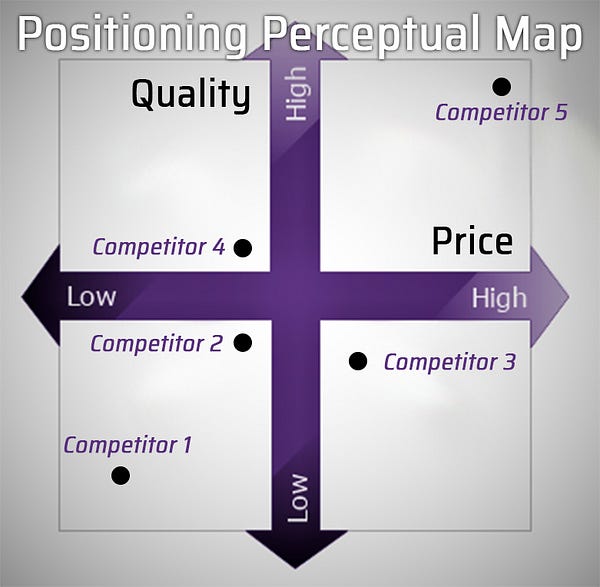
Positioning perceptual map example

The positioning map compares brands competing in a marketplace by illustrating consumer perceptions of those brands by using two key variables.

For example, businesses can apply price and quality for most markets; but the map should focus on the primary consumer needs or product benefits you want to understand, which will vary depending on the market. See below for an example of a positioning map.

In conclusion, your positioning in the market determines where your brand sits relative to competitors. It is important for brands to have a point of difference and to emphasise it in their marketing.

I hope you enjoyed this week’s content about positioning.

See you next week,

Dan

How creating brand equity provides value to your customers

The power of branding in the twentieth century is obvious. Brands such as Google, Apple, Nike and McDonalds are globally recognisable and powerful, the only thing that sets them apart from their competitors is the unique connection and loyalty that consumers hold with them.

Interest in the theory of brand equity increased in the late 1980s with a concern that a shifting trend from businesses towards a short-term focus on finances could have a harmful long-term effect on their brand and marketing tactics. There was a realisation that brands are assets to a business, driving business performance over time.


What Is Brand Equity?

Brand equity is the added or subtracted value given to a current or potential product or service, influenced by the brand. It is “the differential effect of brand knowledge on consumer response to the marketing of the brand” (Keller, 1993). Consumers have a perception and desire that a brand will meet their promise of benefits. The higher the perception of value, the higher the premium customers are willing to pay.

Most people don’t think twice before purchasing Coca Cola
Most people don’t think twice before purchasing Coca Cola

An elevated level of positive brand equity requires cooperation between the tangible and intangible aspects of a product or service. The intangible aspects come from a customer’s subjective experiences with a brand, the brand’s uniqueness and personality and ability to stay relevant and build a relationship with loyal customers.  

“Brands, in their ability to create choice, build trust and loyalty and drive a premium price.” (Interbrand, 2010)
 

Customers are willing to pay more

Consumers gravitate toward products with great reputations. Brands with strong positive brand equity can generate a premium when compared to a generic equivalent. Customers are more willing to pay a higher price — even if they can get a comparable product or service from a competitor for less.

This is how Apple can charge so much for an iPhone when a comparable alternative can cost less than half the price, yet Apple’s legions of loyal fans will queue outside the store to buy the latest phone on release. If a customer attaches elevated levels of quality or status to a brand, they perceive it as being worth more than alternatives.

This price premium is not limited to consumer products; a study on industrial products (See Bendixena, Bukasaa, & Abratt, 2003) found that the leading industrial brand name could command a price premium of 6.8% over the average industrial brand and 14% over a new and unknown brand. Technical specialists were willing to pay a price premium of up to 26%.


Other benefits of positive brand equity

Besides the benefits of being able to charge a premium price, there are numerous other benefits to having a brand with strong positive equity. Some of the benefits are as follows:

  • Higher profit margins because businesses with high brand equity can charge more, but do not incur a higher expense to produce the product or service.
  • The brand is more recognisable and trusted, therefore there is increased demand by customers which results in higher sales volumes. Brands are more easily extendable, which means the parent brand can develop a preference and favourable impressions towards their new products or services with their customers.
  • Your target market more readily accepts marketing communications due to your existing positive reputation.
  • A reduction in new product failure rates and launching costs are lower due to a higher level of brand awareness and trust with their target market.
  • Due to the brand reputation of delivering a certain level of quality, customer retention and loyalty is high as consumers like to reduce their risk and simplify their choice.
  • A reduction in marketing costs to achieve the same volume as it costs more to acquire new customers than it does to retain existing customers.
  • Higher resilience to competitors’ actions as customers is loyal and unlikely to switch. This creates entry barriers to the marketplace for competitors as it is not a profitable market segment for their brand to target.
  • A strong brand provides strategic support to a business strategy that will add long-term value to the organization.
  • Brands with high equity can have higher marketing budgets to invest back into marketing through their higher profit margins. This helps ensure brand equity remains strong.
Brands are everywhere in big cities
Brands are everywhere you look in big cities

Customer-based brand equity

Over the years, there has been confusion and disagreement on how to best define measure brand equity. There have been multiple definitions, but they predominantly fit into two distinct categories: customer-based and financial.

“Customer-based brand equity is defined as the differential effect of brand knowledge on consumer response to the marketing of the brand.” (Keller, 1993)

Customer-based brand equity is the most popular conceptualisation of brand equity, introduced by prominent marketing academic Kevin Keller. He defined brand equity as attracting (or repulsing) consumers to (from) a product, generated by the ‘non-objective’ part of the product. It is the added value of a product in a customer’s mind. It is the influence brand knowledge has on consumer response to the marketing of the brand.

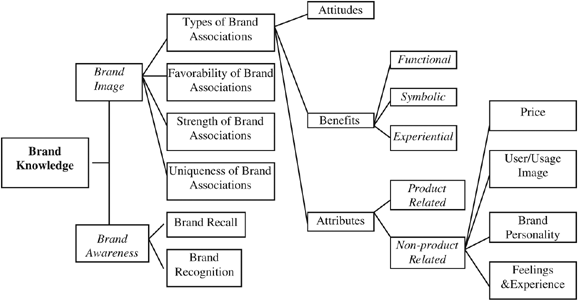
Keller’s brand knowledge construct drives brand equity and is made up of three dimensions — brand awareness, brand image, and brand associations. Brand image is a customer’s perception of a product, service or brand. Brand awareness is a consumer’s ability to recognise a brand and recall how they have that knowledge. As you can see above, an individual’s brand knowledge is the combination of their subjective brand awareness and brand image. Brand image should not be confused with brand identity, which is controlled by the firm. Brand image is the customer’s perception of this identity.

See Keller’s brand awareness framework below.

Keller brand awareness model
Kevin Keller’s brand awareness model

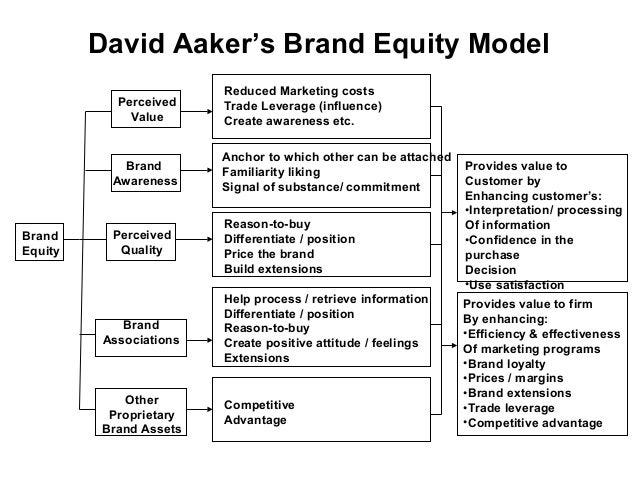
David Aaker is another notable marketing academic who modelled brand equity from the point of view of the customer. He believes recognition is the important driver of brand equity and identified four contributors to brand equity: perceived quality, brand loyalty, brand awareness and brand associations.

Variations of the dimensions the drivers of customer-based brand equity discussed in the literature include reputation, identity, personality, attitude, familiarity, commitment, trustworthiness, loyalty, and performance.

A common characteristic of both Keller’s and Aaker’s model of brand equity is brand associations. Brand associations are anything that creates a positive or negative feeling toward a brand. Marketing aims to create strong, favourable, and unique brand perceptions and associations with a brand that customers remember. It can be based on functional benefits of the product, but often focuses on connecting on an emotional level through a unique brand personality that reflects positive organisational values and social benefits. An individual’s usage experience also influences their brand associations, which is why tangible and intangible aspects of a brand’s products or services must align.

David Aaker’s brand equity model
“High brand equity implies that customers have a lot of positive and strong associations related to the brand, perceive the brand is of high quality, and are loyal to the brand.” (Yoo, Donthu, & Lee, 2000)
 

Relationships build equity

One of the underlying functions of marketing in the 21st century is to form a relationship with customers. Creating a successful relationship contributes to the positive equity existing in a brand, as these customers like and trust you. Brand trust and loyalty strengthen consumers’ investment into the brand by reducing their uncertainty and vulnerability.

A strong brand “increases customers’ trust of invisible products, while helping them to better understand and visualise what they are buying.” (Berry, 2000)

Brand trust is the willingness of a customer to rely on a brand to meet their expectations of function utility. This requires time and experience between the two parties, but trust plays an important mediating role in the creation of equity and value in a brand.

Brand loyalty is a commitment from a customer to consume a preferred product or service consistently and repeatedly into the future, despite situational influences and the marketing efforts of competitors having the potential to cause switching behaviour. Customers that believe in the value of a brand often will not spend time appraising cheaper options with lower prices.


Marketing’s role in creating equity

Companies can create brand equity by making products and services memorable, easily recognisable, and superior in quality and reliability. Marketing is a major driver of brand equity through differentiating products from competing brands. Marketing builds strong brand equity through influencing the brand associations held in a consumer’s mind. Enhance the strength of your brand by investing in advertising and resist often discounting products; as this has been shown to create negative brand equity for businesses, as customers are less willing to pay a premium price if they know it is often sold much cheaper.

“Brand equity is developed through enhanced perceived quality, brand loyalty, and brand awareness/associations; which cannot be either built or destroyed in the short run but can be created only in the long run through carefully designed marketing investments.” (Yoo, Donthu & Lee, 2000)

Create a personality for your brand expressed through your marketing mix. The connection a consumer feels with your brand’s personality can define your relationship with customers. Creativity helps develop a unique brand differentiated from competitors. Marketing communications should also be consistent in the long-term, from messages to the visual identity. The marketing mix should also always be relevant to the target customer and your brand image. Stay true to the brand.

The brand equity model below from Yoo, Donthu & Lee (2000) is a good illustration of how marketing contributes to the brand equity process.

Model of brand equity


Brand equity as the financial value

The second popular definition of brand equity is based on measuring the financial value of a brand. The value added to a product or service by its brand name compared to an unbranded alternative.

Marketers in the 1980s started to realise that certain brands offered considerable added value to products. They saw brand equity as a durable and sustainable asset to a business and wanted a way to estimate the unique value of each brand. One of the formulas introduced to estimate a brands value is by taking the value of the firm and subtracting the tangible assets and “measurable” intangible assets. The remaining value is the firm’s financial brand equity. This measure used at the macro (market) level, to put a monetary value on a brand for resale purposes. There are also measures for brand equity at a micro or product level, which allowed firms to observe the value of individual brands by isolating changes in brand equity by measuring its response after major marketing decisions.

As the financial method offered limited use to helping set marketing strategies to grow strong brands, researchers preferred the customer-based approach. The brand value was starting to be explored as a concept at around the same time, and researchers began to realise that taking a financial viewpoint to brand equity was confused the topic with brand value, and the two should be kept separate.

Brand equity is the value of the brand
Brand equity can be measured as the financial value of a brand


Brand value or brand equity?

An uncomplicated way to separate the two is that brand equity what a brand does for a customer, while the brand value is what it does for the business. Brand value is the financial worth of the brand. Many marketing academics consider Interbrand to be the world’s most reputable brand valuator (see Chu & Keh, 2006), and each year they publish a list of the world’s most valuable brands.

There are three key components to Interbrand’s methodology for brand valuations:

· Analysing the financial performance of the products or services — the economic profit measured as “the after-tax operating profit of the brand, minus a charge for the capital used to generate the brand’s revenue and margins.”

· The role the brand plays in purchase decisions — the portion of the purchase decision attributable to the brand as opposed to other factors.

· The brand’s competitive strength — the ability of the brand to create loyalty and, therefore, sustainable demand and profit into the future


That is it for this week's blog. I hope you enjoyed this week’s content about brand equity. Make sure you keep creating quality marketing content around your brand to increase your brand equity!

See you next week,

Dan

12 strategies to price your products or services


Price is perhaps the most crucial aspect of the marketing mix to determine whether customers make the purchase. If priced too low, profit goes out the door and you must work harder. Priced too high, customers will overlook you. This article discusses several pricing strategies that businesses can use.

Welcome to week fifteen of 50 weeks of marketing. This week's blog explores price and the numerous pricing strategies that businesses can use.

Pricing

Price is the value placed on a product or service to purchase it, based on research, experience, and an understanding of the marketplace. It is an educated calculation of the price needed to be profitable and sell enough volume to be sustainable as a business. Price also must stand its ground against alternative options from competitors.

Pricing is at the core of marketing strategy, being one of the original ‘4Ps’ of the Marketing Mix.

Changing other core marketing strategies such as advertising or new product development is expensive and time-consuming, but the price is very flexible, and business can change it according to the needs of the situation. Price is the most adjustable aspect of the marketing mix, allowing a business to quickly respond to marketplace changes.

For customers, price is often the most crucial factor of their purchase decision. Businesses use price as a differentiating factor to set them apart from competitors and to target a segment of customers. Your price reflects your positioning in the market. Pricing helps create your brand identity.
“One of the more basic, yet critical decisions facing a business is what price to charge customers for products and services.” (Morris, 1987)


Factors that impact the price

There are several factors to consider with a pricing strategy.

The first factor to consider is cost. Or, what your time worth? Cost Plus takes into consideration production costs, then adds a certain percentage of profit to that total. This is a basic way to price a product, and often business use more than one pricing strategy in unison. There could also be other internal considerations within the business that can impact pricing such as quality.

The perception of value in the minds of customers is another important contributing factor a business must consider with their pricing. What do consumers think a reasonable price to pay is? Price and value will not always align with customers, and this perception of value will change over time. The more a business understands what their customers value, the easier it is to price your offering.

“This decision is particularly critical in what The Economist (2013) calls the “age of austerity” — an era characterized by sales stagnation, no reasonable possibility of cutting costs further, and price as the only remaining lever. In this competitive environment, more than ever, a sound pricing strategy is required to facilitate customer value creation, structure price decisions, and earn a profit. (Kienzler & Kowalkowski, 2017)

The competition, of course, must come into consideration. What are they doing? What are their prices? How does their product or service compare to yours? If there are similar offerings that are equally attractive but at lower prices, then you probably will not have many customers.

Economics is going to impact your market and therefore your price also. What is the economy doing? Are people willing to pay a premium? Is there a shortage of supply? How highly regulated is the market? We have recently had the Covid-19 outbreak around the world, forcing many businesses to close and changing business environments. There are now many incentives required to bring customers back to some industries where there has been a reduction in demand. Demand will have increased for other services such as delivery services.

Customer using their credit card to purchase a product

Getting the price right

Pricing your products exactly right to get the absolute maximum profitability is easier said than done. Getting the highest volume of sales must balance at a profitable price. You could have the most brilliant math minds in the world looking at every single statistic possible to create a calculation for maximum profitability, and still not get the price right. There are so many factors outside of your control. Having said that, there are many things a business can do to ensure they are not getting it horribly wrong. Pricing decisions can have significant and disastrous consequences.

It is often the first and most important considerations for customers and it determines your profitability and ultimately, your success. It is the only marketing tool that provides the income — every other activity is an expense.

“Developing an appropriate pricing strategy is both crucial and highly complex. Prior research emphasizes its dependence on various factors, such as the environment, firm objectives, customer characteristics, and the pricing situation” (Kienzler & Kowalkowski, 2017)
 

Pricing Strategies

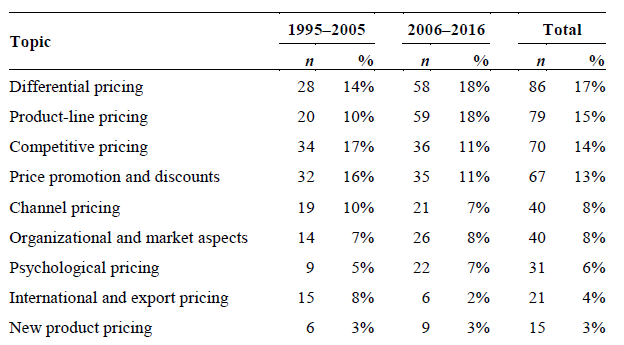
There are several methods and strategies a business can use to price their products. At a basic level, there four basic pricing strategies — premium, penetration, economy and skimming. I will discuss these along with several other strategies that businesses can use in unison in their pricing strategy. Kienzler and Kowalkowski (2017) identify many of these as being the most discussed in the marketing literature over the past 20 years. The eight other strategies are Loss Leaders, Differential, Competitive, Price Promotion and discounts, Psychological, Everyday Low Price, Bundled and Captive.

Pricing strategies in the marketing literature

Premium pricing

Using a price structure that is higher than many of your competitors is a premium pricing strategy. The premium price alludes to the fact that the product or service is of a much higher value, usually consisting of a certain competitive advantage or unique characteristic in the minds of customers. Like a Ferrari or Aston Martin. They have a certain look, high performance and level of luxury not found in a Toyota or Ford. Keeping the price high creates an impression of higher quality than alternatives. You are unlikely to ever see a stock clearance sale on a premium brand.


Penetration pricing

The strategy with penetration pricing is to under-price a new product or service initially to gain market share more quickly. It is common with a product launch, increasing the price after this initial promotional period. The aim is to penetrate the market and steal customers away from competitors. If you can get customer loyalty and positive word of mouth during this period, that also helps marketing efforts.


Economy pricing

A no-frills brand or range of products have an economy pricing strategy which is based on a high volume of sales. Margins are low as are any overheads such as marketing costs. Many brands in a supermarket have an economy pricing strategy, and the supermarket itself will have this strategy. Targeting is at the mass market to gain a large market share, and there is little to differentiate any product besides the low price. The packaging is usually extremely basic.

Low price often equates to low quality in the eyes of customers, so there’s little chance of ever-increasing price as customers will be very price sensitive.


Skimming strategy

Initially charging a high price and then lowering it over time is a called a skimming strategy. This strategy is useful until the market has become saturated with competitors and lower the price accordingly. This strategy is usually only reserved for brands with a first-mover advantage or a strong competitive advantage such as a unique technological advancement. Wealthy segments of the market are usually targeted.

Examples of this are when mobile phones first become popular, texting and call charges were extremely high with just one or two providers. Similarly, with smartphones, the original series of the iPhones only had the one expensive model when there were not alternative android models for much cheaper with similar capacity.


Loss leaders

Whilst most of these pricing strategies are on a brand or product level; Loss Leaders is a store level strategy. Certain retailers such as supermarkets sell high profile and high volume brands such as Coca Cola at a low price, maybe at a slight loss depending on competition, intending to attract customers rather than being a profitable product. This strategy is based on the fact these customers are highly likely to purchase other products that are more profitable items.

You just want to get people into the store. Sales work the same way, a highly discounted TV because they might purchase the cabinet and home theatre that comes as a bundle. But often this is a day to day pricing strategy. After all, who goes to the supermarket just to grab some Coke, right? You will probably grab some potato chips or a bag of nuts, maybe some bread, toilet paper or milk, some bread, maybe some beer…


Differential pricing

Also known as discriminatory pricing or multiple pricing, differential pricing uses the law of demand as the key principal. Recognising that certain customers are willing to pay extra for a product based on the market segment they belong to; selling the same product or service to different customers at different prices.

Think about going to an auction for a property. If there are ten bidders, for example, they will also see value at a slightly different level. As the price goes up, the number of customers reduces.

Businesses can offer slightly different value propositions to different market segments with differential pricing. Pricing at a sports game or a concert is an example of differential pricing. Kid’s prices, family prices, corporate boxes, front row seats, VIP passes, season tickets… This helps the businesses maximise their potential profit by focusing on their customers’ unique valuations.

Brand Image in product segments such as clothing and cosmetics can also allow for different pricing in different markets, location, and time such as early bird tickers are another variable.

Cafes often use competitive pricing, a standard coffee is $5 in most places in New Zealand

Competitive pricing

Also known as reference pricing, Competitor pricing is set by the market, priced just below the price of a competitor’s product. The term reference explains the use of the competitor’s price as a reference for the price, they are willing to pay.

In New Zealand, in the past because of our geographic isolation and low population, multi-national companies often leave us alone, leading to monopolistic and duopolistic markets. Telly-communications and Airlines in particular.

Air New Zealand has enjoyed a free market for extended periods, and occasionally a company like Jetstar or Virgin will come along to take a share of the market. Not often successfully. But when they do, forcing Air New Zealand to lower prices to match the competitors. Volumes of sales increase accordingly.

Going rate pricing is a by-product of highly competitive markets, where the companies have little to no control of the market price. E.g. Mobile phone rates are all similar and standardised across the market. The price of a regular-sized coffee is usually $5 in New Zealand, regardless of what café you visit.


Price promotion and discounts

Using price as a tool for sales promotion is common marketing and sales tactic. Usually, a product or service temporarily discounted in price. We have all seen it, 40% off all Tupperware for three days only! For many consumers, the value that they perceive in a brand’s product or service increases with a reduction in price. A short amount of time to purchase creates urgency around the transaction that the buyer might miss out.

Discount coupons are another form of price promotion which is also designed to promote brand awareness as the consumer a required to hold onto it physically, meaning brand recall should be higher as the coupon might be noticed often when rummaging through a purse or draw for example.

Price discounts often are a strategy to clear out-dated inventory. A study by Ailawadi, Lehmann and Neslin (2001) who looked at data from P&G when they changed their pricing strategy to cut deals and coupons and invest more into advertising, and they found coupons and discounts help with market penetration, but have little impact on customer retention and product usage. Overuse of discounting pricing can be harmful to a brand image over time and reduce the brand equity — being the premium a customer is willing to pay over a competitor.

Trade and volume discounts are common pricing strategies in B2B, especially in the trades with wholesale buyers. This also helps enhance loyalty as there are often many competitors in the market. Some products may have seasonal pricing, often summer clothing is on sale in the middle of winter and vice-versa.


Psychological pricing

Businesses can design their pricing to have a psychological impact on purchasers. Marketers using Psychological pricing to “trick” the customer’s brain into thinking the price is lower than it is. It is a common tactic in retail — we have all seen pricing at $99.99 instead of $100.00. The price rounds up to a hundred anyway, but the customer sees the 99. The lower number is more attractive to purchasers.


Everyday low price

Another store-level strategy, Everyday Low-Price strategy is popular with large format retailers. Margins low and therefore prices are low, selling in high volume. Think Walmart in the USA. People shop there because they know prices will be low, therefore the business does not need to spend money advertising their prices. You do not have to offer discounts to get people through the door. This saving on advertising costs keeps prices low and customer loyalty is often high, as people know what they are going to get and there are no gimmicks.

The two largest home and hardware store chains in New Zealand, Mitre 10 Mega and Bunnings Warehouse both use this strategy. It is more than just a pricing strategy; it is a business strategy.

Studies (See Montgomery, 1997) have shown that having micro-marketing pricing strategies instore — e.g. not promoting discounting options besides an aisle display that is low cost and low in labour, can improve profits by four to ten percent. This also allows organisations to maintain their consistent brand image but still alter prices to adapt to local markets.


Bundled pricing

When more than one product sold together at a lower than the price to buy the same items individually, this is a bundled pricing strategy. The products could be similar, e.g. shampoo and conditioner, or they could be dissimilar but under the same brand. This is an effective way for businesses to clear old stock. Buy one, get one free is an example of bundled pricing.

Other examples of bundled pricing are signing up for both power and broadband services from the same company and get a discount, or a bundle deal at the local pizza store to get 2 large pizzas, garlic bread and large drink for cheaper than purchasing individually. A Big Mac combo instead of a Big Mac. The strategy behind this approach is to stop customers dwelling on the price but instead on the benefits of the bundle.


Captive pricing

Captive pricing is where a primary product has secondary consumables that customers must purchase to function. Battery companies often manufacture torches for example or razor blades. The initial offering is cheap, but the consumables are not. This is a popular pricing strategy when there are other complementary goods you can also sell the consumer.


That is it for this week’s topic about pricing. I hope you learnt something new!

There are many strategies a business can use to base their pricing — hopefully, this makes it all a bit easier to understand.

The profitability of customer loyalty


Loyal customers are profitable to a business. We need to look after them.

This week's blog discusses the topic of customer loyalty, using marketing theory to first define what loyalty is and how it relates to your relationships with customers. 

Marketing strategies businesses can use to enhance the loyalty of their target customer are also explored.

What is Loyalty?

The mass-marketing approaches of the ’60s and ’70s ignored the role of customer loyalty as an important parameter of marketing activities. There has long been a shift from this transaction based-approach into a relationship-based strategy. 

The focus changes from acquisition to retention. The new goal is to enhance customer loyalty by focusing on the lifetime value of existing customers, considered just as important as attracting new customers.

Loyalty is the maintenance of trust in a person, a party, an institution; which fosters strong feelings of support or allegiance. An individual has a sense of belonging to a relationship. In business, this feeling of loyalty a customer feels with a brand or business yields a deeply held commitment for consistent future consumption. Often, businesses use repetitious purchase behaviour as an indicator of loyalty. I use the term customer loyalty in this article as opposed to brand loyalty to emphasise that loyalty is a feature of people, rather than a characteristic of a brand.
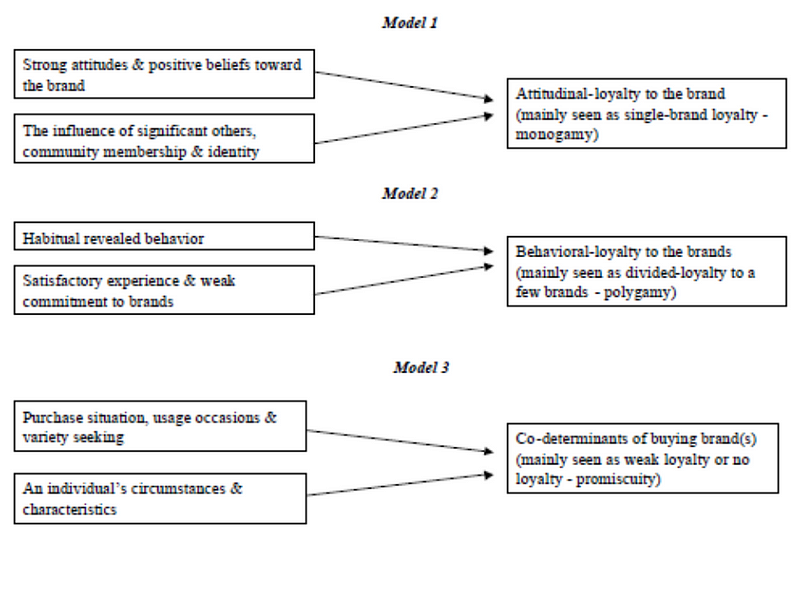
“Customer loyalty is difficult to define. In general, there are three distinctive approaches to measure loyalty: behavioural measurements; attitudinal measurement; and composite measurements.” (Nyadzayo & Khajehzadeh, 2016).
 
Conceptualisations of Customer Loyalty (Uncles, Dowling & Hammond, 2003)
Customer Loyalty

Loyalty pays off

Customer loyalty is profitable. A study found that “when a company retains just 5 percent more of its customers, profits increase by 25 percent to 125 percent.” (Bowen & Chen, 2001). Loyal customers provide more repeat business and are less likely to shop around, this higher retention of existing customers reducing marketing costs.

When a brand has generated loyalty from customers, their customer base becomes less sensitive to the marketing efforts of competitors. It makes sense that business focus their energy into strengthening relationships with customers, to enhance their loyalty.

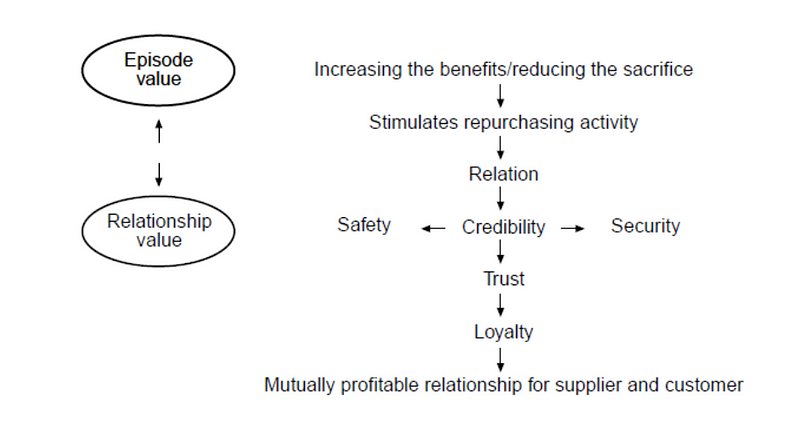
The effect of value-adding strategies in a long-term relationship (Ravald & Grönroos,1996)

Relationship marketing

The foundation for a relationship marketing strategy is “a core service around which to build a customer relationship, customizing the relationship to the individual customer, augmenting the core service with extra benefits, pricing services to encourage customer loyalty, and marketing to employees so that they, in turn, will perform well for customers (Berry, 1983).

Relationship marketing is marketing activities that attract, develop, maintain, and enhance customer satisfaction and fostering customer retention. The focus is the lifetime value of the customer rather than the value of a single transaction –the underlying assumption being that establishing and maintaining relationships with customers will foster customer retention. Businesses use strategies to bond with their customers to enhance their commitment.

As you can see in the model above, trust is a component that comes before loyalty. Trust is one of the foundations of relationship marketing, and it is a customer’s willingness to rely on a certain business or brand. This reduces uncertainty and vulnerability, so it gives customers a good reason to stay in a relationship as they can value relationships that they do not have to monitor. 


Trust aligns with loyalty

Building a relationship is based on the formation of a bond. This bond is the psychological, emotional, economic, or physical attachment that binds parties together. The strength of this bond can determine a customers’ commitment and loyalty to a brand.

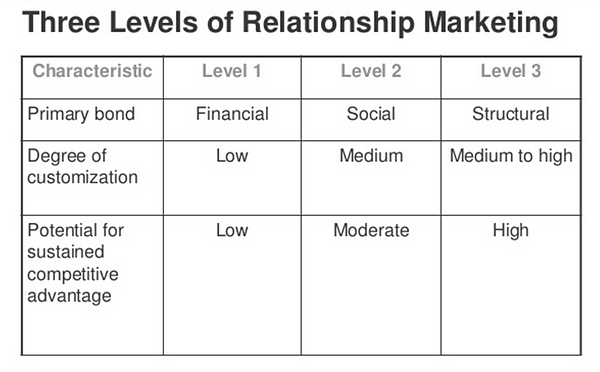
Some customers will only bond with the company based on price. The first level of relationship marketing relies primarily on pricing incentives to secure customers’ loyalty where business bond with customers on the promise to save money. Service providers often reward loyal customers with special price offers. This advantage is unsustainable, and customer bond based on price will never foster true loyalty.


Practising higher levels of relationship marketing gives greater potential for sustained competitive advantage. Level two is a social bond, and level three is a structural bond. Structural bonds provide solutions to important customer problems, as discussed by Berry (1995): “When relationship marketers can offer to target customers value-adding benefits that are difficult or expensive for customers to provide and that are not readily available elsewhere, they create a strong foundation for maintaining and enhancing relationships.”

Targeting Profitable Customers

Certain customers will be more profitable to a business than others. Some are loyalty-prone if they receive good service, happy to use one brand or business. Whereas other customers are deal prone, always on the lookout for alternative and discount offers.

These types of customers are stayers and switches. Stayers have the possibility of lifetime value, as their motivation is to reduce their available choices and repeatedly use certain suppliers to simplify the process, and it reduces the perceived risks of consumption. Switchers do not exhibit loyalty and have a repertoire of brands from which they regularly choose. Having systems to recognize these characteristics of customers is important to help us target customers who are more likely to stay.


Customer satisfaction

Customer satisfaction is one of the most important criteria for customer loyalty. When satisfaction levels are high, the potential for loyalty is high; when satisfaction is low, there is a very low chance of retaining customers. Satisfaction is a popular measurement that marketers use to determine how happy customers are with their company’s services and or products. 

Businesses can use research such as customer surveys to determine how happy their customers are and how to improve their experiences. Highly satisfied customers will also be far more likely to tell friends about your business. There is a correlation between higher satisfaction and positive word of mouth intent. The same also goes with loyalty — loyal customers are more likely to spread positive word-of-mouth and recommend your business to others.


Tools to enhance loyalty

The cost of replacing defected customers is significantly higher than the cost of retaining them. To enhance customer loyalty, there are several tools a business can use. I will discuss four options: Loyalty programs, benchmarking performance, CRM, and branding.


Loyalty programs

A popular strategy for maintaining customer loyalty is through loyalty programs. For example, a popular one is the coffee card at your local café, often getting the tenth coffee free. This strategy only tends to work if the frequency of consumption is high.
Loyalty programs provide financial and relationship rewards to customers, and there are two aims: · One is to increase sales revenues through increased purchase levels, and/or increasing the range of products consumed. · The second is a defensive aim, to build a closer bond between the brand and current customers, to maintain them in the current customer base.

Benchmarking performance

The second strategy to enhance customer loyalty is by benchmarking service quality. Improving service quality should increase customer loyalty. Relationship marketing and service improvement go hand in hand. Businesses should do everything they can to keep improving their customer experience. This service quality adds more value to the core product, which improves customer satisfaction, strengthening relationship bonds and increasing loyalty. 

Benchmarking a level of performance you expect from your staff and/or systems helps ensure to keep the level of quality high.

Use customer surveys to analyse your services and take the results of your loyal customers. Use this as internal benchmarks for customers service quality. This means to set a minimum standard of service quality. Holding your business to a strict standard does not ensure every customer will return, but there will be an increase in loyalty. Furthermore, often dissatisfaction is because of a negative customer service experience rather than the product or service itself.

CRM — Customer Relationship Management

Advances in technology over the past thirty years has removed many of the barriers for businesses to maintain relationships with clients and customers. CRM is the managing of all your company’s relationships and interactions with customers and potential customers. Email database management for example enables businesses to regularly be in contact with customers. Because past experiences impact customer satisfaction, the quality of a CRM can mediate how customer satisfaction translates into loyalty. When customers perceive a higher quality of CRM, this strengthens relationships.

“CRM quality comprising of trust and commitment is crucial in building and maintaining long-term relationships and enhancing customer loyalty.” (Nyadzayo & Khajehzadeh, 2016)

Model of customer loyalty (Nyadzayo & Khajehzadeh, 2016)
Model of customer loyalty


Brand image

The fourth way to increase customer loyalty is through investing in your branding, and the image you portray in the minds of customers. Your brand can be a mediator of the link between satisfaction and loyalty. The more customers connect with your brand, the more they trust you. Research has shown (Nyadzayo & Khajehzadeh, 2016) that a stronger brand image can lead to a higher perceived CRM quality, enhancing loyalty. Just look at Apple around ten years ago! 

A strong brand “increases customers’ trust of invisible products, while helping them to better understand and visualise what they are buying” (Berry, 2000).

That is it for another week and blog — I hope you enjoyed this week’s topic about customer loyalty and learnt something new that you can implement in your business. 

See you next week, 

Dan

Social Media Trends for 2020


social media title — marketing blog
Social media in 2020

Social Media Trends for 2020

As a marketer or small business, it’s important to stay on top of all the latest trends in the fast-evolving world of social media. Luckily for you, I’ve compiled the biggest trends into this article for your convenience!

Bear in mind, you’ll find no reference to COVID-19. No quick fix marketing scams here to make a dollar out of this disaster! Many of the trends I will be discussing have been growing for the last couple of years, rather than the flavour of the month.

Each week, I talk about marketing theory as well as the practical implementation of a different marketing theory or topic. We don’t just want to talk about the “what”, we think it’s important to understand the “how” and “why”.
social media
Social Media

The growth of social media

We all know what social media is, but how do we define it?

Social media is an online community, where people connect through electronic communication and share stories, ideas, opinions, thoughts and other content to generate discussion. It can be through a website or an app. Another characteristic is that users create service-specific profiles and can connect with other users, brands and join groups.

Over the short lifespan of social media (about 15 years), platforms have evolved, come, and gone. MySpace originally set the trend as the biggest social media network between 2005 and 2008. By the time the Facebook movie came out in 2010 called “The Social Network”, social media was a normal part of life for many people. Now, the number of internet users was 4.4 billion in 2019, and the number of people using social media was 3.5 billion.
“Social media is internet-based resources for sharing and discussing any topic. Any website which allows the customer to discuss their material, views, views and motivates connections and group developing can be classified as social media.” (Sajid, 2016)


According to Wikipedia, there is a general agreeance that social media includes the following: blogs, business networks, collaborative projects, enterprise social networks, forums, microblogs, photo sharing, products/services review, social bookmarking, social gaming, social networks, video sharing, and virtual worlds.

Social media has become an integral part of people’s lives and daily routines. Checking their social media accounts is the first thing many people do upon waking in the morning!

Over the past ten years, marketers have come to realise the importance of social media in peoples’ lives, and brands have saturated platforms like Facebook and Instagram with advertising and content to connect with their target customers. There is a lot of competition, so it is difficult to stand out without a strategy.


Choosing the right social media channel

Many brands rely on social media platforms as their major communication channel to reach their target audiences. The difficult part is, consumers are scattered over many social platforms. Social media is a dynamic and competitive space, any edge you have on your competitors in reaching your audience will give you an advantage.

Whilst the major platforms still dominate, there has been a rise in alternative platforms. Platforms like Facebook and Twitter have seen drops in users, with younger audiences opting to spend time on other platforms such as Snapchat and TikTok.

Generally, marketers have concentrated a lot of their effort on major platforms such as Facebook. But every business will have multiple audiences, it is not just one type of person. Even if most of the characteristics of a consumer are similar, they will like to consume content in diverse ways. All popular Social media platforms all have one characteristic that makes them best-suited toward a particular form of content, which influences its type of users it has.

Segment your audience into distinct groups of customers, and then tailor your communication to suit the preferences of each group. Assuming your audience is one type of person means you are ignoring potential customers who might be hanging out somewhere else and likes a certain form of communication. The better you know the diverse types of people most likely to be your customer, and their preferences, better you can adjust your messaging and narratives to fit each segment.
Trust and goodwill are the basis of social media, which uses the “wisdom of crowds” in a collaborative manner. (Sajid, 2016)


social media — like
LIKE! The rise of social media
As trends evolve on social media, so must the corresponding marketing. Over the past ten years, with the prominence of social media, the digital world has become saturated with brands’ marketing. Staying updated on the latest social media trends can help fuel your strategy and make you stand out in the crowd. Here are eight social media trends that you need to be aware of for 2020 and beyond.

Telling a human story…

Social media is synonymous with sharing our life experiences with friends and families. We share stories through our posts. Social media platforms are evolving with trends, allowing people to tell their stories in diverse ways. Video is continuing to increase in popularity as a way for people to share their narrative through platforms such as Instagram, Snapchat and Facebook.

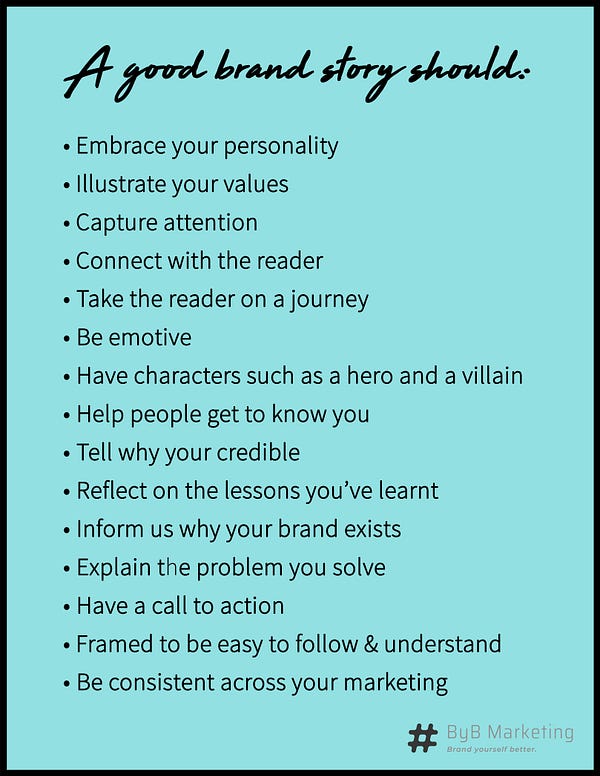
Brands are following the lead and connecting with consumers on a more personal level through sharing more human stories of their own. Storytelling has become an important function of social media, as it feels real, immediate and personal. A brand can share their story in a number of ways, such as a creative mix of video, images and graphics.


creating a brand story
Important elements of a brand story


Distributed through social media, stories tell the narrative behind the brand, which capture moments and experiences shared by consumers of a brand or product. A human face to a business and brand is helpful to increase trust and loyalty as it helps the brand seem more relatable. Using the personal brand of the business owner in marketing content is an effective way to humanise a business.

Influencers

Influencers are already all-over social media. They are probably most obvious on Instagram and YouTube. These people get paid massive amounts of money to promote brands in their content. It can be much cheaper than running ad campaigns with impressive results, so it has become increasingly popular with brands as a marketing tool.

Influencer marketing should continue to be popular. This is the use of social media figures or influencers”, who have a community around them, to essentially be a salesperson for the brand. They include brands in their content in a way that is more like product placement or product endorsement. less direct than traditional forms of advertising This is to help humanise a brand. To give it a human voice. They can influence their following through the trust they have already built with the platform. It comes across as a more authentic form of marketing, even though it is still just marketing!

Signs are that consumers might be starting to see through the strategy, however. There has been a rise in “fake likes” on platforms like Instagram, so using likes as engagement metrics to measure the value of the influencer. The use of “nano-influencers” is increasing, which are accounts with a few thousand followers, instead of millions. Brands are moving away from big influencers to networks of these small and relevant niche influencers.

Make a more meaningful connection with a more engaged audience, not just for the “likes”. These influencers get much higher engagement and cost much less. If you are considering influencer marketing, consider what they bring to your business and whether their audience is meaningful to your brand.

Video content

Most smartphones for more than $100–200 these days should come with a camera good enough to produce a video for social media. With the barrier to entry lower than ever, video content is becoming increasingly popular with people creating content as well as consumers. Whether it is short-form videos like those popular on TikTok or Stories or long-form content on YouTube. One study suggests that by 2022, 82% of all online content will be video content.

Platforms are introducing more features for video content, such as Instagram introducing landscape videos, which will make it easier to repurpose video already produced for other formats. TikTok has an insane growth with younger demographics, with over 1.5 Billion downloads. But marketers and brands cannot harness the potential yet. However, the platform is working on ways that brands engage with their consumers. If you are not using video already, you should be thinking about it.


video content creation
A woman creating a video of a makeup tutorial


“Selfie videos” are drawing high user interest on social media. Like the selfie photo, the selfie video allows users to capture a moment in time, but the video format allows users to communicate in a deeper and more personal way than a photo ever could. Selfie videos tend to be less than 5 minutes long. Brands should look to create some content to connect with their audience via the ‘selfie” view of the lens. It will help you come across as more authentic, relatable and trustworthy.

Short-term content (Stories)

Short-term content (Ephemeral content) is available only for a short duration and disappears afterwards. “Stories” — which have become popular on Facebook, Instagram and Snapchat, are examples of this type of content and one of the biggest social media trends over the past few years. There are over a billion people combined using stories.

Some social media users spend hours lying on the couch watching friends’ and brand “stories” on Snapchat, Instagram and Facebook. One thing that makes Stories so attractive that they are short and engaging. You can add polls, questions, links and other content that allow you to go back and forth with your audience and makes it more exclusive. People’s attention spans are short on social media, so stories are a fast and convenient way to consume content.

Hyper-targeting & Personalisation

Hyper-targeting is a marketing strategy where a customer is pinpointed with targeted and relevant communication where they are most likely to see it. Google, websites, Social media… Over half of consumers think that the brand communication they receive is irrelevant. People are starting to expect to see advertising tailored to them. They want exclusive offers and discounts. It is a marketer’s job to meet those needs.

Every social media platform allows you to filter your audience with paid advertising. From geographic to specific market segments based on occupation, hobbies etc. Facebook recently roll-out personalised ad experiences that allows brands to advertise with dynamic ads that use changing formats and calls-to-action depending on the individual.

After the first targeting, you then retarget the same people with more relevant content. The more ads you click on, the better it will understand your online behaviour and preferences. The cycle continues. Often after shopping for a certain product or doing research on Google, you start seeing related advertising on Facebook? That is hyper-targeting. The same ad will not work for ten different buyers’ personas. So, create ten different adverts based on those personas, and then target those people in the right places at the right time. That is the idea. Customisation.

Local Targeting / Geo-tagging

Location-based targeting is used to reach out to people in a certain location. This is common on Instagram and in the use of “Stories” where a location (geo-tagging) is added to a post, to draw-in a local audience. Social platforms provide the option to search for posts from nearby places or specific locations. If you add locations to your content, it will show up in these search results, helping local people find your brand and content.

Geo-targeting works especially well for promoted posts to help you target the right audiences. For example, if you use the “boost post” option on Facebook, you can also select the locations that you want to target. Facebook will show your posts to users in those locations. Brands can also use geo-targeting to get more people to attend their local conferences and brand events. Or, they can use location filters in their social media ads, to advertise only to a relevant, local audience.

There are a lot of benefits of location-based targeting on social media and you simply need to know how to leverage it.

Niche communities

Community is important to consumers. They feel a sense of belonging from communicating with people with similar beliefs or goals. People use consumption as a vehicle to fit into a community that reinforces who they want to be. There are increased opportunities for brands to create communities for people that fulfil this desire. Brands that focus on niche groups build deep connections that are not possible when speaking with a wide audience.

Facebook Group marketing has become a valuable way to market to smaller and private communities. These communities are social groups created by brands to provide a networking platform for their customers. These are usually private groups that like-minded people can join to talk about their shared interests. Users discuss topics, share experiences, and seek solutions. As more people become concerned about their privacy, they engage a lot more in content in these private communities. Businesses can also use these communities as a source of market research and to launch new products.

Social media on mobile devices


Social Commerce Integration

People are becoming increasingly comfortable with the concept of social shopping. The recent introduction of Instagram shopping is an example of this. It allows brands to sell on the platform without having to send people to links and leave the platform.

Social media platforms have long been used to sell products, but as a gateway rather than on the platform itself. Now social media platforms are starting to become a mainstream retail channel like your website and offline stores, with increased social networks introducing features like shoppable posts. As social media continues to evolve, social commerce will continue to grow and give customers more options and ways to browse and buy within social networks.

Figures show 55% of online shoppers purchasing a social media channel, such as Facebook, Instagram or Pinterest in 2018.
· 87% of e-commerce shoppers believe social media helps them make a shopping decision.
· 40% of merchants use social media to generate sales.
· 30% of consumers say they would make purchases directly through social media platforms.

Technology — AR & VR

Social media will see a rise in the adoption of technologies like augmented reality (AR) and virtual reality (VR). Platforms are trying to create more engaging experiences to compete with other social media platforms. Facebook, for example, has introduced a virtual world where people can connect, play games, and explore.

While the adoption of VR for social media in infancy, the use of AR has been around for a few years now. AR filters are used on several major platforms like Snapchat and Instagram, introduced to enhance the visual content by adding digital elements to it and changing the way things look. They have become hugely popular. We have all seen the filters with the bunny ears or crazy makeup.
AR is not just restricted to photo filters for fun. Platforms are trying to provide better shopping experiences to their customers. Checking out products in AR via Facebook messenger, for example trying on makeup products. Augmented reality can have a lot of potential social media applications for brands. The major platforms will keep producing interesting applications of AR and as technology continues to advance, VR.

Customer service

Social media has become more than just a place for people to connect with their friends and share photos and videos. As well as for retail, social media is now being commonly used by brands for customer service. This transition has happened over the past few years with customers reaching out to brands via social media as a more direct way to reach the brands. Brands started to respond and the use of messenger for communication has become more widespread.

It is not just some one-off cases where customers post their questions or complaints on social media and brands respond. Now, it has become a significant enough customer service channel for brands to recognise it as one. And, it is one of the most important customer service channels, owing to the massive repercussions of not handling a customer well in front of other users. So, it becomes even more important for brands to handle these customers well.


Thank you for reading! I hope you learnt something about social media and the trends business owners should be thinking about moving forward to best communicate to their target market.

Cheers,