The potential for business people on LinkedIn is ENDLESS. Whether you want to find a job, or wanting to find an employee, want to learn new skills, looking to generate leads, or grow your professional personal brand, LinkedIn is the perfect platform.
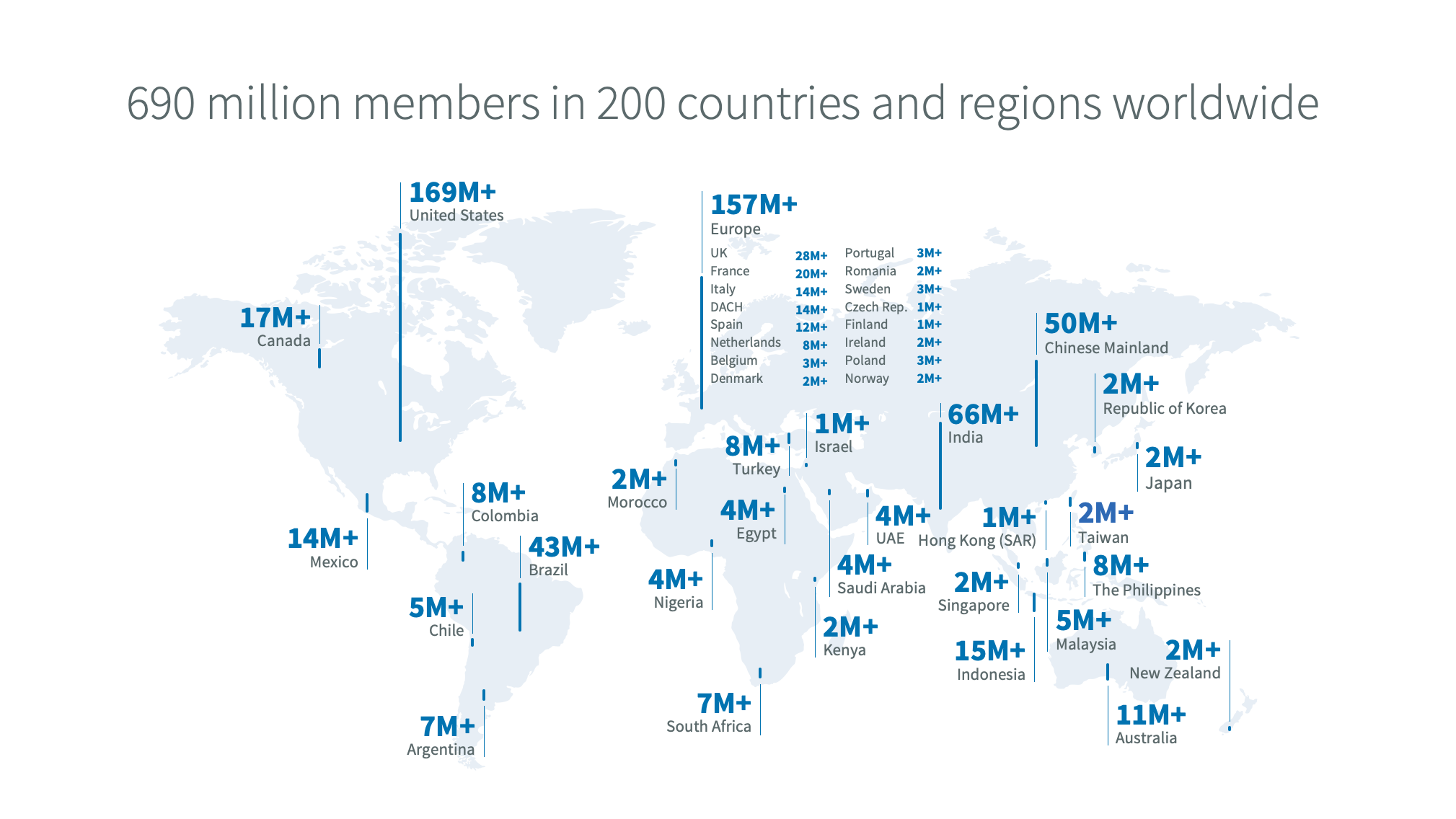
700 million users across the world, many of them engaging on the platform every day. The ability to connect with relevant professionals and have a massive potential audience for your content. This potential is remarkably easy to tap into... If you know how.
This article will discuss ten strategies you can use to harness this potential. It is the second half of my two-part LinkedIn blog. The first discusses the potential of the platform, how to optimise your profile and my background on the platform. If you missed that - I have been using LinkedIn for around five years as a marketing tool for my business and receive over 50,000 views a month on my content, and hundreds of people view my profile daily. These are my biggest tips.
Start
conversations — post original content
If you want to grow
your personal brand and increase awareness of what you do, you need to be
posting content on LinkedIn. I do not believe there is a better platform for
growing a professional personal brand. Sure, you may not have the reach of
high-level influencers on YouTube or Instagram; but for the average person, you
are far more likely to be able to grow an audience on LinkedIn.
If you are not
already, Start posting original content. Focus on what comes easy to you, do
not just do something because some ‘LinkedIn video guru’ is telling you that
you “MUST be doing videos!”. If you are good at writing and not comfortable on
camera, just focus on writing interesting content. If you are a natural on camera
and not that good at writing, post video content. Just start posting content
that aligns with your personal brand and what you are trying to achieve.
Different forms of
content have their advantages and disadvantages, and people generally have a
preferred type of content - so you will never cater to everybody. I do not
watch a lot of videos myself, but I like to read interesting articles. Create
content that you think your target audiences is going to be interested in.
Think from their point of view — what would they like to learn or what would
entertain them?
Articles do not get
much of a push on LinkedIn anymore. It can feel like a lot of effort for little
reward. But if you are already blogging and producing long-form content, there
is no reason you should not repurpose it as LinkedIn articles. You are unlikely
to get too many views (Mine usually get less than 100 views compared to
2500–5000 views on my average post), but if people are checking your profile
out it can increase your credibility to have a few well-written and informative
articles on there that position you as an expert in your industry.
It is also
important to post any content directly to LinkedIn instead of posting any
links. The algorithm does not like it if you send people away, and that piece
of content will be penalised. Hail the almighty LinkedIn algorithm! If you must
post a link to external content, do it in the comments instead of the main
post.
Join
conversations — engage in content!
One of the biggest
unwritten rules of LinkedIn is to engage in the content of other people as well
as your own. Comment on content relevant to your brand, whether it is your
personal brand or business brand.
The LinkedIn
algorithm favours those who engage. If you like or comment on somebody else’s
post, they are then more likely to see your content. The algorithm is more
likely to send your content into their feed. LinkedIn will assume that you know
each other and that your content is also relevant to them. If you do not engage
in anybody else’ content, they are unlikely to see yours. You could have
high-quality content, but this does not matter if nobody sees it.
I have come to
realise the importance of this over the last few years of using LinkedIn. If I
am busy with work, and do not spend much time on the platform browsing content
and engaging for a few weeks, I notice that there is a reduction in my reach.
Fewer people see my posts. If I spend a couple of weeks of commenting and
liking a lot more content, it will bounce back to previous levels.
As well as putting
your content out to more people, writing well-articulated comments helps builds
your reputation as a thought-leader, and more people will connect with you and
find you credible to do business with. This will help you to start building a
community around your personal brand. LinkedIn is full of people like you who
want to connect and use LinkedIn for mutual benefit, but most of all to have
conversations. It is social media. Also, it might seem obvious, but reply
to comments on your post — do not just leave them hanging! They may never
comment again.
Connect!
Grow your network
Connect with people
and form professional relationships. The more people you connect with means the
bigger your network becomes, so theoretically the more potential opportunities
of somebody seeing your content who might find it valuable. As well as being a
content marketing platform, I believe people should think of LinkedIn as a
relationship-building platform.
LinkedIn allows you
to connect your email address book with your LinkedIn account. So first, send
an invitation to connect with past clients, friends, and colleagues.
I suggest
connecting with many people locally and with relevance to your industry. Even
if their competitors or people in similar roles, this means they will have an
interest in your content and may engage with you. If you are going to try and
create a community around your brand you need to be visible. It is extremely
hard to get your message out there if your network is only a few hundred
people. I recommend trying and connect with at least 1000 people.
I have over 6000
connections, and when I first started using LinkedIn for my business, I was
aggressive with building my network. I would connect with anybody in my area
with more than 50 mutual connections. I assumed that if we have that many
mutual connections then they likely to accept my request to connect. LinkedIn
is not like Facebook where most people only have a few hundred friends; many
people on LinkedIn have an open mind toward connecting with anyone, regardless of whether you have or will ever meet.
 |
| Connect! |
You can send a
little connection notes to increase your chance of them connecting. To be
honest, sending notes to people that is not something I did a lot of when I
first started building my connections up. It was about volume, and LinkedIn
makes it easy to quickly send requests on mass to people they think are
relevant. I know a lot of LinkedIn ’gurus’ would tell me off for this. But I
figured that if people took offence me sending a request to connect without a
personal note, and refused to connect for this reason, then they are probably
unlikely to engage in any content anyway. It seems a bit dramatic.
If people send a
note to me with a request to connect, I will try and respond to most and say
thanks for connecting. I highly recommend not selling to people when you first connect, without first
establishing a relationship and credibility. If the first thing a person does
when they connect tries to sell me something, then I typically will not respond
to that kind of message. That's not the LinkedIn way.
Try and connect
with “influencers” too. If they have a large audience, chances are it is
because they have a large network. They must have an open mind towards
connecting with people. They realise the importance. Do not assume they will
not accept if you do not have a big audience. If they then engage in your
content, it helps push it out to a bigger audience and increases your
credibility.
Targeting
the right audience
Before you start
creating random content with no purpose, it is important to define exactly
what you are trying to achieve and who your targeting with your content. Then
create content centred around this strategy. There are a lot of people who use
LinkedIn to have random conversations or talk about their families as they
would on Facebook. You wonder what they are trying to achieve, and whether they
care about attracting new clients, or if what they do on LinkedIn has an
influence on their career. If your main reason for using LinkedIn is to build
your professional reputation for your career, then you need a direction and a
focus.
Create content that
is of interest to your target audience. Follow and connect with people who
already have a large following, with a similar target audience to your own. You
can get ideas for what kind of content to produce and share yourself, but also
to start engaging in their content to increase your brand awareness with more
of your target audience through having conversations.
It is also important
to connect with people in your target audience. Some people with more of a
sales mindset will tell you to send messages to these people etc but I’m from
the perspective that if you start providing value in your content they will
start engaging with it and learn who you are and what you do anyway.
Focus on consistency, not metrics
Do not let the
“likes” and engagement of other users discourage you to focus too much on
metrics. A lot of the time they are
meaningless. Somebody who spends 6 hours
a day on LinkedIn will have far higher engagement than somebody who spends 5
minutes a day on LinkedIn. That is just
the way the algorithm is wired.
Sure, you can use
likes a benchmark for your content. But
benchmark it against your own content, not other peoples’. If one of your posts
got ten likes, and you usually get 2 or 3, then try another similar post. If a certain style of post never gets any
likes, comments or any views, maybe ditch it and try something else. It is all a bit of trial and error.
Views is another way to benchmark, but again, is not absolute. Video views and article views are counted differently from post views, so do not let the low view counts discourage you. Typically, all my posts receive at least 1000 views, but video views can only be a few hundred, and articles less than 50.
 |
| LinkedIn video post |
Consistency is
the key. Just keep posting content, regardless of whether you have people
engaging. If it aligns with your purpose, then people will start to notice.
Once you break over that barrier and start gaining engagement then it should
consistently happen, if your content is interesting and valuable. You will slowly keep growing an audience as
more people see it, and want to connect with you to see more of your content.
 |
| LinkedIn post about local city |
Make a point to
spend an hour or so daily if possible, to spend scrolling through your feed
liking and commenting on relevant content. Whether it is ‘leveraging’ (I do
hate this word, but you can do this in a way you are still providing value) the
networks of influencers and commenting on their content, or engaging in the
content of local connections, or content relevant to your industry (do this by
clicking on a hashtag to view content on that topic).
All of this will
start to get the LinkedIn algorithm working in your favour.
Tips to get
the most from the algorithm
You cannot just put
random content out there and assume people are going to see it and engage in it.
There are a few different tactics you can use to maximise the chance of people
seeing your content.
As just discussed,
there is a mutual benefit of engaging in the content of other people. The
LinkedIn algorithm favours those who engage. You often see it when people start
posting content for the first time. If they have been regularly engaging in
other peoples' content over some time before posting themselves, then their
content often they get a huge push from the algorithm. They have already earned a
lot of LinkedIn algorithm brownie points.
Use relevant
hashtags in your content, but not too many. LinkedIn recommends using three. If a post does well,
it might start trending in a certain hashtag and go out to more people. As well
as this, people can find your content if they are looking through posts with
that hashtag. Aim for one broad hashtag such as #Marketing, use one
more niche hashtag such as #contentmarketing and
you can also use a unique personalised hashtag to help people find other posts
from you. I have one called #50weeksofmarketing.
Trending posts on LinkedIn
|
In a post,
the maximum number of characters is 1200. Try and use as many of
them as possible. The algorithm gives more of a push to content that uses up
more characters, as its easier to identify as quality content. Try to add an
image to your written content, as more people are likely to notice your post
and stop and read it.
The LinkedIn
algorithm push posts out to a bigger audience if the initial
engagement is high. A post might initially only go out to 1–5% of your
connections and if nobody likes it or comments, it dies. However, if five or
ten people for example like it within the first 30 minutes, the algorithm
identifies it as a good piece of content that people want to engage in and
sends it out to a higher proportion of your connections.
The time of
the day you post can also influence how well a post does. If you
post between 8 a.m. and 9 a.m., 12 p.m. and 1 p.m., or 4 p.m. at 5 p.m. during
the week, this is usually when the highest number of people are browsing the
platform. Therefore, you have more chance of people seeing the content when you
first post it. In saying this, I posted
some of my popular content between 8 and 9 a.m. on a Saturday morning and
sometimes, 8-9 p.m. can work well.
People often have more time to browse after work hours as LinkedIn has
become more like Facebook. It is not
just a work thing anymore.
Many “influencers”
use engagement pods to make sure that their content gets this
initial push. They try and cheat the algorithm by posting a link to their
latest content in a private group and there is an obligation to like and
comment on one another’s posts. Most of these pods you have to pay for, and
does not guarantee the right people are going to see your content anyway; as
most of the people in these groups are on the other side of the globe, and
their network is the people most likely to see your post. Not your local
network.
It takes a lot of time
and effort to engage in all this random content (I imagine) and it also means
you do not learn what kind of content works best for you. What your sweet spot
is. There is no quality control, they
like everything. But hey, if you want an ego boost and pretend you are famous,
go for it.
7. Do not have
a sell first mindset
The biggest issue
that many people face who get little engagement on their LinkedIn content is
their sales mentality. Think of LinkedIn as a relationship-building platform
rather than a sales platform. I know the term customer relationships is often another way to describe a sales job, however, I believe too much of a sales mindset
harms your ability to build relationships.
People tend to switch
off from the content of people who keep trying to sell — we do it without
thinking. I talked about it in my article about persuasion knowledge. If
we do not have any need for a product or service RIGHT NOW, we are going to
have no interest. But we might have an interest in a “how-to” guide or quirky
story.
I have seen many
people post content about nothing else besides the products they sell or how
successful they are. Nobody engages in their content, and then they just end up
saying “LinkedIn doesn’t work…”
Being a real estate
agent for over four years, it is something I noticed often. The best real
estate agents have no idea what to do on LinkedIn because they have a sell
first mentality, and that does not work well on this platform. Nobody cares
about how many houses you sold, but they do care about what is happening in
their neighbourhood. That is why I stood out as an agent on this platform. If one of my ‘for sale’ or ‘sold’ post got 20
likes, that was a great outcome. Any of
my content about infrastructure or growth would tend to sit in the 50-150 likes
category, and obviously, a lot more people saw this content. And it still had a real estate feel. But I was not selling anything.
8. Provide
Value — Be Selfless
Instead of aiming
to sell something in your content, aim to create value to certain groups of
people on LinkedIn. Your target audience
– the people you are creating content for.
Focus your strategy
around providing value for people who could potentially be a customer one day.
You could do this by creating infographics, or a video showing how to do
something related to your profession. It does not always have to be
business-related. It could be an opinion-piece on local politics or sharing a
piece of news that makes people happy or excited.
Provide this value
to people selflessly and without the intention of doing things “just” to
leverage it. Do it for the sake of genuinely helping people, as if you have
this mindset, people will notice. This will establish trust. People love
authenticity and do business with people they like and trust. People start to
see through those who are consistently self-promoting themselves doing these
good-deeds, just put themselves in the spotlight.
You want to make
people smile, make them laugh, make them think deeper about something, help
them learn something or share a relevant news piece. Create content to educate and entertain
people. Pose thought-provoking questions. This kind of content is interesting
and provides value to people.
Think from the
perspective of your target audience. If
you do not know who your target audience is, create five buyer personas for the
types of people you are trying to reach.
Is it business owners? CEOs? Future members of staff? Once we understand
who our target audience is, it will be easier to think from their perspective
when creating content for them.
If you are
struggling for topics for content, use tools such as local news websites and
Google trends to find topics relevant to your industry to talk about. Use your
expertise to have a constructive conversation about the topic. Read my article about content marketing to get more tips.
9. Be Brave,
Original and Authentic
Do not be afraid to
be yourself. Honesty can polarise some people, but many other people will
respect you for it, even if they do not agree. It builds trust with people.
Speak your mind and be authentic to who you are and your beliefs but do it
constructively. People on LinkedIn have a pretty open mind towards people
expressing their opinion. It is not like Facebook, where trolls who just want
to pick a fight and abuse people, lurking in the comments.
If you are
authentic and speak your mind, this also means you will be original and stand
out amongst the crowd. Many people on LinkedIn will stand in the shadows a bit
and will not do anything too daring.
I would not
recommend trying to replicate the strategies of other people who have a large
following on the platform. Sure, take inspiration, but do not directly copy
everything they do. Chances are that they built their audience based being
unique and original, so that same strategy will not work for you. Stick to your
bread and butter.
Do not post all
kinds of random things that do not align with your personal brand and the image
you want to create. I centre my content strategy around being passionate about
my city, my networking events, marketing (before, real estate), and
fitness/sport as part of my personal brand because I am passionate and find it
easy to talk about. Occasionally I will say something political, but I try not
to too much, as it can be polarising to large groups of people. Save it for
when you want to take a stand and have something to say.
For example, this
recent post where I discussed the possibility of using a place in New Zealand called Queenstown, as a Quarantine town
(Quarantown), had over 25,000 views.
 |
| LinkedIn post |
Users of LinkedIn
like to connect with the “person”. Posts with selfies in them often do
surprisingly well. You might think, what is this, Instagram? But it is true. I
have never been comfortable taking photos of myself, so it is not something I
do a lot of. Instead, I will post a photo of a coffee meet up I went to.
Consider how you can incorporate your unique human element into your LinkedIn
content.
Grow a community
I think one of the
ultimate aims of using social media is to create a tribe and community around
your personal brand or business. If you can take your community offline, it
will be even stronger. However, do not try and make the community about you.
Instead, make it about a common cause and provide value through the community.
There is a huge ability on LinkedIn to build a local audience.
People are
passionate about the city they live in. Just look at your local sports team and
the passion their fans have. A way to establish your personal brand in the
local market is to create content around relevant news in your local area. When
I was a real estate agent, my posts about a house for sale might get 5 likes on
average. A piece about the local real estate market might get 10 or 20 likes,
where a post celebrating a new piece of local infrastructure often had over 100
likes.
Because I had
established local reach, this allowed me to set up LinkedIn
Local Hamilton, a local networking event that has become popular.
Now ten events in, I host them quarterly and around 1800 people have attended. Might
not sound like a huge amount, but 150–200 odd local businesspeople coming to a
networking event enjoying a drink creates a pretty cool atmosphere and people
love it.
 |
| Linkedin post - Linkedin local networking event |
When I started the
events, I just wanted to meet some more local people so I could sell their
house one day. I had no idea they would become so popular! Building my personal
brand around sharing content about my local city was probably the perfect
platform to launch the events, as I had a local audience. I had previously
aggressively connected with local LinkedIn users - I could only sell houses in
my city, so local geographic targeting was high up on my strategy list.
I have been doing
the events two and a half years now, but only created a LinkedIn page for the
event around ten months ago. I was quite hesitant because I knew it gave my
personal profile coverage and I did not want to risk losing any reach. Now, I
share a lot of the event content from an event page, and because of it, I think my personal
page has become less saturated with content. This is a good thing, as I have
not lost any reach and I can post more content focused around my business, which is marketing.
 |
| Linkedin business page metrics |
Organising an event like this also
allows you to set a page for the event on your website, as well as a form up to
take email details for an events database. This will help with SEO, increasing
your brand awareness and gives you the ability to contact these people via
email. Do not use it to spam people with email however you will lose
credibility quickly. You can see the LinkedIn Local page I set up on my website here.
Read my article about building a
brand community.