Showing posts with label understand customers. Show all posts

Consumer Behaviour: Understanding the Psychology Behind Consumption

Consumer behavior - shopping bags


Each business should have a pretty good understanding of our target consumers, how they think, and the reasons for how they behave.

If not, it is very difficult to give them exactly they want.

The study of consumer behaviour improves decision-making a some of the guesswork is removed.

This article explores the foundations of understanding consumer behaviour so the business can make better choices with their marketing and attract more of their target customers.


Consumer behaviour is the study of consumption. It aims to have a better understanding of consumer actions and processes used in their purchase decisions, as well as the usage of products and services and how they are disposed of.

Exploring how the consumer’s emotions, attitudes and preferences affect buying behaviour, consumer behaviour draws upon ideas from several fields including psychology, sociology, anthropology, biology, marketing and economics.


“[Consumer behaviour is] all activities associated with the purchase, use and disposal of goods and services, including the consumer’s emotional, mental and behavioural responses that precede or follow these activities.” (Kardes, ‎ Cronley, ‎ & Cline, 2010)


A consumer could be an individual, groups or organisations. The study of their consumption investigating characteristics such as demographics, personality, lifestyle, and behavioural variables such as usage rates or occasion. Businesses aim to understand the process and underlying motives when satisfying their needs and wants.

Through a better understanding of what causes the consumers to buy certain goods and services, marketers can better determine the needs in the marketplace and accordingly alter marketing to suit. Consumer behaviour is the who, where, when and how of consumption.

The consumer is not necessarily the purchaser. From the information provider to the decision-maker, the user, the payer or the disposer; consumers play numerous roles. Roles also vary depending on the circumstances — for example, within a family, the Mother could be the purchaser, the children consume the items and the mother also disposes of them.

An early model of understanding consumer behaviour was introduced by Belk (1975), based on a stimulus, organism and response. The stimulus an object and a situation, a person (consumer) is the organism and the response to their behaviour (consumption).
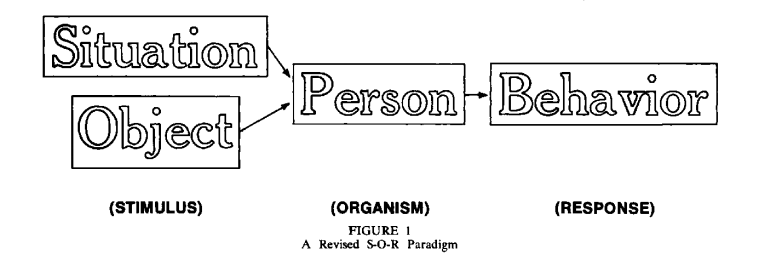
consumer behavior model

Factors that influence consumer behaviour

Consumer behaviour is not static. It changes over a period and depending on the nature of products. Societal trends change, but also does an individual over their lifetime. Equally, all consumers do not behave in the same manner. Some people spend outside their means, others are quite frugal even if they do not need to be.

For many individuals, knowledge of consumer behaviour enhances their ability to consume more wisely. Given the time and energy we devote to consuming, we should aim to be better at it and have at least a basic understanding of how marketers try and influence our behaviour.


“Most of us spend more time buying and consuming than we do working or sleeping. We consume products such as cars and fuel, services such as haircuts and home repairs, and entertainment such as television and concerts.” (Hawkins & Mothersbaugh, 2010)


Some of the factors influencing consumer behaviour are:

  • Marketing factors such as product design, pricing, promotion, packaging, positioning and distribution
  • Personal factors such as age, gender, education, and upbringing
  • Psychological factors such as buying motives, perceptions and attitudes.
  • Situational factors such as physical surroundings, social surroundings and time factor
  • Social factors such as social status, reference groups, social media and family
  • Cultural factors such as religion and ethnicity
  • Lifestyle factors such as status, income and identity
  • Geographical factors such as region, country and urban or rural.

Indian student consumers

In a household, the whole family have influence and may become involved at various stages of the decision process, performing distinct roles.

For example, the mother is often the decision-maker, Dad the purchaser, but the children important influencers.

  • The Initiator -the person who proposes a brand (or product) for consideration (something in return)
  • The Influencer -someone who recommends a given brand
  • The Decider — the person who makes the ultimate purchase decision;
  • The Purchaser — the one who orders or physically buys it;
  • The User — the person who uses or consumes the product.

Some purchase decisions involve long, detailed processes that include extensive information search to select between competing alternatives. Other purchase decisions, such as impulse buys or habitual purchases, are made instantaneously with little or no investment of time or effort in information search.

All of this illustrates the many complexities of understanding consumer behaviour.


Why consumer behaviour is important to marketers

One of their biggest challenges for businesses is to stay relevant to their target market. We must ask questions of our customers such as:

Why do people buy and use certain products?

What do they buy, when do they buy it and how often?

What are their likes, dislikes and expectations?

Why do they decide to buy one product and not another?

Do consumers behave differently individually and in groups?

Consumer behaviour gives us a better understanding of what motivates consumers to make purchases, and the benefits most valued by them. Knowing what consumers value most will improve the decision-making of businesses when creating more effective marketing campaigns. Ideally to sell more! Marketing needs to be strategic to be at its most effective.


“Marketers spend billions of dollars attempting to influence what, when, and how you and I consume. Marketers not only spend billions attempting to influence our behaviour but also spend hundreds of millions of dollars studying our behaviour.” (Hawkins & Mothersbaugh, 2010)

For example, Procter & Gamble adding the word “repeat” to the instructions of their shampoo in the 1980s is a part of marketing folk law — not because it was required, but because it sold more shampoo.

Not only is consumer behaviour relevant to marketing strategy, but it is also important to research and development, management, sales and advertising.

Remember, marketing is not just advertising. It starts with marketing research — which helps us understand consumer behaviour in our market better, which then influences the product or service itself. We want to make it fit the needs of our target market as closely as possible, as it becomes easier to sell.

However, it is not an exact science. Consumer behaviour is difficult to predict. Applying the principals learnt from consumer behaviour knowledge requires human judgment, therefore is not an objective fixed set of rules.

Marketers must have a good understanding of consumer behaviour. The best way to do this is by using market research to study a range of factors that influence their target customers. Customer relationship management (CRM) statistics are an asset for the analysis of customer behaviour.

Consumption is the ultimate goal for marketers, referred to as a behavioural response. But marketing also aims to elicit an emotional (affective) responses, as well as a mental (or cognitive) responses, influencing a consumer’s thought processes. These are often antecedents for consumption.


“Consumer behaviour is of most importance to marketers in business studies as the main aim is to create and retain customers” (Kumar, 2004).

The benefit of understanding consumer behaviour

Understanding consumer behaviour habits of the target market enables marketers to take appropriate marketing decisions concerning the following factors:

  • Product design — If a company fails to understand the reaction of a consumer towards a product, there are high chances of product failure.
  • Pricing — what price is the target market most likely to purchase at? Is this profitable?
  • Promotion — where is the best place to reach the target market? Facebook? They might spend a lot of time reading car magazines. That would be a good place to put an ad.
  • Targeting— a group of consumers with the same or similar behaviour. Each group of consumers are different, their needs and wants different from other groups. Consumer differentiation will help to tailor your strategies to the needs of varying customer groups.
  • Packaging — what type and style of packaging will be most attractive to customers? Does it matter?
  • Positioning— communicating a brand’s point of difference compared to its competitors, to the target market.
  • Branding — monitoring other brands in the customer’s consideration set to optimise planning.
  • Place of distribution — what location or type of store to sell a product or service?
  • Customer retention — retaining customers is cheaper than attracting new ones, so understanding what customers want is key to maintaining their loyalty.
  • Predicting changing trends and behaviours — consumer behaviour changes, especially with fast-evolving technology. A consumer behaviour analysis will indicate a shifting trend so marketing efforts can be aligned accordingly.
  • Innovating new products and staying relevant — many new products and services end up in failure. It can range from 33% to 90% based on the industry. Understanding customers helps businesses to design offerings that will be consumed.


Buyer decision process

The buyer decision process (or customer buying process) helps marketers to better understand consumer decision-making and how the journey from knowing about a product to making the purchase decision is completed.

The process consists of 5 distinct stages: problem or need recognition, information search, evaluation of alternatives, purchase, and post-purchase behaviour/evaluation.
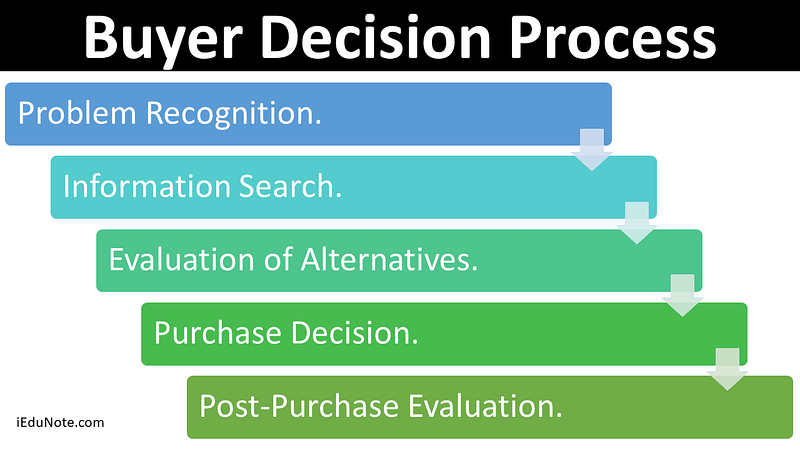
Buyer decision process

Problem recognition

The buyer decision process begins with the problem recognition stage, occurring when the consumer identifies a need or want. The strength of the need drives the decision process and the consumer decides they need a product or service to satisfy this desire. Triggers of problem recognition include:

Out-of-Stock/Natural Depletion — e.g. when you run out of toilet paper

Regular purchase — e.g. purchasing a bottle of wine each week with the groceries

Dissatisfaction — e.g. not happy with their current internet service provider and change to a new one.

New needs/wants — as a family gets bigger, they purchase a bigger vehicle

Related product — purchasing on product triggers need for accessories, spare parts or complementary products such as purchasing the latest X-Box gaming console and upgrading the TV, buying games to go with it, and extra controllers.

Marketing induced — advertising triggers the recognition of a problem or needs that consumers did not realise they had. E.g., my internet IS slow. Yes, I do need faster internet!


Information search

The information search phase aims to identify a list of options representing realistic buying options. Consumers search their internal memory and use external sources for information about options that will potentially satisfy their need. In an internal search, the consumer scans their memory for suitable brands.

The evoked set are preferred brands, typically to around 3- 5 alternatives.

Businesses use marketing to increase brand awareness and the likelihood that their brand becomes a part of their target market’s evoked set. An understanding of their target market’s behaviours means they are can be more objective with putting marketing in places where they are more likely to see it and hopefully remember it.

External sources of search include the internet such as social media or product comparison websites, shopping around and talking to friends/family.

Information search and the next phase of evaluation can occur throughout the entire decision process.


Evaluation of alternatives

Consumers engage in a series of rational evaluations of the alternative options available to them. During this evaluation phase, consumers consider a small number of options that could be viable choices.

Being aware a brand exists does not necessarily mean it will be considered as a potential purchase. Realistic purchase options are known as the consideration set, each consumer will have distinctive characteristics they are looking for, searching for the best value and the best fit for their needs.

Different evaluation criteria are used depending on each unique buying situation, consumers assessing and then ranking the relative merits of different options available. Consumers with low knowledge about a product category tend to evaluate a brand based on functional characteristics.

Towards the end of the evaluation stage, consumers form a purchase intention.


Purchase decision

Once the alternatives have been evaluated, the decision is made by the consumer and they proceed through to the actual purchase. To increase the chances of customers purchasing with them, businesses use techniques to improve conversion rates, such as a strong call-to-action in advertising. “Buy now while stocks last!”. This encourages an immediate sale.

Some customers might know all along who they want to purchase with. Others might spend an extended period researching information about the different options available before they make their decision.


Post-purchase evaluation

This process is not complete until after the consumption of the product or service and the consumer engages in a post-purchase evaluation. Consumers compare their experience with the product or service and the perceived value with their expectations that were formed during information search and evaluation. This is called expectancy disconfirmation and is a strong driver of satisfaction.

Factors evaluated include price, functionality, and quality.

A consumer’s next purchase decision for that good or service is influenced by this evaluation. If consumers feel some uncertainty or regret towards their choice, they are unlikely to choose that brand again.


Consumer motivations

An underlying motivation drives a consumer to act and purchase. These motivations fit under the problem recognition phase discussed above.

This motivation can be either positive or negative. A positive motivation could be a pleasure — having dinner a nice restaurant or a night on the town.

A negative motivation could be the avoidance of unpleasantness such as purchasing toothpaste to minimise tooth decay, getting toothaches and having to visit a dentist.

Abraham Maslow’s well-known Hierarchy of needs model is one way to help understand the motivation.
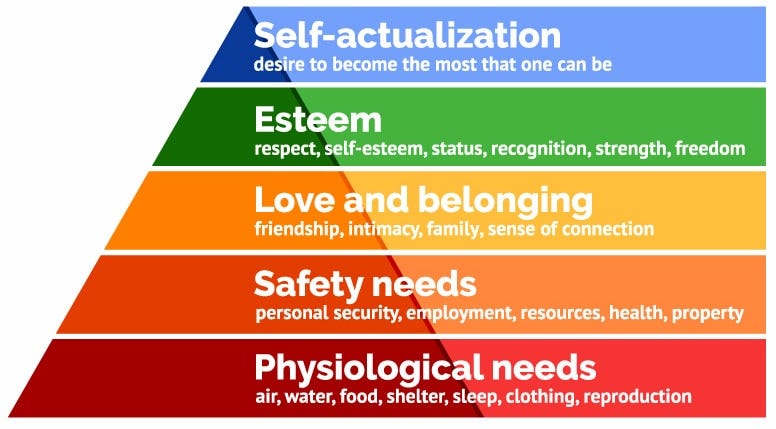
Maslow's hiararchy of needs

Although not a marketing model, it is commonly applied across the social sciences. This model can help marketers to understand the unique needs and levels of motivations of customers.

It contains five levels of needs, organised accordingly to the level of importance. Lower order needs are most important, consumers typically using most of their time, energy and finances attempting to satisfy these.

Only then can they move onto the higher-order needs and they become meaningful.

  • Physiological is a human’s basic levels of needs such as food, water and sleep. We need these to survive.
  • Safety is the need for physical safety, shelter and security. Purchasing a house or paying rent.
  • Belonging the need for love, friendship and a desire for group acceptance. A man buys his new wife an expensive ring when they get married.
  • Esteem is the need for status, recognition and self-respect. Purchasing the latest BMW car or a designer handbag and shoes.
  • Self-actualisation is the desire for self-fulfilment such as personal growth or artistic expression. You might over to the other side of the world to see a motivational speaker such as Tony Robbins at a conference.

The Co-Creation of Value: Everybody Wins

Co-creating value

How the customer and firm can co-create value together to both get what they want.

In 2020, customisation and giving the customer exactly what they want is becoming the norm. How do we give customers exactly what they want? One way is by letting them co-create value.

This week’s article explores the co-creation of value as a strategy and how this approach creates unique value for customers, creating a competitive advantage.

Customer Service: why it matters and 10 key skills

 Customer service

Customer service is a vital component of the consumption experience to any firm who wants to retain customers and grow their business. 

Great customer service means customers are likely to come back, but a subpar experience means they are unlikely to come back. 

What Is Customer Service?

Customer service is the support provided by a firm or brand to the customers or potential customers of their product or service. It can happen before, during or after customers purchase or use a product or service. Firms aim to meet the needs, desires and requirements of these customers through delivering professional and supportive and assistance, to ensure an easy and pleasant consumption experience.

Customer service can be face to face in a store, over the phone, through digital activities such as text, social media messaging or email, or by automated means such as an ATM. This interaction between a service organisation and its customers or clients is referred to as a service encounter and a firm has the opportunity to form an impression with customers every time they come into contact.

“Interpersonal interaction between an organisation’s employees and its customers… have a high “impact” on the consumer and the quality of the service encounter… thus a vital ingredient in the overall quality of service experienced by the customer.” (Lewis & Mitchell, 1990)

Why is customer service important?

Customer service is part of the promise brands give customers. There is now an expectation from customers that businesses provide a certain quality of customer service. This is especially true in the services industry. Even the local mechanic now needs to step up their game. Businesses need the ability to learn, identify and adapt to the needs and wants of consumers. Customer-oriented firms have a higher ability to anticipate the developing needs of consumers and respond with goods and services.

Customer service that is at least on par with competitors is critical to competing effectively. If it is better, it can give you a competitive advantage. Customers do not shop based on price as often as they used to. Instead, their overall experience is often the motivator.

“89% of companies now expect to compete mostly on the basis of customer experience.” (Gartner Research, 2014)

It is cheaper to keep existing customers than to acquire new ones. But it is not as simple as just having great products to retain them — your customer service needs to be on point. Bad customer service is enough for previously loyal customers to choose a competitor — if customers are not happy with the service, chances are they will leave.

The benefits of great customer service

Providing customers with an elevated level of service quality has a positive relationship with brand performance and customer satisfaction. Service quality is how well the delivery of that service matches customers’ expectations. Satisfaction has a positive relationship with repeat purchase, and this is particularly true for service industries. Customers are satisfied when a firm performs better than they expected.

Prioritising customer service support might increase the costs of a firm through needing extra staff or tools/technologies, but there are a few benefits that should outweigh the investment. Studies have indicated that over 80 per cent of people would pay more for better customer service.

Some other benefits of providing great customer service include:

  • customers are more satisfied with their experience
  • enhanced perceptions of the firm’s overall market strategies
  • increased positive word of mouth and referrals attracting new customers
  • increased customer loyalty and repeat purchase
  • increased ability to upsell or cross-sell relevant services
  • customers can be willing to pay higher prices for a better experience
  • customers perceive products and services as having better quality
  • customers perceive the servicescape as being of higher quality

The customer service of a firm or brand can ‘make’ or ‘break’ their reputation.

“…Organisational culture that stresses the customer as the focal point of strategic planning and execution…  Employees consistently exhibit customer-oriented behaviours, and consumers thereby become accustomed to this philosophy.” (Brady & Cronin Jr, 2001)
Having somebody yell through the phone line is nothing new to customer service representatives

Bad customer service

In the world of mobile phones and social media, it is hard to hide a bad customer experience. People can quickly share a negative experience online, which can reach a large audience. With many people using Google search to check out a business, a couple of bad reviews can make a significant difference. People are more likely to share a negative experience on social media or talk about it with their friends than they are with a positive experience.

How can firms improve their customer service?

Improving customer service means making every touchpoint great and not letting any interaction fall between the cracks. There must be consistency across the organisation in providing a great customer experience.

In 2020, it is not enough for firms to only use the traditional means of customer support such as over the telephone for customer support. Customers expect to be able to reach organisations by whatever means they find convenient, whether it is email or social media. Therefore, firms must have a comprehensive approach and provide a range of customer service options to customers.

Businesses can also provide self-service support to customers so they can find the answers they require without needing to deal with customer support staff.

A customer orientation

Marketing has progressively moved towards a customer orientation since Leonard Berry’s seminal writing on Relationship Marketing (1983), now considered a fundamental principle of marketing. To be customer-oriented implies that a firm focuses on the customer as the centre point of their strategic planning and execution. They aim to identify and adapt to consumers’ needs and wants as a competitive strategy through learning from customer perceptions of their experience.

“Having a customer orientation has a positive influence on customer perceptions and, ultimately, the performance of firms.” (Brady & Cronin Jr, 2001)

A customer’s evaluation of the overall service quality is determined by three factors: employee service performance, physical goods/service quality, and servicescape (place of business) quality. Firms must be proactive in collecting and analysing customer data for a better picture of how they are performing and the needs and wants of customers, and to act on this information.

Digital tools for customer service

In the digital age, consumers now have several methods available to communicate with customer service representatives.

Over the past few years, social media has become increasingly popular to request and receive customer service. It is an expectation now to be able to send a message via a major brand’s Facebook page with any questions or problems you may have related to their products or services and receive a prompt response. Around half of the internet users now turn to social media for help. Accordingly, many large organisations implemented dedicated customer service teams to respond to social media messages. Studies (see Xu, Liu, Guo, Sinha & Akkiraju, 2017) have indicated that users who message a brand’s Twitter account expect a response within an hour.

This consumer demand for an instant response and the time-consuming nature of manually addressing these requests lead to the rise of AI for customer service on social media. This led to the creation of chatbots to automatically generate responses for user requests on social media and now on websites. These chatbots provide an opportunity for brands to provide individualised attention to consumers.

“Marketing is concerned with exchange relationships between the organisation and its customers. Quality and customer service are key linkages in this relationship.” (Christopher, Payne & Ballantyne, 91)
A genuine smile goes a long way in customer service
A genuine smile goes a long way in customer service 

Key customer service skills

As much as a firm can have a customer orientated strategy, much of the responsibility for great customer service falls on the staff members. Luckily, customer service is a skill that people can learn and develop, rather than a personality trait you either have or you do not.

Here are ten customer service skills that are key to providing great customer service.

1. Patience

Patience is vital for anybody with customer service in their role. From real estate sales to a check out operator at a supermarket. Customers who reach out to support are often frustrated and at their wit’s end. Sometimes they want to vent. There could be a simple solution, but let the customer get it out of their system. For example, a study found that 40% of user requests on Twitter are emotional and not intended to seek specific information. Empathy goes hand in hand with patience, which is a person’s ability to understand another person’s feelings. A staff members ability to see an issue from the customer’s point of view is a huge advantage and customers appreciate it.

2. Listening

The ability to truly listen is not only a key skill for customer service but life in general. Listening allows you to fully understand the customer’s point of view and solve their problem. When you do not listen, it is easy to get it wrong and create a frustrating experience for the customer. Customer service reps can often jump to conclusions about a solution, which can come across as rude and brash. Take time to listen and understand customer issues, it will show you value their needs.

3. Communication

It might sound obvious, but how you communicate with customers is key to their experience. You do not want to come across as condescending, grumpy or rude — this will translate into a negative experience. It is important to be mindful of how staff communication comes across. As well as attitude, the clarity of the communication during customer service is key providing the right outcome. The last thing you want is more confusion on the part of the customer because they do not understand what they are supposed to do or what the solution is.

4. Learning

By learning about the issues and concerns of their customers, so they can provide a solution. How do we learn from our customers? By asking questions and listening when interacting. The more your customer service staff know about your customers’ needs, the more of an asset they are to both the organisation and the customers.

If the same customer issues come up consistently, chances are you have not learnt from this to provide an adequate solution. Staff must communicate these issues to management so they can plan to resolve the problem. If your customer service team is working like a well-oiled machine and learning from the feedback, you will start anticipating problems instead of just solving them.

5. Time management

Customers often expect a resolution as quickly as possible. They hate to wait — especially over the phone, so long waiting times can negatively affect customer experience. So, whilst patience and taking time with customers is important, there is a limit to how long you should commit to each customer. Firms should provide customer service employees with the information and tools to support their customers are as quick as possible. Staff training can help improve resolution times.

Customer service representative on the phone

6. Composure

Customer service staff must have the ability to stay consistently calm under pressure, even if they are experiencing difficulties with an upset customer. This cool demeanour can help calm down the customer and keep the conversation as objective as possible to find a resolution to their issue. Emotion triggers many of the interaction customers have with customer service, so it is key for staff to remain level-headed — even when customers are being insulting to them or their firm. The staff that can think on their feet are a huge advantage — not every interaction will be in the training manual. Expect the unexpected.

7. Negotiation

Often staff members will need to negotiate with customers to find a resolution. Conversations need to end with a solution and/or with the customer feeling that the firm have (or will) taken care of their needs. Negotiation is not arguing — it is important to remain calm and have a constructive conversation. There will always be one party who feels like they have come out better off than the other party — make sure that is the customer! Do not just give in to the customer demands, there must be some give and take. Customer service staff require good persuasion skills when there is no obvious solution, this reasoning can help convince the customer of a suitable outcome.

8. Teamwork

Teamwork and customer service go hand in hand; both staff and customers will benefit when customer teams work together as resolutions to the customer issues are faster. One customer service representative will never have all the answers, so there must be open communication lines across teams to find a solution to each unique issue. Large firms often have several dedicated customer service teams for different requirements. There might be one team for technical support, another team for accounts and billing, and another team for general inquires. In smaller firms, provide all employees with some customer service training so they can help when required.

9. Positivity

It can be a challenge for customer service staff to spend their days dealing with customer complaints and negativity that comes along with the role. However, it is a key customer service skill to remain upbeat and positive. If staff meet customers with a smile and a cheerful attitude, it makes customers feel a lot better. This can put staff on the front foot when trying to find a resolution. It also creates a better work environment. If staff are happy and they can feel other staff are happy, they enjoy their jobs more and become more productive.

10. Product & brand knowledge

The more your sales staff know about your product or service, the better they are at selling them. Similarly, with customer service, the better staff become at providing a solution. Training should be a key part of customer support. Many large companies onboard every new employee to ensure they know their products inside and out. Onboarding is the process of integrating new employees into an organisation, familiarising them with the products and/or services. The best customer service staff have intimate knowledge of how their products work or order to find each customer an adequate solution to their problems.


In summary, this article has explored how great customer service can positively influence the performance of a firm and 10 key skills for customer service staff. 

I hope you enjoyed this week’s content and learnt some new tips and strategies for improving your firm’s customer experience.

Positioning: 5 strategies to stand out from your competitors

Positioning

Positioning is one of the fundamental elements of marketing, both for consumer products and B2B (Business to Business). Positioning is a brand’s unique way of providing value to its customers. Where does a brand sit in the hearts and minds of customers? These associations that consumers hold with a brand reflect their positioning.

This week’s blog topic explores positioning as a marketing strategy and how it relates to other marketing strategies. Five common positioning strategies are also discussed.

“A position that takes into consideration not only a company’s own strengths and weaknesses, but those of its competitors as well.” (Ries & Trout, 2001)

What Is Positioning?

Firms use positioning to create an image of a brand’s product or service in the mind of a target customer. Positioning defines how the brand’s offering is unique, how it provides a distinct benefit to customers. Businesses use marketing to communicate their market position to customers and influence their perception of the brand’s products or services. Marketing establishes the brand identity, influencing consumer perceptions of its position in the market relative to the alternatives available from competitors.

“Positioning is not what you do to a product. Positioning is what you do to the mind of the prospect. That is, you position the product in the mind of the prospect.” (Ries & Trout, 2001)

Before determining its position in the market, a firm should decide on a segment of the market that they want to target. This segment of the market should be profitable — either there are many customers, or it is a niche in the market that presents an opportunity due to a lack of competition. This is where positioning comes in. A business must decide how to make their brand as attractive as possible to this group of customers they want to target. This target market defined by demographics such as gender, location and age as well as criteria based on their consumer behaviour.

Unique Selling Proposition

Effectively positioning a product or service gives it a USP (Unique selling proposition). A USP is an attractive feature or characteristic of a brand that differentiates it from similar alternatives. In a modern marketplace cluttered with so many choices with similar benefits, you want your brand to stand out from the rest. It becomes more memorable and can have a competitive advantage over alternatives. Your USP is your unique benefit to entice customers to purchase your brand over another. Brands must communicate This USP with their target audience. This is where positioning comes in.

McDonald’s is a notable example of using a USP to help position their brand. They are the world’s most widely known fast-food brand and compete with hundreds of other fast food outlets. They do not try and position themselves as the fastest, cheapest or best tasting. Instead, their USP is that they are a family-friendly restaurant. The children’s menu items, the free toy with a kid’s meal, the playgrounds. They position themselves to target families.

Positioning statement

A USP and positioning statement is similar. The biggest difference is that a USP is product or service-centric and focuses on what sets your product or service apart from competitors; where a business creates their positioning statement after the USP, focusing on the primary benefit of the product or services for their target market. Businesses need to ask themselves, “How do I want our brand to be perceived?”

A positioning statement should be no longer than a paragraph, and should discuss the following:

· First, the positioning statement begins with describing your target market and what their specific needs or goals are. Market research helps businesses to understand their market and customers more intimately.

· Define what category your product or service belongs to and how it meets the needs of consumers. Customers need a reference point to provide context to evaluate a brand’s offering.

· What differentiates your product or service from the alternatives? One point of differentiation is best, stating your difference from the customer’s perspective. How does your differentiator will help solve the customer’s problem or help them achieve their goals?

· Explain why consumers in your target market should believe your brand’s claims. Consumers must see credibility in your positioning, so provide evidence to justify the claim of your brand in your positioning. Do not just say you are the fastest or best quality, state HOW you are.

“There is a positive relationship between company performance (profitability/efficiency) and well-formulated and clearly-defined positioning activities.” (Kalafatis, Tsogas & Blankson, 2000)

Determining a Positioning Strategy

A successful positioning strategy relies on a deep understanding of the marketplace you want to compete in. It identifies how your company is different from the competitors and the conditions and opportunities in the marketplace. A big mistake that many businesses make is assuming that positioning is just a marketing strategy. It should be one of the foundations of the business strategy. After all, you cannot position a product as a high-quality offering in your marketing if the product itself cannot back up those claims.

Customers can recognise a clear positioning strategy — they understand whether a brand is competing on price or quality. Positioning must be a cohesive effort between the business strategy and sales and marketing tactics. It is far more than just a communication strategy. This is the only way the product or service will deliver on customer expectation and the promises of its positioning. Organisations must clearly define their positioning across the value chain, otherwise, communication loses focus and can become confusing.

There are five main strategies upon which businesses can base their positioning.

1. Positioning based on product characteristics

Using product characteristics or benefits as a positioning strategy associates your brand with a certain characteristic that is beneficial to customers. For example, in the automobile industry, Toyota’s position in the market is reliability, Porsche’s position is performance and Volvo’s position is safety. Brands consistently communicate the most unique benefit or characteristic of the product with consumers.

“Volvo owns ‘safety.’ BMW owns ‘driving’…” (Ries & Trout, 2001)

2. Positioning based on price

Positioning your products or services based on price is associating your brand with competitive pricing. Usually, with pricing positioning strategy, a brand aims to be the cheapest or one of the cheapest in the market, and value becomes their position. For example, Supermarket chains often have a house brand with very low-price products in many product categories. Their lower logistical and distribution costs allow them to price their products lower than the competitors, so price-sensitive buyers will often purchase them without knowing the price because they know it is often the cheapest option.

Brands can also position based on price if they find a gap in the market at a certain price point. Being the only option in a certain price range becomes your market position. Often brands extend their product lines to fill a gap in the market.

3. Positioning based on quality or luxury

Often the price and quality of a product align, certainly in the mind of the consumer, as the high price is often associated with high quality. But positioning a product based on its high quality or ‘luxury’ is different from positioning based on price. Often these brands do not communicate their price point, but instead high quality or prestige is the focal point of communication, to create a desire so customers want the product regardless of the price.

Note that luxury does not always mean better quality, but customers still believe it is better because of the reputation of the brand due to their long-term brand positioning strategies. For example, a $200,000 Rolls Royce car, the epitome of luxury, is likely to have a lower build quality than a $30,000 Hyundai.

4. Positioning based on product use or application

Associating your product with a particular use is another way to position your brand in the market. For example, meal replacement supplements can be of use to anyone lacking time or wanting a quick convenient meal. There are also meal replacements designed specifically for people who want performance in the gym, so high in calories and added vitamins and minerals. Other meal replacements are for people on a diet, so they are low in calories and would not provide much energy for somebody’s workout. 

Often the former meal replacement target males and the diet low-calorie option target females. Both are meal replacements, but different positioning.

5. Positioning based on competition

Competitor based positioning focuses on using the competition as a reference point for differentiation. Brands highlight a key difference their product/service offers in their marketing to make it seem favourable and unique compared to other options in the marketplace. The product or services becomes unique.

Brands can also use the competition as a reference point to follow a similar strategy. If a particular brand has a large market share, their positioning strategy must be attractive to a large group of customers, so you try and convert some of their customers by offering a similar product with similar benefits at the same price point.

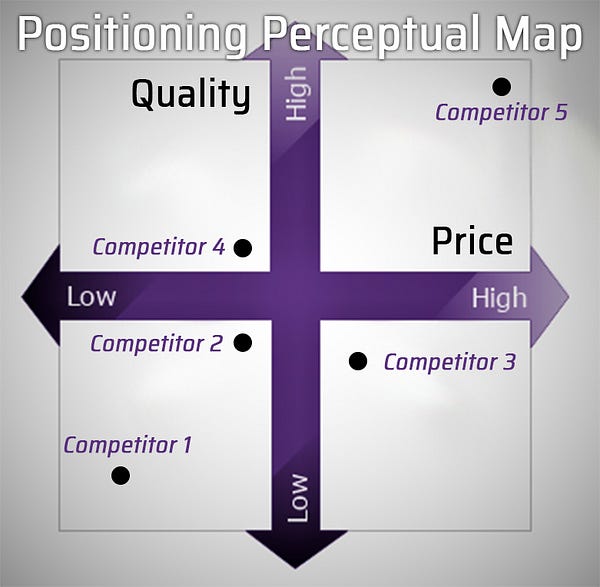
Positioning Perceptual Maps

Businesses can create a perceptual map of the positioning of the dominant brands in a marketplace to identify any gaps and opportunities in that market.

Positioning perceptual map example

The positioning map compares brands competing in a marketplace by illustrating consumer perceptions of those brands by using two key variables.

For example, businesses can apply price and quality for most markets; but the map should focus on the primary consumer needs or product benefits you want to understand, which will vary depending on the market. See below for an example of a positioning map.

In conclusion, your positioning in the market determines where your brand sits relative to competitors. It is important for brands to have a point of difference and to emphasise it in their marketing.

I hope you enjoyed this week’s content about positioning.

See you next week,

Dan

Ten networking tips to help boost your career

Networking is a powerful tool for business people to meet relevant people that can help them further their career, whether it is a new job or new clients.  As they say, "It's not what you know but who you know."

Business networking event

What Is Business Networking?

Business networking is the act of interacting and conversing with other people to develop professional contacts and exchange information, usually in the setting of an event or meeting. Networking helps individuals to establish and nurture long-term and mutually valuable relationships, popular with career-focused professionals.

The aim is usually to expand one’s circle of influence and acquaintances to enhance opportunities to further one’s career — whether it is a new job or promotion or to meet potential future clients, customers or business partners. Invest time (and a little bit of money) into increasing your networks and relationships — personal and professional, and in the long-run, you will reap the benefits.

Although we often have individual goals, we should not forget that networking is for mutual benefit. If you want to further your career opportunities, you should be networking. Opportunities to network exist all around us. At the supermarket. At the gym. Picking up the kids from school or watching them play sport, or at religious gatherings. We should not neglect our networks as an opportunity to grow our business network. As they say, it is not what you know, but who you know.

Growing your networks will help you establish rapport and trust in your local community, so look for opportunities to network strategically. Consider locations where you are likely to meet new people with common professional or personal interests, and where you feel comfortable. Volunteering is one way to meet people and put yourself in a positive light, whether its coaching or for a local community group.


Business networking events

There are several options out there for business networking, this section will cover a few of those options to help you choose what might be best for you. There is not a “one size fits all” for networking — different settings and strategies will suit different people.

Try different networking events to see what is more comfortable for you. Do you like busy open networking events with noise and atmosphere, or would you prefer a sit-down coffee group with a dozen or so people, each taking a turn to talk? Whether you have introvert or extroverted characteristics will influence how comfortable you are in a certain setting.

Once you have worked out what type of networking setting suits you best, think about where you can meet the right kinds of people to help you further your career.


Chamber of Commerce

If you join your local Chamber of Commerce, often they have a range of events set up for their members. The goal of a Chamber is to help promote, support and encourage sustainable, profitable business growth in the local community for its members. Often, they run events once or twice a month where there are designated speakers on a particular theme, and there is a networking portion of the event.


BNI

The BNI group (Business Network International) is one of the most well-known and popular networking groups for business professionals. BNI is an American model franchised around the world, boasting over 270,000 Members in 9,500 Chapters worldwide. They call themselves “the world’s leading business referral organisation”. They are often very structured, and members meet weekly or fortnightly, usually over breakfast. There are a large emphasis and expectation to provide referrals for other members and because of this there is a membership fee to be a member, and typically only one person from each profession can be a member of each chapter.

Many of the networking skills discussed in this will not apply as this format is so structured and everyone gets a turn to talk about themselves and what they do.

Coffee networking group

Coffee groups

Coffee groups are a fantastic way to build relationships with people over a period. You could consider starting your own, set up through a Facebook or LinkedIn group, or your local mailing list. I run a local coffee group who meet once a month on the same day, time and location, to make it easy to lock into the diary. Everyone gets 30 seconds or so to give their elevator pitch and then we all have informal discussions with the people next to us, or sometimes as a whole table (inevitably with 10–15 people, smaller conversations break out). There is no fee to attend and no obligations for referrals like a BNI, so it has quite a relaxed feel. Once you build trust with people, referrals will naturally come.


LinkedIn Local

LinkedIn Local is a business networking event set up to leverage the growing popularity of LinkedIn and its professional networks. It is in over 1000 cities around the world, and the format is dependent on the individual event and its host. Some events are small coffee group type gatherings or at a bar, and some are more large scale in a specific events space. I run one called

LinkedIn Local Hamilton networking event


The benefits of networking

A strong professional network can have many benefits that can influence the success of your career and growth. Here are some of the benefits you will receive through planned and regular networking.


Career development

The overall goal for most people who attend networking groups is the evolution of their career. Some of those people might have a specific goal of short-term sales or to meet a certain person or type of person, but these goals all work towards the grand vision of being more successful in life and business.

People used to have jobs. Now people have careers. In an ideal world, more businesses would emphasize the professional development of their staff, but it is usually up to the individual to further their career. The average life span for a job is five years, even less for those under 35. Career-focused individuals often have an eye or ear out for better opportunities to further their careers.


Opportunities

Developing your career is a long-term game, and consistently networking will open many new doors for opportunities.

If you are a good networker, you will find opportunities to connect with different people everywhere you go. You could meet people who end up being a mentor to you or build a stronger relationship with somebody from senior management in your workplace. Do not dismiss the workplace as an opportunity for networking. Often large workplaces have an end of week or end of month drink, could be beneficial to your career progression.

You could also use environments such as after school sport when you chat with other parents as an opportunity to improve your soft skills and you never know where opportunities come from. It is all about building relationships with relevant people consistently over a period

For those people who have recently lost a job or have just finished their study and are looking for a professional role, networking is the perfect opportunity to put yourself out there to grab any opportunities. You never know who you might meet who could be hiring or can give you a lead or referral which lands you the role you desire. They might just connect you with the right people. Networking helps you watch the local job market.

Just like it can help you find a new job; networking is a great environment to meet clients. There more people you meet who know what you do, the more likely you are to find new clients who want to engage you. Whether it is directly or through referral because of the trust you have built through networking.


Increasing your local profile

If you have been to a networking event before, you have probably noticed that there seems to be somebody who knows everybody. Chances are, they are probably regular on the local networking scene. Professionals can leverage networking to increase their profile. When you become well known and well respected with many people, this increases their general awareness of what you do and your expertise, leading to more business opportunities.

Networking event — LinkedIn Local Hamilton
Networking event — LinkedIn Local Hamilton
“Every man I meet is my superior in some way. In that, I learn of him.” (Carnegie, 1936)

Exchange ideas & knowledge

Networking is the perfect opportunity to learn. Therefore, a key skill to have as a networker is the ability to listen, as people who are strong networkers often exchange valuable information that is not public and only gained through conversation.

Whether it is keeping up with general current affairs, local news or industry knowledge and trends; the ideas and information gained from networking can help a career move forward. This sharing of knowledge also helps cement relationships by enhancing your credibility and mutual trust. Networking is a two-way street, so do not underestimate what value you can provide through sharing your knowledge.


Boost your confidence

Networking will help you develop and improve your soft skills which will increase your confidence to start conversations with new people. This increased self-esteem can be beneficial in the workplace when having conversations with senior staff members, or in your next job interview. Without having to consciously think about it, your body language will be a lot more positive from this self-belief.

Students often have not had many conversations with working professionals and once they leave their bubble of student life they can be a little nervous in job interviews or networking for the first time. It can be daunting. Actively trying to interact with professionals in your industry to gain networking experience and confidence can really set you apart from your peers in the job hunt.


Networking skills

Although it seems like great networkers are naturals, and often extroverts can be, it is just as much a skill learned and acquired. Here are ten networking skills or tips that you can use to become better at networking.


Have a plan

The first thing you can do to improve your networking is to have a plan. I must admit, when I first started networking, I had no idea what I was doing and would stand awkwardly in the corner and get nothing from it. Building a network is just like any other goal you have in life, and therefore, you need some sort of plan on how to achieve this goal.

Often people uncomfortable with networking view it as a work activity, which can make it seem quite loathsome. This mindset will not put you in the right frame of mind for networking. If you link networking with a higher goal, you will come into it with a much more positive mindset.

Whilst you do not need a specific goal for each event like I have to talk to X person, it is important to plan what you want to achieve so you increase your chances of meeting the right people. Choosing the right events to attend can define your success at a networker. Having broad goals for each event such as meeting with three people in your industry and knowing what actions you need to take.


Find familiar faces

If you are feeling uncomfortable and anxious about networking with people you do not know, look for people you are familiar with and join their group. It might be work colleagues or people you have met briefly previously. If you start here, you are likely to meet new people through them introducing you to people they know. You will also grow in confidence and after a while, you will get a feel for the atmosphere and should grow enough courage to approach other groups.

Networking event
Networking event

Find other people who are alone

If you cannot spot anybody that you know, try and find other people that are there alone. Chances are that they are feeling just as awkward as you are! Not everybody who attends networking events are seasoned pros. Often there will be many people such as yourself who are new to networking or new to the area.

Approach them in a light-hearted way and ask if they are there alone too, and how it is awkward to not know anybody there when everyone else seems to know each other. You will probably share a laugh and their walls will come down and you might have a really enjoyable conversation. Other people might notice this and come and join you.

Position yourself near the bar if you are alone and looking for somebody to chat to. The worst thing you can do is try and capture people as they walk in. Chances are they are tired and or hungry after work, and the first thing they want to do is grab a drink. They will be far more comfortable and ready to chat if they have just grabbed a drink.


Remembering names

When you meet a person or group of people for the first time, do you forget their names 30 seconds after the introduction?

I am the first person to admit I am terrible at remembering names. Unless I am focusing on remembering names, it is like they are instantly gone from memory. This is not going to help your networking very much, as it can be very awkward to not be able to remember somebody’s name and you might steer clear of them to avoid the situation. On the flip side, people love to hear their name, and it will leave a great impression if you remember their name and introduce them to someone else.

Luckily, remembering names can be a learnt skill. Try and attach a visual cue to a unique facial or body feature of each individual. If it rhymes, that will help even more. You might meet a guy called Henry or Harry who has a long beard. The visual cue that helps you remember his name could be hairy.


Body language

Body language can be a crucial factor at networking events of how many conversations you attract in the evening. Go in with a positive mindset and Smile! If you are uncomfortable, try not to focus on this. Your body language will reflect you are feeling awkward and people will feel this energy and will not approach you. Try not to look serious. Focus on happy thoughts and be open with your body language.

Smile at anyone who looks in your direction and say hello. Whilst engaging in conversation, the head tilt is a positive cue you can use to create rapport with the other person. This body language shows the other person that you are interesting, paying attention and listening. Everyone likes to be listened to!


Entering conversations

One of the most difficult things to do as a networker is trying to enter a conversation already in full flow. Especially if none of the people in the conversation knows who you are. Confidence is essential when networking, but do not go in, all guns blazing and interrupt a group conversation.

Instead, wait for your moment. It will make a bad first impression if you interrupt the flow of the conversation. Start by listening and then find a moment where you can add some value. If you can ask somebody a question, this is a soft way you can enter a conversation.

Listening to others builds them up. A lot of people at networking events love to talk about themselves. If you are not a confident networker, let other people lead the conversation. If you show genuine interest, nod in the right places and ask questions to find out more about their experiences and opinion, it will leave a great impression without you having to say very much.

“You can make more friends in two months by becoming interested in other people than you can in two years by trying to get other people interested in you.” (Carnegie, 1936)

Focus on learning

As discussed earlier, the benefit of networking is the exchange of ideas and knowledge. Therefore, part of your mindset when networking should be to learn as much as possible. Focus on learning instead of what you plan to get out of that specific conversation, you will come across in a positive light.

Approach networking with curiosity and an open mind about what interesting people you might meet. If you want to learn something new about someone, your conversation will seem far more authentic to the other person. You may have an interesting conversation that gives you new ideas leading to new experiences. Concentrate how networking helps you boost your knowledge and skills to further your career.


Identify common interests

Memorable conversations often begin with a point of common ground. Your kids go to the same school or you are members of the same sports club. The sooner you can identify any similarities you have, the sooner you will build rapport with that person and the easier the conversation will flow. This will be the starting point for an ongoing professional relationship. Consciously think about how your interests and goals align with the people you are meeting.

The easiest way you can do this is by asking questions to find out more about them. The conversation will feel far less forced and more authentic and meaningful, which will be a lot more memorable than the previous conversation they had about the weather. They will also appreciate the fact you tried to get to know them a bit better and might introduce you to others in their network with mutual interests.


Pay it forward

Do not make the mistake of looking at networking from the perspective of something you do just to get something out of it personally. If you look at networking equally as an opportunity to help others, people will recognise this and be more willing to help you. Introduce your network to each other if you think they can mutually benefit and look for ways to provide value to people.

The more you learn about your new connections the easier it will be to help them. It could be anything from a restaurant recommendation to introducing them to someone in your network. A great networker will know people with skill and expertise in all kinds of areas. If they cannot help them personally, they will know someone who can. They will both feel grateful toward you for bringing them together, giving you brownie points.

There is nothing worse than talking to someone at a networking event and the conversation cut rudely short when the other person realises there is no immediate benefit for them to gain from that conversation and they walk away to talk to somebody else. Do not be that person!


Following Up

Following up with somebody with mutual interest after meeting them at a networking event might sound obvious, but it is something that many professionals fail to do. People get busy and you can quite quickly become forgotten, wasting the hard work you did putting yourself out there. Following up reaffirms what you discussed, establishing your connection with them and opens future communication. Within a couple of days, send them an email (assuming you swapped business cards) or connect with them on LinkedIn with a personalised message, reminding them who you are and your conversation.

Do not follow up too strongly, you do not want to ruin your hard work by coming across as clingy or desperate. Once you connect on LinkedIn, you can stay in touch through wishing them a happy birthday or tagging them in articles that could provide value to them. Just stay relevant — do not be pushy!


That‘s this week’s blog. I hope you enjoyed this week’s content about networking.

Now go out there and meet some people!

Using research to better understand your target market

Market research plays a key role in helping businesses to better understand their customers and marketplace, to help them make more strategic decisions.

This week’s blog explores the topic of market research.

Marketing team discussing a marketing strategy

What is Market Research?

Market research is the organized effort of planning, gathering, recording and analysing information to better understand a target market. This includes factors such as market size, the competition and customer types.

“Information used to identify and define marketing opportunities and problems; generate, refine and evaluate marketing actions; monitor marketing performance; and improve understanding of marketing as a process. Marketing research specifies the information required to address these issues…” (American Marketing Association, 2004)

Research is a key component to guide businesses with important strategy decisions, such as changing elements of their marketing mix and how this is likely to impact customer behaviours.

The research process first identifies and formulates the problem, then determines the research design such as the research method and collection of data and the final stage is the analysis and providing recommendations based on the research findings.


Why is market research so valuable?

There are many strategic and tactical decisions that businesses make in the process of identifying satisfying customer needs. There are many uncontrollable environmental factors such as economic conditions, politics, and social changes that complicate marketplaces. Analytics can show a business what is happening, but you can only learn so much. Market Research helps a business discover the ‘why’.

Research provides relevant, accurate and up to date information to understand a marketplace at a current point in time. This new knowledge of relevant information informs decision-making by reducing uncertainty. Often bad decisions in business are the result of guessing instead of putting any time and effort into researching what the customer would think or how the market would react.

You will never think on behalf of your customers or experience a product or service in the same way. Testing your assumptions means you will not waste time and money on a bad idea.

Research helps businesses improve decision making to create better products, improve the customer experience and improve their marketing to attract and convert more leads. This leads to three broad goals for market research. First is to better understand the marketplace; second, to better understand your customers; third, to monitor performance.


Gain a better understanding of your market

Without understanding a market, a business is just throwing something out there, hoping it will work. Do not learn from mistakes, look for the opportunities first and then tailor your products to suit.

A market analysis is a powerful tool to study the dynamics of a specific market, whether it is online, or localised. This analysis helps a business understand market trends to discover opportunities and guide strategy. A business needs to identify internal strengths and weaknesses, as well as external opportunities and threats. This is a SWOT analysis.

Part of understanding a market is knowing what your competition is doing better than you, to improve. A similar analysis a business can use through research is a PESTEL analysis, which investigates Political, Economic, Social, Technological, Environmental and Legal factors in a marketplace.

Some of the broad goals business have for market research are:

• planning and implementing marketing strategies

• a competitor analysis

• risk analysis

• identifying market trends and opportunities

• learning the potential for a market

• target market selection and market segmentation

• product testing and refinement

• business planning

• understanding social, technical, and political aspects of a market

Young woman shopping at a hardware store
Young woman shopping at a hardware store


Getting to know your customers better

Research helps businesses understand their customers wants, needs, desires, beliefs and actions. Only then, a business can recognise whether their offerings meet those needs.

When you understand your customers better, you learn to learn how they think. You learn what they value, how they make a purchase decision, and what they think of your competitors. Once the behaviours and preferences of your target customers are better understood, you can modify your offering and accordingly the marketing to better meet their needs. This is crucial for planning a marketing strategy that aligns with not only who you are, but also what the customer is looking for.


Define your buyer persona

If your business does not already have buyer personas or understand your market segment and target customers well, this is a good place for your research to start.

Buyer Personas are fictional and generalised representations of ideal customers, created by a business to better understand them and therefore more effectively target marketing to communicate with them. Personas include characteristics such as age, gender, family, location, income and challenges.

Your research participants should then match the characteristics of your buyer personas. If you have more than one persona, focus your research on your most important personas and recruit a separate sample group for each.

Sales forecast
Sales forecast

Monitoring performance

Market research can also help a business to monitor and evaluate their marketing or product’s performance. Large companies invest millions of dollars into product development, to ensure all that effort is worth it. Provide the right solution for a customer’s problem, at the right price, with the right marketing. There is a lot to get right… or wrong.

Ways you can test consumer opinions of new products or products in development is through focus groups and beta-testing. Companies can also analyse their existing data, such as analytics, to better understand the demand for their current products and services, to then make tweaks and improvements.


Research methods

Marketing research specifies the information required to address these issues, designs the method for collecting information, manages and implements the data collection process, analyses the results, and communicates the findings and their implications.

There are two major types of market research: primary research and secondary research. Primary research is sub-divided into two research methodologies, quantitative and qualitative research; although it can be a combination of the two, called mixed methods.

One general research question guides the research; for example: How should we segment our market for product x. Or, who is the most profitable region for product y. More specific research questions follow to guide the research process and what information to gather.


Primary Research

Primary research is the design, collection and analysis of your personal data through methods such as talking to customers or observing behaviours. Primary research can be exploratory or specific. Exploratory is when research is trying to understand a certain scenario and is better suited to qualitative research such as open-ended questions with a small sample.

Specific research usually follows exploratory research and delves into more specific research queries a company may have. It is more direct towards asking certain customer segment-specific questions.

Two methodologies guide the design of primary research — qualitative and quantitative research techniques.


Qualitative research

Qualitative research aims to explore feelings, behaviours and experiences — things we cannot measure with numbers and statistics. Common qualitative research methods include in-depth interviews, focus groups, and observation. The idea is to gain deeper knowledge about your customers and/or target market, to find out the why behind their decision-making process.

“Qualitative research encompasses a family of approaches, methods and techniques for understanding and thoroughly documenting attitudes a behaviour… Qualitative research seeks the meanings and motivations behind behaviour as well as a thorough account of behavioural facts and implications via a researcher’s encounter will people’s own actions, words and ideas.” (Mariampolski, 2001)

Instead of asking specific questions to get an objective answer, qualitative research does not follow a scripted approach. The researcher is facilitating a conversation rather than trying to lead it. Do not ask yes/any questions, as this style of questioning can bias the outcome, through unintentionally swaying participants’ thoughts.

There should be a general focus for the session, outlining the topics you want to explore, but it should be natural and conversational with open-ended questions. You might include one scripted question such as “take me back to the day when you first decided that you needed to solve this x problem”

From this point, you guide the participants which “can you tell more about that?”, and “how…?”, “who…?”, “where…”, “what…?” Just delve deeper into topics that the participant thinks are important to discuss. Get them to go deeper into their experiences.

Qualitative research goes deeper than quantitative to explore the ‘why’ instead of just the ‘what’. The general demographic information is not as important in qualitative research, as we want to understand the consumption experience itself rather than customer characteristics. Just find out a little bit of background information to give context to the participant, such as their career and family life.

market research team
Market research team


Quantitative research

Quantitative research aims to describe and explain a situation or problem (attitudes, opinions, behaviours), through generating numerical data or data that can be easily transformed into statistical data. The aim is to be as objective as possible to be able to generalise the results for a larger population.

“Quantitative research… explaining phenomena by collecting numerical data that are analysed using mathematically based methods (in particular statistics).” (Creswell, 1994)

Common methods of quantitative research are customer surveys, polls, questionnaires, and analysing digital analytics or secondary data. With the rise of digital technologies, mobile surveys have become increasingly popular making it far cheaper and easier to compile this kind of research.

Quantitative research typically begins with asking demographic questions to form an accurate picture of who the participants or ‘sample’ for the study are. Demographic questions are those such as gender, age and education. For example, a male under the age of 20 is going to have many differences to a woman over the age of 65. Because quantitative research focuses on numbers and statistics, a larger sample increases the validity of the results whereas qualitative research has a much smaller sample.

A substantial portion of the questions is closed-ended, meaning participants have set responses to choose from that best fit their situation. This makes large datasets fast and easy to analyse, but the data is generalised and cannot delve into the nuances that qualitative research can.

Some examples of quantitative survey questions are:

• Demographic questions: Gender, age, religion, ethnicity, occupation

• How often do you use the product: Every day, once a week, once a month, very rarely

• What price do you think is fair for the product: $80, $100, $120, $150


How to find research participants

Once you have decided to conduct market research and choose a suitable method, you need to find participants. Research participants should be a representative sample of your target customers, as well as some of your actual customers. This will help you to understand their characteristics, challenges, and buying habits.

Ideally, your sample will also include people that researched your business but decided not to purchase. If they have chosen a competitor, you want to know why.

Finding customers is the easy part. Anybody who made a recent purchase should be in your CRM. You want to ask recent customers, as their experience will still be fresh in their minds. If you do not have a CRM, ask people when they purchase if they would like to do a brief survey.

CRM will hold information such as an email for potential customers who enquired or evaluated your services but did not make a purchase. You can also find participants through social media or online forums and other communities. Find out where your target audience spends time together. You can even create a Facebook group specifically for the study. Use your network to find participants, but they must be relevant. Stay away from friends and family, but they might know somebody. A post on Facebook and LinkedIn can be fruitful.

It might help to offer an incentive for participants to be involved in the study. You could offer something like a $50 or $100 voucher to spend 30–60 minutes to be a part of a focus group or complete a survey.


Secondary research

Also known as desk research, secondary research is a research method that uses pre-existing data. No fieldwork (e.g. no observations or surveys required), hence the term desk research. This existing data is summarised to strengthen the findings of primary research. If your data matches the findings of previous studies, it is solid evidence.

Secondary research is far quicker to compile and cost-effective than primary research as data collection is not first-hand. The kind of data you can find helps paint the ‘big picture’, such as industry trends or geographic factors.

Common sources of secondary research include:

  • Academic journals, market research, industry reports or trade publications
  • Online sources — websites, databases, publications, government data
  • In-house company data and analytics — e.g. CRM, social media


That is this week’s blog.

I hope you enjoyed this week’s content about market research.

See you next week,

Dan